Drosera ramellosa Lehm.
Species sheet, updated on 30/10/2026.
At a glance
| Scientific name | Drosera ramellosa Johann Georg Christian Lehmann, 1844 |
| Synonyms | D. penduliflora Planch., Sondera ramellosa (Lehm.) Chrtek & Slavíková |
| Family | Droseraceae (subgenus Ergaleium, section Stolonifera) |
| Distribution | From Kalbarri to Cranbrook, and east as far as Mount Ragged (Western Australia) |
| Habitat | Sands or sandy clays, wet in winter |
| Status | Least concern (IUCN, 2018) |
Photos in the wild
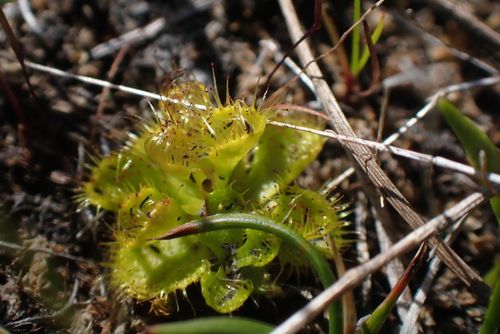
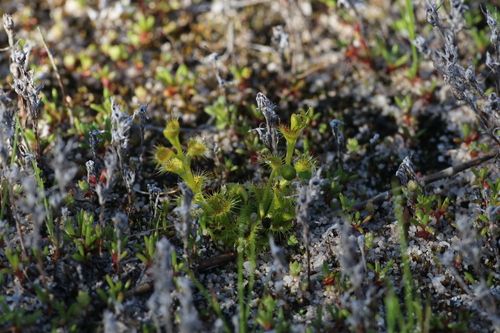
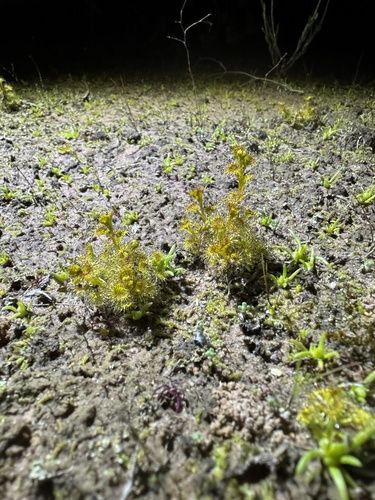
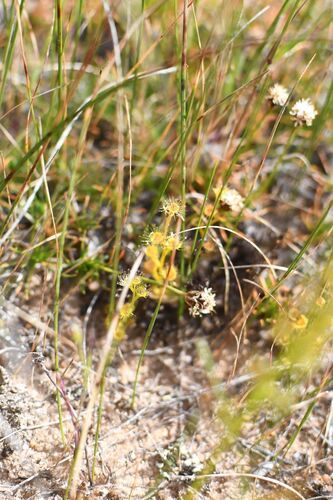
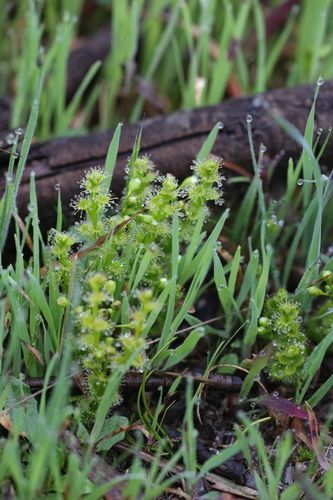
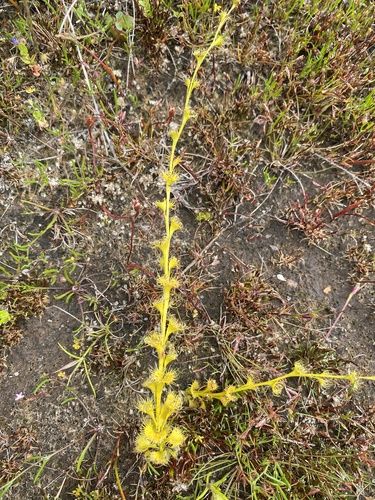
Etymology
- Drosera: see the genus sheet.
- ramellosa: from the Latin, “with small branches”. English common name: “branched sundew”.
History of the description
- 1848: Planchon describes it again under the name D. penduliflora.
- 1864: Bentham reduces this name to a synonym.
Description (how to recognise it)
- Tuberous perennial plant with 1 to 3 erect stems 4 to 12 cm tall, bearing only alternate leaves.
- The flowers arise from the basal rosette: a feature that sets it apart from the other species in its section.
- Flowers from July to September.
Distribution
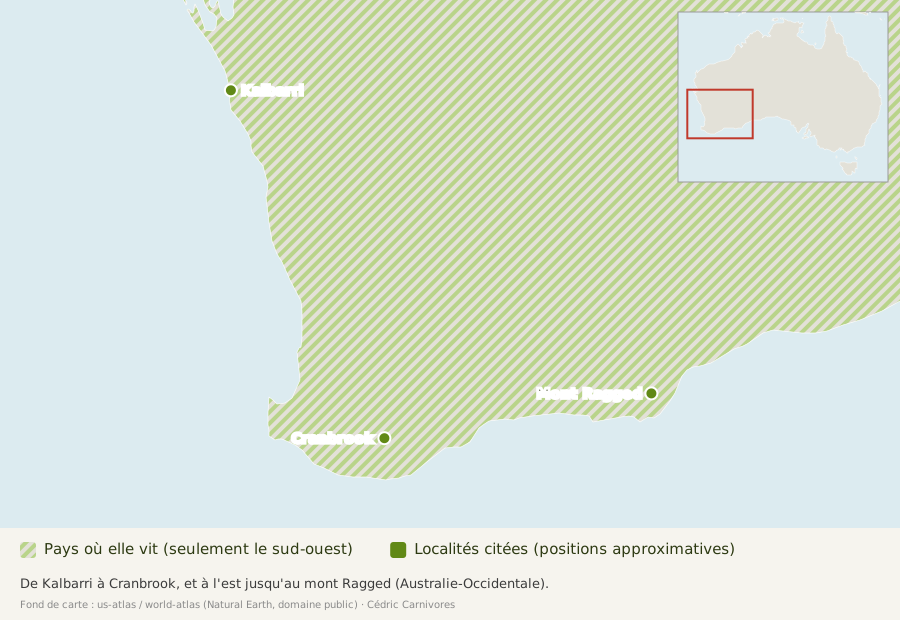
Endemic to Western Australia: from Kalbarri south to Cranbrook, and east as far as Mount Ragged.
Habitat
Sands or sandy clays that are wet in winter. According to the collections and observations published in GBIF, it grows mostly from 40 to 320 m altitude.
Sources
- Wikipedia (English), Drosera ramellosa: author, synonyms, common name, history, description, flowering, range, habitat, status, section.
- GBIF, Drosera ramellosa: author, original publication, countries, altitude and localities of herbarium specimens and observations.