Drosera sulphurea Lehm.
Species sheet, updated on 30/10/2026.
At a glance
| Scientific name | Drosera sulphurea Johann Georg Christian Lehmann, 1844 |
| Synonyms | D. bifida, D. flava, D. flavescens, D. neesii var. sulphurea |
| Family | Droseraceae (subgenus Ergaleium, section Ergaleium: upright or climbing tuberous sundews) |
| Distribution | Coasts of Western Australia |
| Habitat | Coastal sandy loams, often among Cephalotus |
| Status | Least concern (IUCN, 2018) |
Photos in the wild

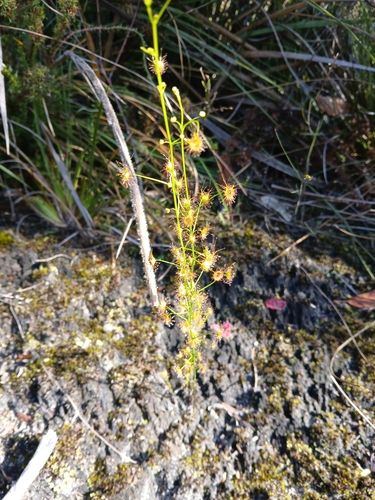
Etymology
- Drosera: see the genus sheet.
- sulphurea: from the Latin, “sulphur-coloured”, for its yellow flowers. In English: “sulphur-flowered sundew”.
History of the description
- 1864: Bentham makes it a variety of D. neesii; Marchant merges it into that species in 1982.
- 1999: Lowrie reinstates it, noting that it is only distantly related to D. subhirtella and its relatives.
Description (how to recognise it)
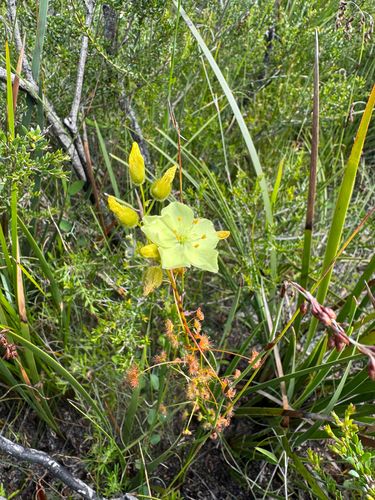
- Perennial tuberous plant, scrambling, with stems 40 to 60 cm long.
- Small shield-shaped trap leaves.
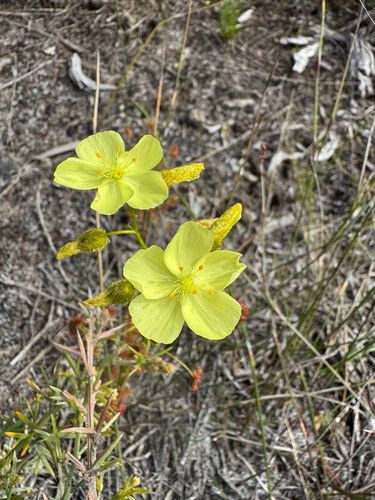
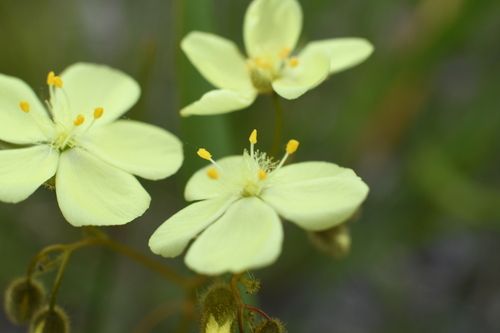
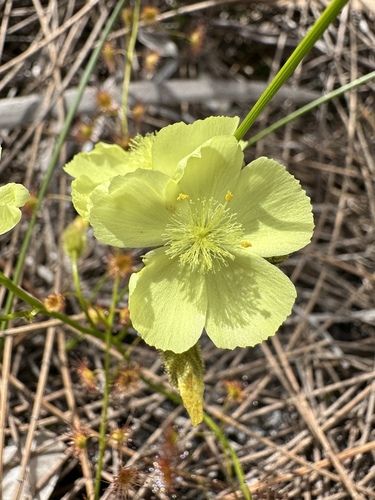
- Yellow flowers in September.
Distribution
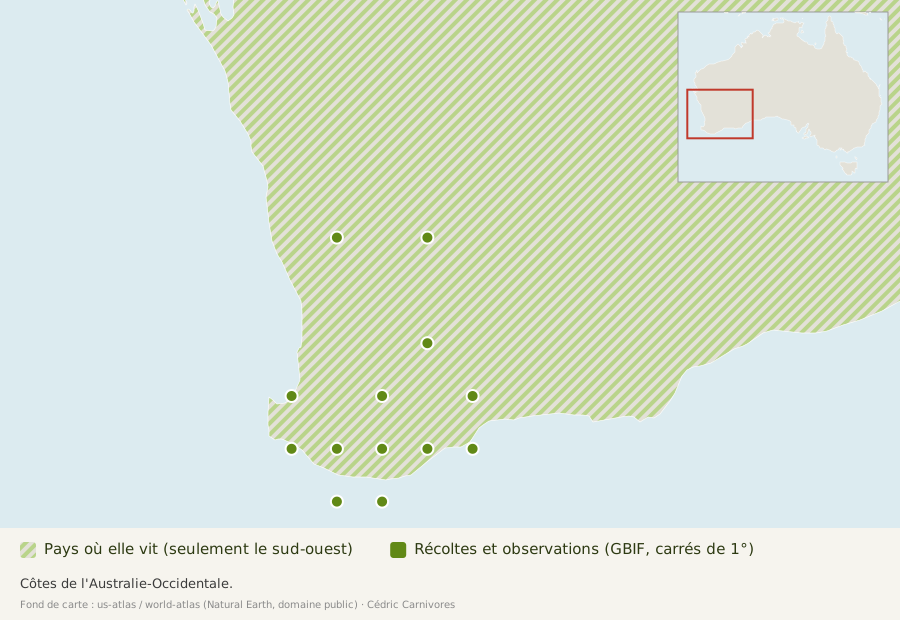
Endemic to Western Australia: coastal areas.
Habitat
Coastal sandy loams, often among Cephalotus (the Albany pitcher plant). According to the collections and observations published in GBIF, it grows mainly from 10 to 90 m above sea level.
Sources
- Wikipedia (English), Drosera sulphurea: author, synonyms, common name, history, description, flowering, range, habitat, status, section.
- GBIF, Drosera sulphurea: author, original publication, countries, altitude and localities of herbarium specimens and observations.