Drosera zonaria Planch.
Species sheet, updated on 30/10/2026.
At a glance
| Scientific name | Drosera zonaria Jules Émile Planchon, 1848 |
| Family | Droseraceae (subgenus Ergaleium, section Erythrorhiza: rosetted tuberous sundews) |
| Distribution | South-west of Western Australia, from around Perth to around Esperance |
| Habitat | Deep siliceous sands, open woodland and coastal heathland |
| Status | Least concern (LC) on the IUCN Red List |
Photos in the wild
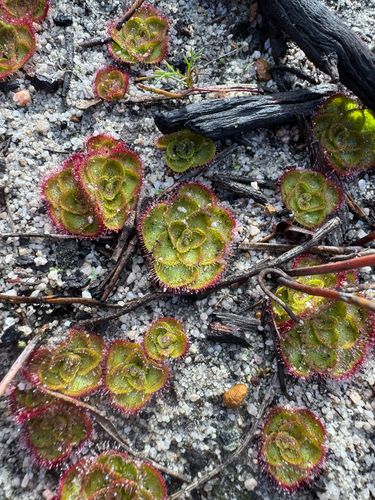
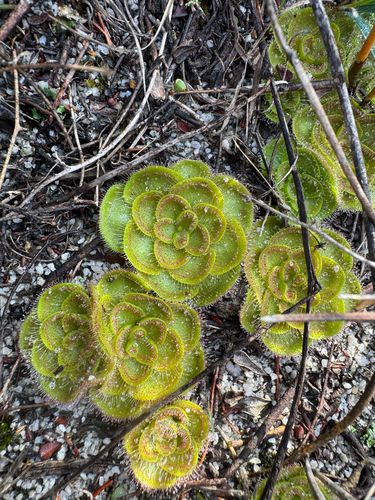
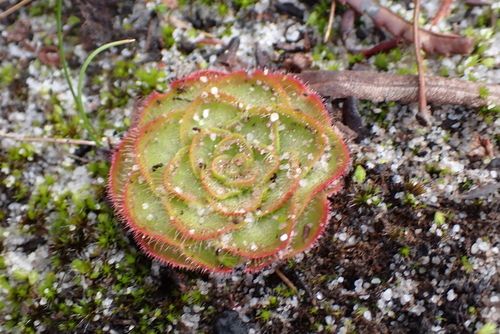
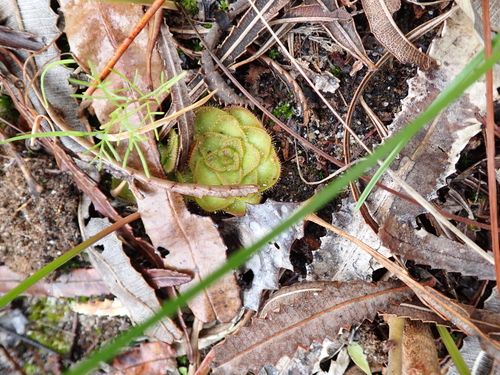
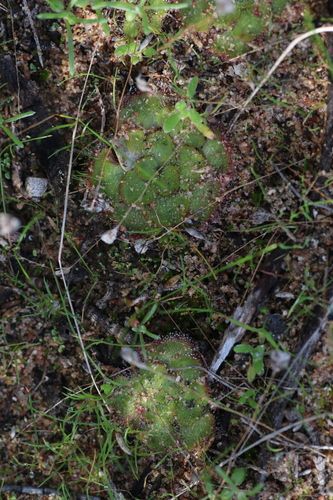
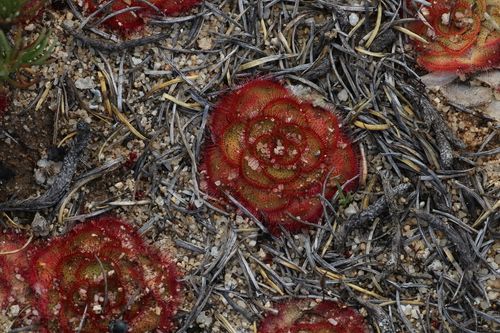
Etymology
- Drosera: see the genus sheet.
- zonaria: from the Latin, “zoned, banded”, probably for the purple edge of its leaves (not confirmed). In English: “painted sundew”.
History of the description
- James Drummond was the first to collect it, near the Swan River Colony, but only two sterile rosettes.
- 1864: Bentham doubts that it is a species.
- 1952: M. C. Russell finds it again near Guildford, and sees it flower for the first time in May 1954.
Description (how to recognise it)
- Perennial tuberous plant forming a tight rosette 5 to 7 cm across, with 20 to 30 kidney-shaped leaves, green to red, arranged in rings, with a crimson edge.
- In summer, it dies back above ground and retreats to a tuber buried 10-30 cm deep.
- Fragrant white flowers on scapes 4 to 5 cm tall.
Distribution
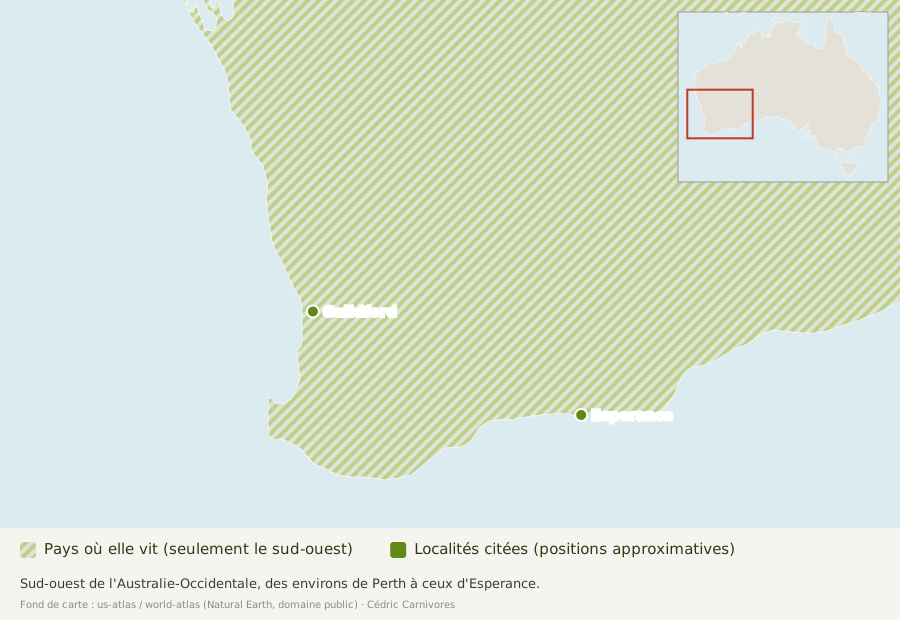
Endemic to the south-west of Western Australia: from around Perth south-east to around Esperance.
Habitat
Deep siliceous sands, in open woodland or in coastal heathland. According to the collections and observations published in GBIF, it grows mainly from 224 to 356 m above sea level.
Ecology
It flowers only after a bushfire, perhaps triggered by the ethylene released by the fire.
Did you know?
- Its flowers look very much like those of D. erythrorhiza.
Sources
- Wikipedia (English), Drosera zonaria: author, common name, history, description, flowering after fire, range, habitat, section.
- GBIF, Drosera zonaria: author, original publication, IUCN Red List category, countries, altitude and localities of herbarium specimens and observations.