Drosophyllum lusitanicum (L.) Link
Species sheet, updated on 29/10/2026.
At a glance
| Scientific name | Drosophyllum lusitanicum (Linné) Johann Heinrich Friedrich Link |
| Synonyms | Drosera lusitanica, Rorella lusitanica, Spergulus droseroides |
| Common names | Dewy pine; in French “drosophylle du Portugal”, “rossolis du Portugal” |
| Family | Drosophyllaceae, of which it is the only species |
| Distribution | Portugal, south-west Spain, northern Morocco |
| Habitat | Dry soils, from sea level to 1 200 m |
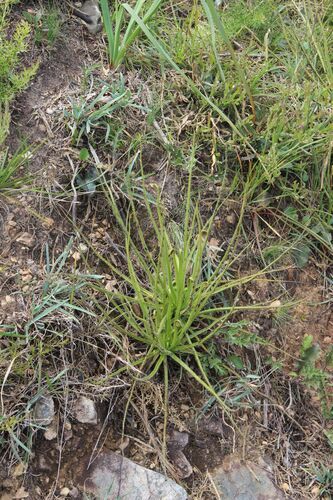
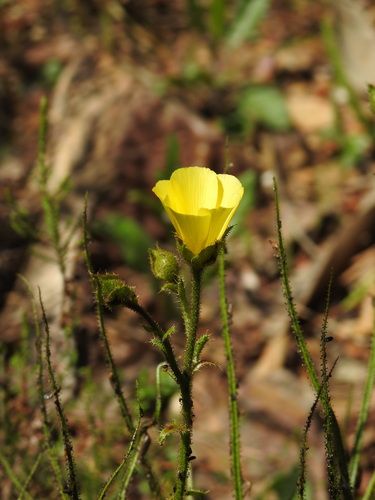
Photos in the wild
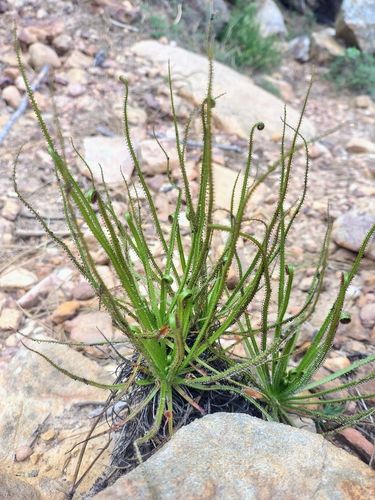
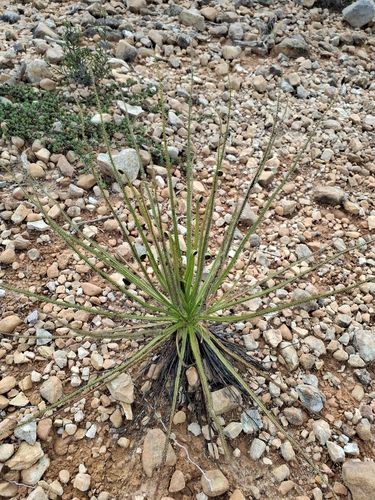
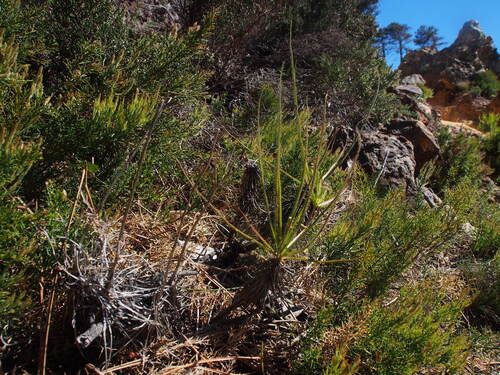
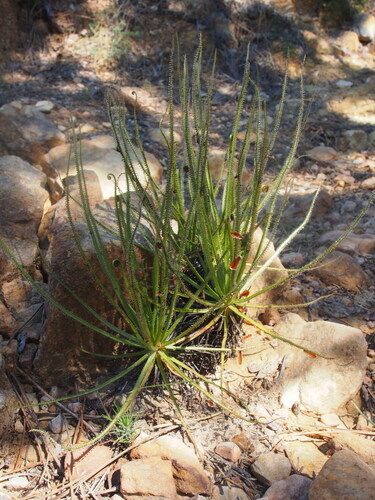
Etymology
- Drosophyllum: from the Greek drosos, “dew”, and phyllon, “leaf”: “dew leaf”.
- lusitanicum: “from Portugal”, the Lusitania of the Romans.
History of the description
Linnaeus described it under the name Drosera lusitanica; Link later made it a separate genus, Drosophyllum. Charles Darwin drew its glands.
Description (how to recognise it)
- A perennial plant with a woody base.
- A dense rosette of narrow, linear leaves, 10 to 20 cm long, covered with stalked glands and sessile glands.
- Its leaves do not move, unlike those of sundews, and the young leaves unroll outwards, the opposite of sundews.
- Large yellow flowers with five petals, 2 to 3 cm across.
Distribution
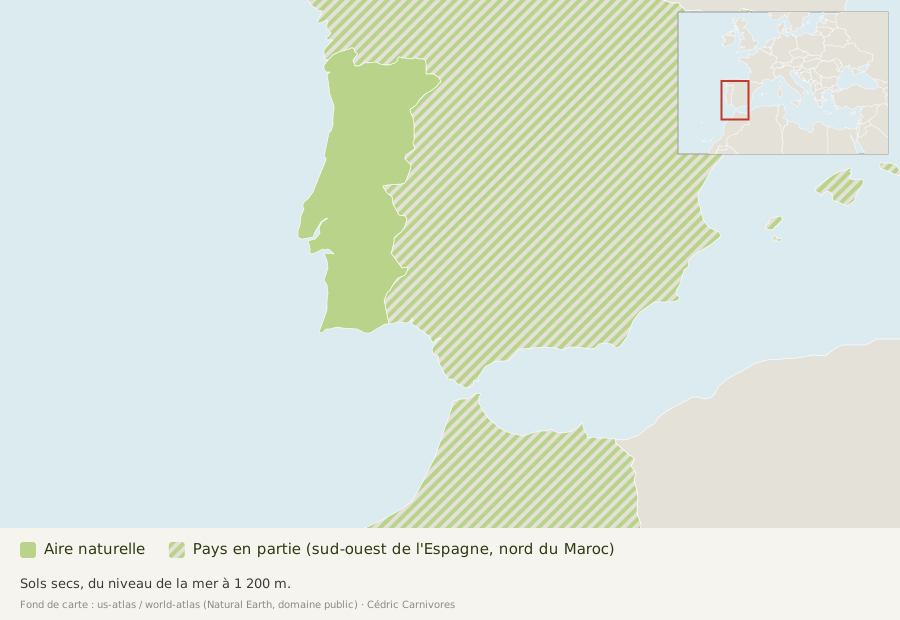
Western Mediterranean basin: Portugal, south-west Spain and northern Morocco, from sea level to 1 200 m.
Habitat
One of the few carnivorous plants of dry soils:
- clearings in garrigue scrub, often with heathers;
- open forests of pines and cork oaks;
- sunny heathland;
- on siliceous, gravelly or schist soils, somewhat disturbed.
Ecology: a scented trap
- A sweet scent, said to be close to honey, attracts insects (comparison, not confirmed).
- They stick to the mucilage; as they struggle, they become even more stuck and die of exhaustion or suffocation.
- The plant then secretes enzymes and absorbs the nutrients, which supplement a poor soil.
Relationships
Formerly placed in the Droseraceae, it now has its own family, the Drosophyllaceae. Genetic studies place it close to Triphyophyllum (Dioncophyllaceae) and the Ancistrocladaceae.
Sources
- Wikipedia (English), Drosophyllum: authors, synonyms, common names, family, relationships, description, range, altitude, habitat, trap, Darwin's drawing.
- (Etymology, “Lusitania” and honey scent: general knowledge; not confirmed)