Genlisea tuberosa Rivadavia, Gonella & A. Fleischm.
Species sheet, updated on 30/10/2026.
At a glance
| Scientific name | Genlisea tuberosa Fernando Rivadavia, Paulo Gonella & Andreas Fleischmann, Systematic Botany, 2013 |
| Family | Lentibulariaceae (section Genlisea) |
| Distribution | Brazil: Bahia, Goiás, Federal District, Minas Gerais |
| Habitat | Campos rupestres, fast-drying sandy soils, wet for part of the year, from 800 to 1 500 m |
Etymology
- Genlisea: see the genus sheet.
- tuberosa: from the Latin, “bearing tubers”: it is the only Genlisea that forms tubers.
History
- Late 1980s: Carow collects it near Diamantina, but takes it for G. pygmaea.
- 2007: Fernando Rivadavia finds it again.
- 2013: description.
The smallest genome of flowering plants
In 2014, its genome of about 61 million base pairs was the smallest known in flowering plants.
Distribution
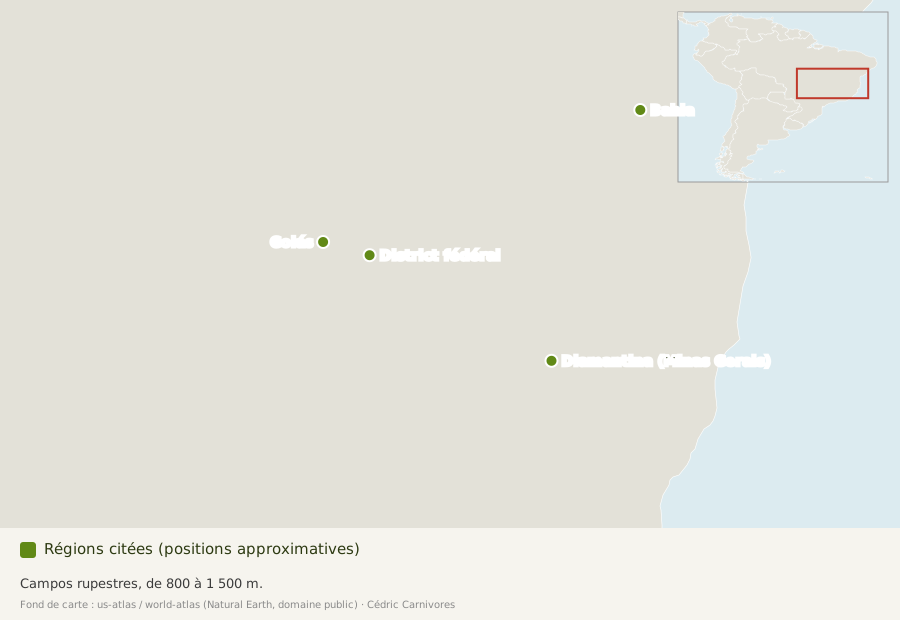
Endemic to Brazil: Bahia, Goiás, Federal District and Minas Gerais, from 800 to 1 500 m.
Habitat and life cycle
- The campos rupestres, the vegetation of high-altitude rock outcrops, on fast-drying sandy soils, wet for only part of the year, together with other Genlisea, bladderworts, sundews and grasses.
- It flowers from February to June, then goes dormant during the dry season of the southern winter, in the form of tubers.
Sources
- Wikipedia (English), Genlisea tuberosa: authors 2013, tubers, genome, range, altitude, habitat, life cycle, history.
- (Dormancy “in the form of tubers”: logical inference, not confirmed)