Nepenthes abalata Jebb & Cheek
Species sheet, updated on 30/10/2026. Short sheet: sources on this species are still scarce.
At a glance
| Scientific name | Nepenthes abalata Matthew Jebb & Martin Cheek, Nordic Journal of Botany, 2013 |
| Family | Nepenthaceae |
| Distribution | Islands of Culion, Cuyo and Malalison, western Philippines |
| Habitat | Coastal grassland and scrub, from 0 to 20 m |
| Status | Least concern (IUCN, 2018) |
Photos in the wild
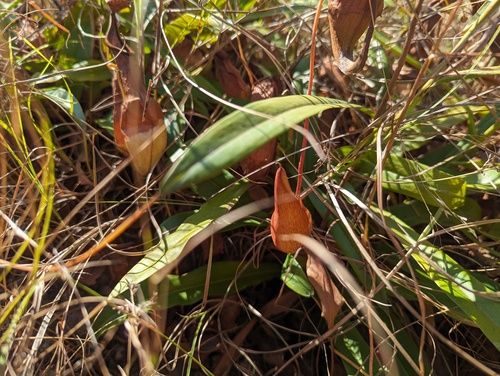
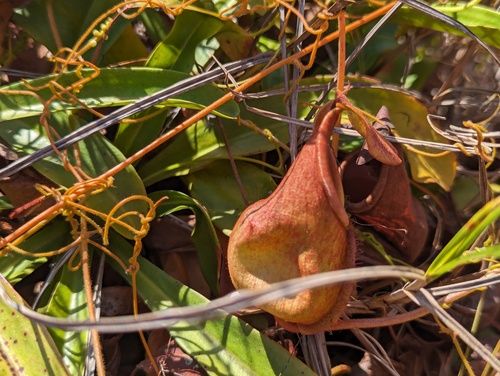
Etymology
- Nepenthes: see the genus sheet.
- abalata: “coming from alata”: it used to be placed in N. alata, a very variable species.
History of the description
- 2013: Martin Cheek and Matthew Jebb separate it from N. alata, in the paper in which they also fix the type of N. blancoi.
Description (how to recognise it)
- According to its description (2013): a grassland species, apparently close to N. philippinensis but also similar to the grassland species of Indochina; the plants formerly assigned to N. blancoi belong to it. Its authors then rated it “critically endangered”; the IUCN has since assessed it as “least concern” (2018).
Distribution
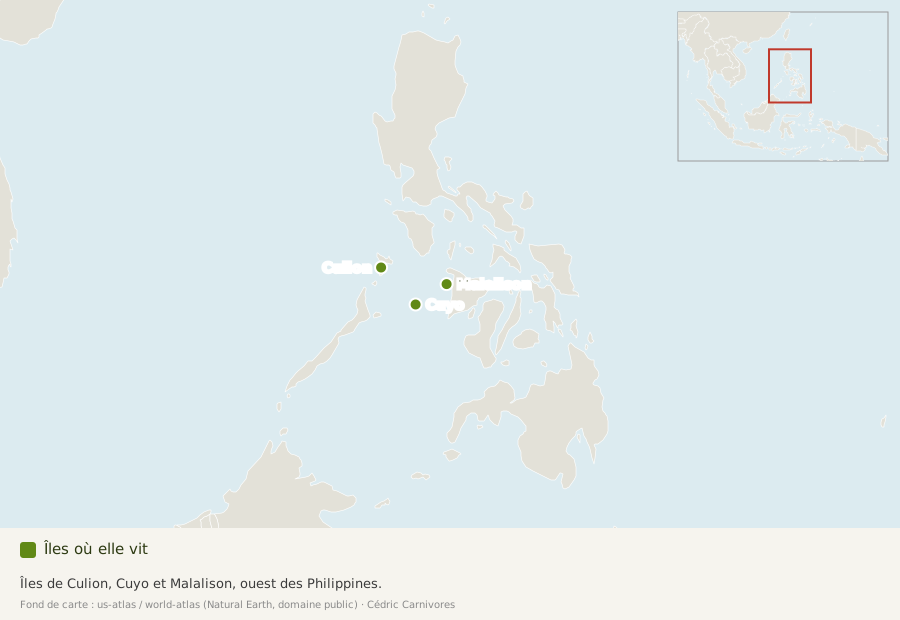
Endemic to the Philippines: three western islands, Culion, Cuyo and Malalison (Mararison). Regions where most of the herbarium specimens and observations published in GBIF come from (number of records): Antique (4), Aklan (3).
Habitat
Seaside grassland and scrub, from 0 to only 20 m: one of the lowest-growing Nepenthes.
Sources
- Wikipedia (English), Nepenthes abalata: authors, etymology, islands, altitude, habitat, status.
- “Identification and typification of Nepenthes blancoi, with N. abalata sp. nov.”, Nordic Journal of Botany, 2013: abstract of the paper.
- GBIF, Nepenthes abalata: author, original publication, countries and localities of the herbarium specimens and observations.