Nepenthes khasiana Hook. f.
Species sheet, updated on 30/10/2026.
At a glance
| Scientific name | Nepenthes khasiana Joseph Dalton Hooker, Prodromus 17, 1873 |
| Family | Nepenthaceae |
| Distribution | Khasi Hills and neighbouring hills (Meghalaya), Assam and Nagaland (India) |
| Status | Endangered (IUCN, 2015); CITES Appendix I |
Photos in the wild
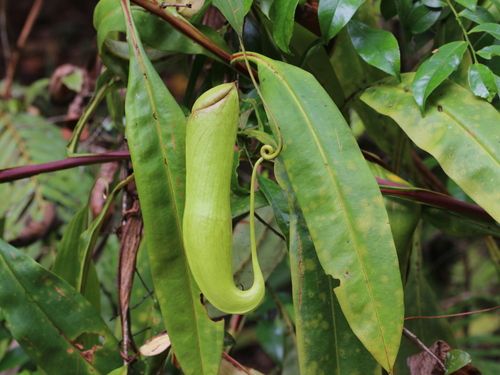
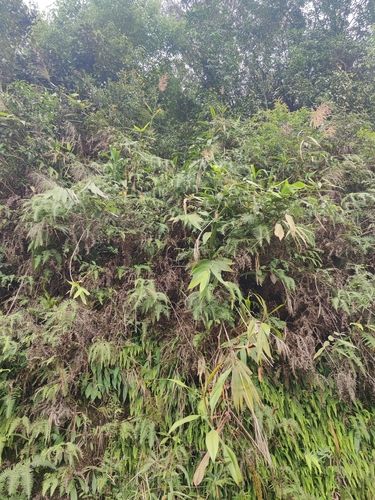
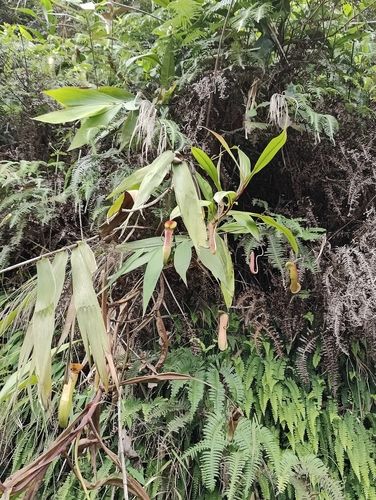
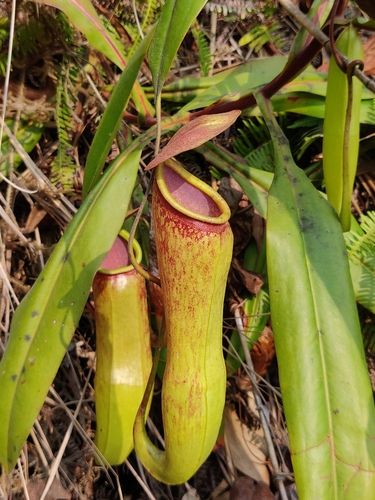
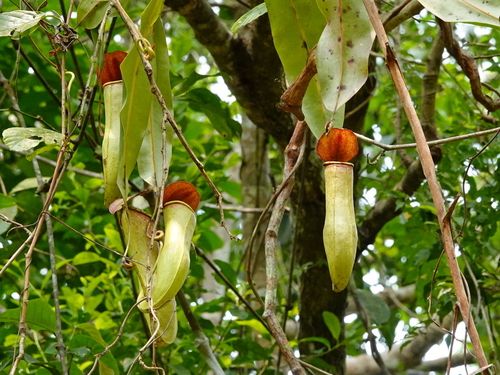
Etymology
- Nepenthes: see the genus sheet.
- khasiana: from the Khasi Hills, to which it is almost endemic (formerly spelled “khasyana”).
History of the description
- 1872: the name first appears in an article by Maxwell T. Masters (The Gardeners' Chronicle), based on Hooker's manuscript.
- 1873: description by Joseph Dalton Hooker.
- In cultivation, it was long confused with N. distillatoria from Sri Lanka.
Description (how to recognise it)
- No detailed description yet in the sources consulted.
Distribution
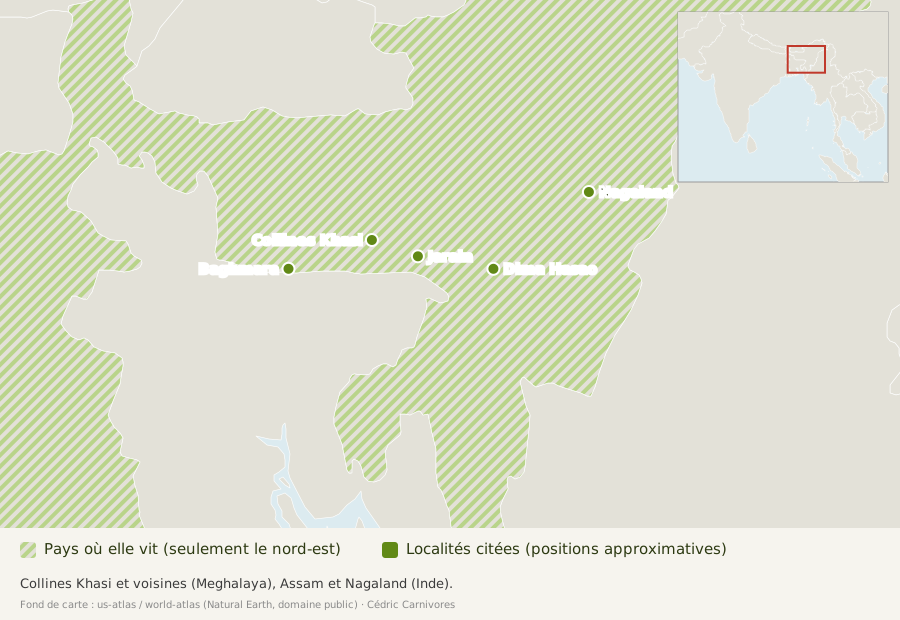
Endemic to north-east India: mainly the Khasi Hills (Meghalaya), with isolated populations near Jarain (Jaintia Hills), Baghmara (Garo Hills), in Upper Kharthong (Dima Hasao, Assam) and in Nagaland. It is the only Nepenthes in India.
Ecology
- It is thought to attract its prey through a blue fluorescence.
- Despite its small range, it retains great genetic diversity.
Threats and protection
- Habitat destruction, acidic water from coal mines, collection for traditional medicine and ornament.
- Listed in CITES Appendix I: its international trade is prohibited.
Did you know?
- The Khasi call it “tiew-rakot” (demon flower, devouring plant), the Garo “memang-koksi” (devil's basket), the Jaintia “kset phare”.
Sources
- Wikipedia (English), Nepenthes khasiana: publication, etymology, range, genetics, fluorescence, local names, threats, status, CITES.