Nepenthes madagascariensis Poir.
Species sheet, updated on 30/10/2026.
At a glance
| Scientific name | Nepenthes madagascariensis Jean Louis Marie Poiret, 1797 |
| Synonyms | N. cristata Brongn. (1824), in part |
| Family | Nepenthaceae |
| Distribution | Eastern Madagascar, from Tôlanaro to the Masoala Peninsula |
| Habitat | Marsh edges, peaty or sandy soils, at low altitude |
| Status | Least concern (IUCN, 2018) |
Photos in the wild
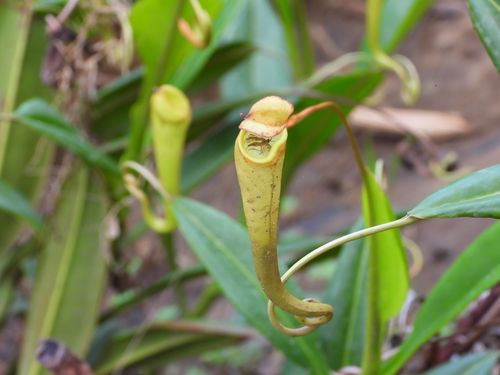
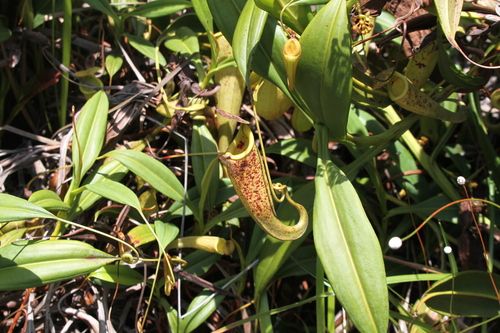
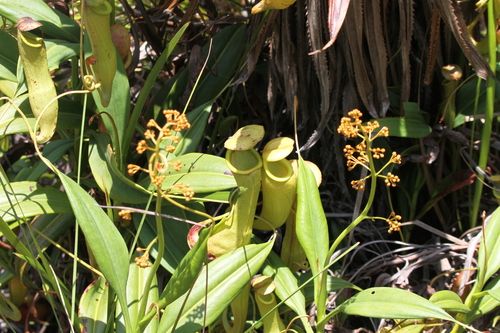
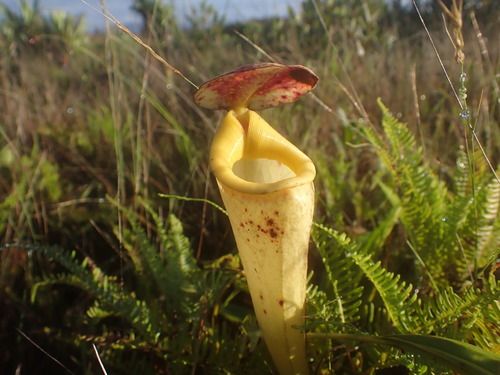
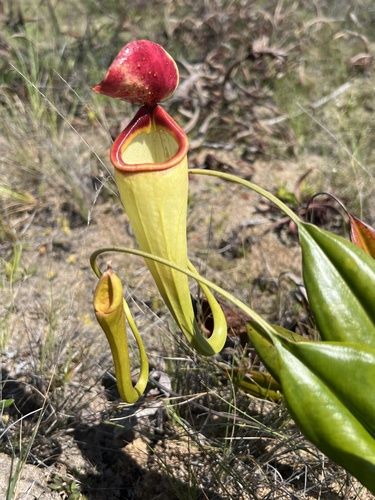
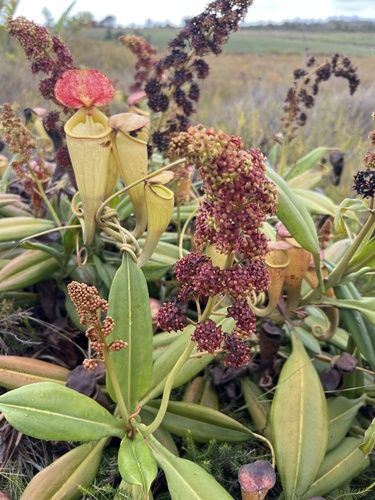
Etymology
- Nepenthes: see the genus sheet.
- madagascariensis: “from Madagascar”.
History of the description
- 1658: Étienne de Flacourt, governor of Fort-Dauphin, describes it under its local name “Amramatico” in his Histoire de la Grande Isle de Madagascar.
- 1797: Poiret gives it its scientific name.
Description (how to recognise it)
- Flacourt describes it as about 3 feet tall, with leaves of about 7 inches, bearing “a hollow flower or fruit like a small vase, with its own lid”.
- He knew a red form and a larger yellow form; after rain, each pitcher held about half a glass of water.
- Two varieties have been described: var. macrocarpa (1891) and var. cylindrica (1906).
Distribution
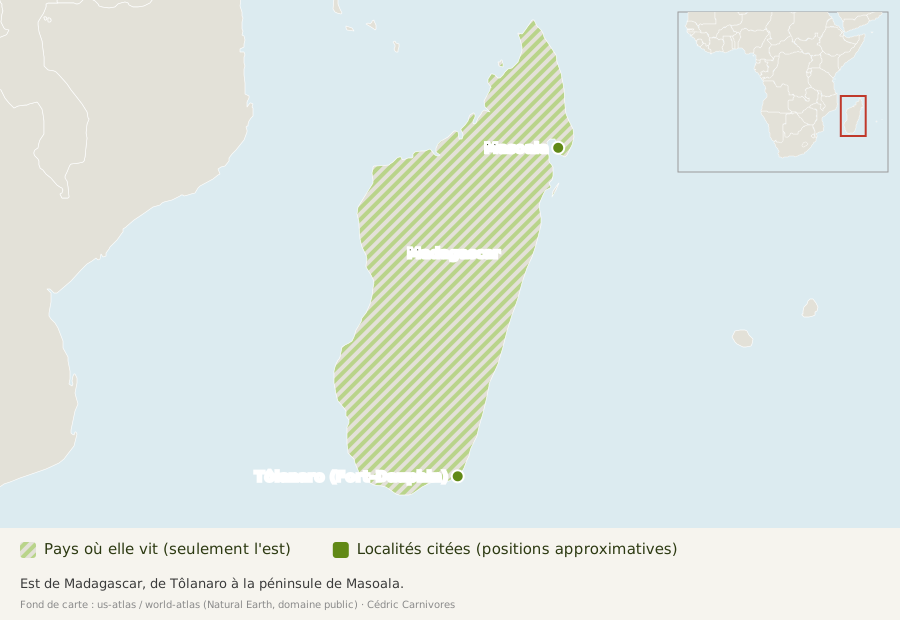
Endemic to Madagascar: east of the island, mainly in the south around Tôlanaro (Fort-Dauphin), up to the Masoala Peninsula in the north.
Habitat
Low altitude, at the edge of marshes, on peaty or sandy soils.
Ecology
At least two spiders live in its pitchers: Synema obscuripes and Theridion decaryi.
Did you know?
- It is the first Nepenthes described by a scholar (1658).
- According to Flacourt, the inhabitants avoided picking the pitchers, for fear of bringing rain.
- Its closest relative is the other Malagasy Nepenthes, N. masoalensis.
Sources
- Wikipedia (English), Nepenthes madagascariensis: Poiret 1797, synonyms, Flacourt 1658, description, range, habitat, spiders, belief, varieties, status, relationships.