Nepenthes maxima Reinw. ex Nees
Species sheet, updated on 29/10/2026.
At a glance
| Scientific name | Nepenthes maxima Reinwardt ex Nees, 1824 |
| Common name | Great pitcher-plant; in French “grande népenthès” |
| Synonyms | N. celebica Hook. f. (1873), N. curtisii Mast. (1887), N. oblanceolata Ridl. (1916), N. dayana… |
| Family | Nepenthaceae |
| Distribution | New Guinea, Sulawesi, Moluccas |
| Habitat | From about 400 m (Sulawesi) to 2,600 m (New Guinea) |
| Status | Least concern (IUCN, 2018) |
Photos in the wild
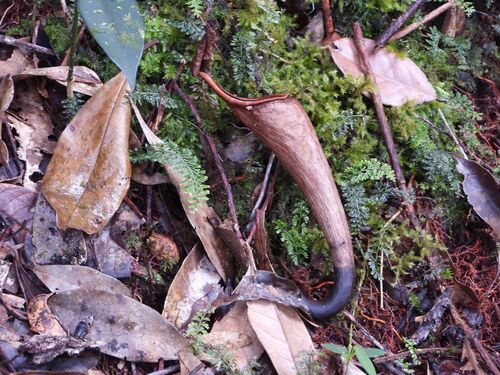
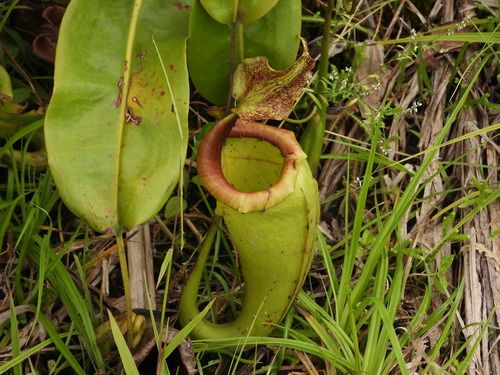
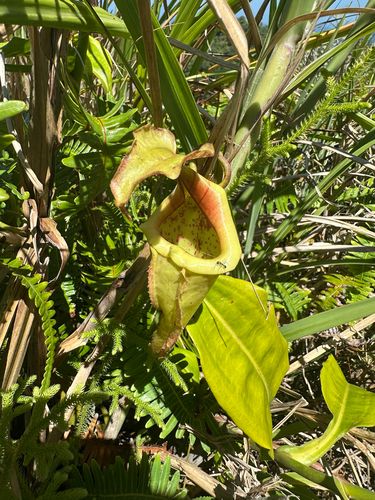
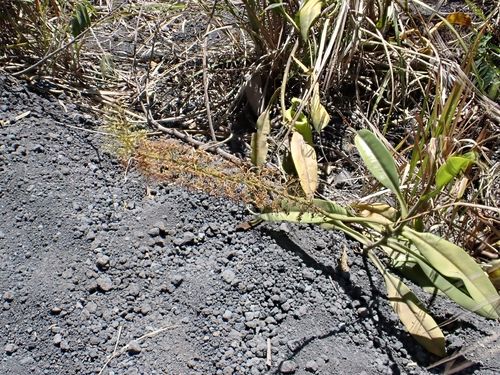
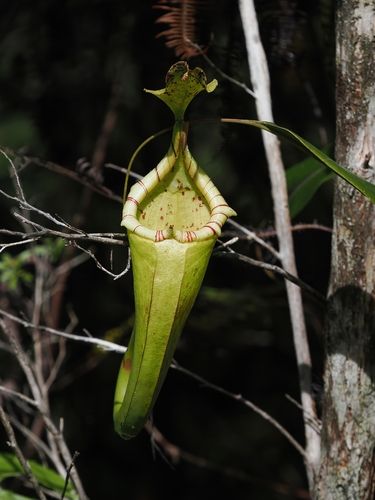
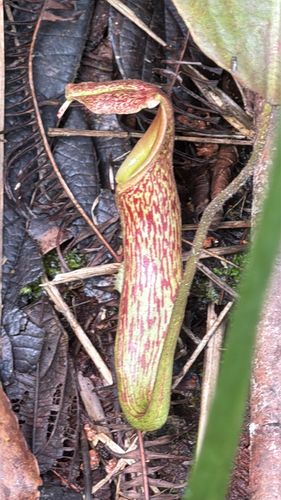
Etymology
- Nepenthes: see the genus sheet.
- maxima: from the Latin maximus, “the largest”.
History of the description
- 1750: the naturalist Rumphius, who lived in the Moluccas, was already calling it “Cantharifera alba”, before modern scientific names were invented.
- 1824: it was described as N. maxima, from material collected by Caspar Reinwardt, by Christian Nees von Esenbeck.
A species that adapts to the climate
Its pitchers vary a great deal in shape depending on the climate:
- in parts of New Guinea that are dry for part of the year, the pitchers are elongated, with a narrow peristome and a well-developed waxy zone;
- in regions that are always very wet, the waxy zone shrinks and the peristome widens. A wet peristome traps insects better, but it works poorly in dry weather.
On Sulawesi, the leaves often have wavy edges; in extreme cases, so do the wings running down the stem.
Distribution
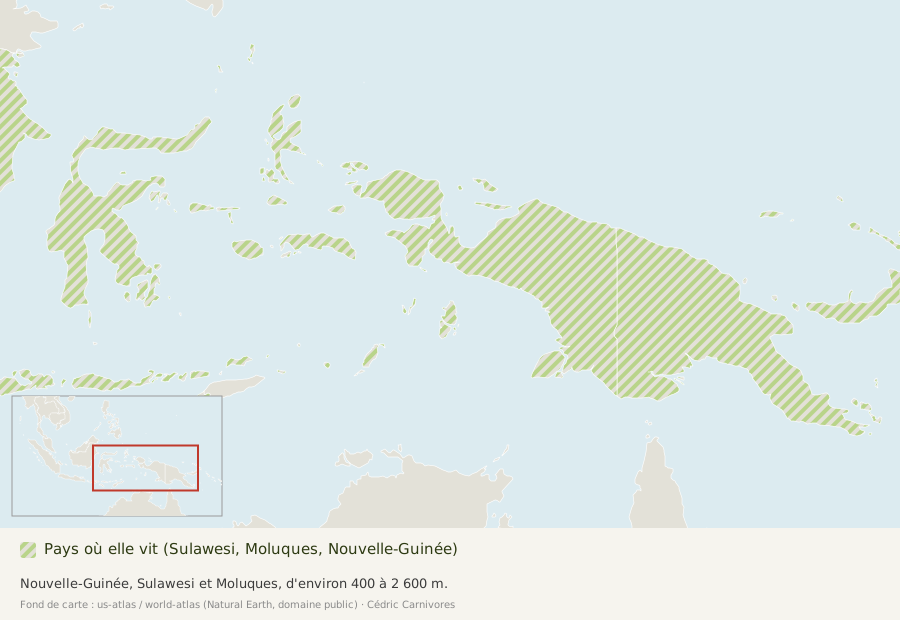
New Guinea, Sulawesi and the Moluccas; perhaps also the island of Wowoni. Pitchers have been photographed from about 400 m (Sulawesi) to 2,600 m (New Guinea).
The maxima complex
It gives its name to a group of about ten closely related species, including N. boschiana, N. stenophylla and N. klossii.
Forms and varieties
| Name | Current status |
|---|---|
| f. undulata (1985) | form |
| var. minor (1917), var. superba (1897) | old varieties |
| var. glabrata | name without a description |
| var. lowii | now N. stenophylla |
| var. sumatrana | now N. sumatrana |
| 'Lake Poso' (2009, Lake Poso on Sulawesi) | described in 2016 as a species: N. minima |
Natural hybrids
With N. glabrata, N. klossii, N. neoguineensis and N. tentaculata; doubtful with N. eymae.
Threats and protection
“Least concern” according to the IUCN (2018).
Sources
- Wikipedia (English), Nepenthes maxima: authors 1824, etymology, Rumphius 1750, synonyms, range, altitudes, variation of the pitchers with climate, wavy leaves, maxima complex, forms and varieties, N. minima, hybrids, status.
- (Rumphius in the Moluccas: general historical note, not confirmed)