Nepenthes mirabilis (Lour.) Druce
Species sheet, updated on 29/10/2026.
At a glance
| Scientific name | Nepenthes mirabilis (Loureiro) Druce |
| First name | Phyllamphora mirabilis Loureiro, 1790 |
| Common names | In French “népenthès commune des marais”; in cultivation, the “Viking” form |
| Family | Nepenthaceae |
| Distribution | The widest in the genus: from southern China to northern Australia |
| Habitat | Marshes and wet places in the lowlands |
| Status | Least concern (IUCN, 2014) |
Photos in the wild
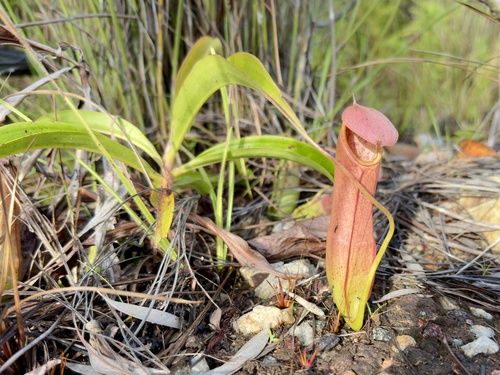
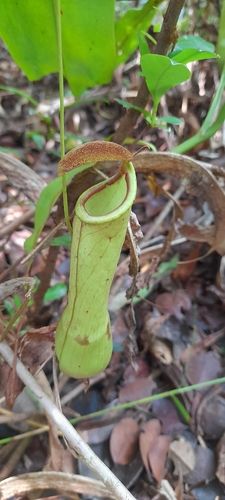
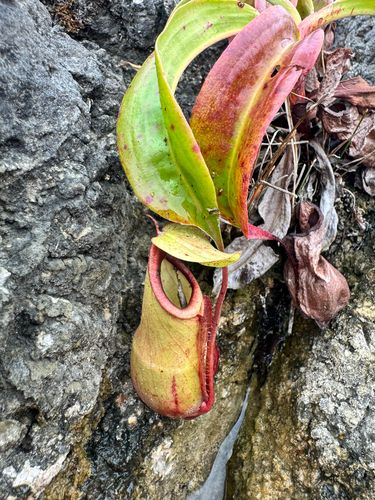
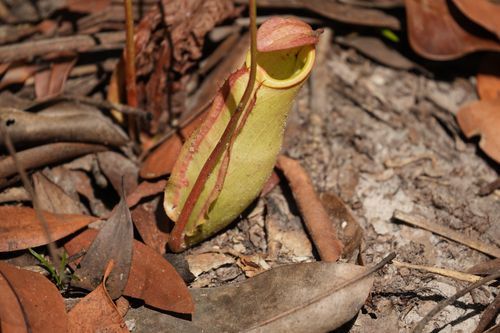
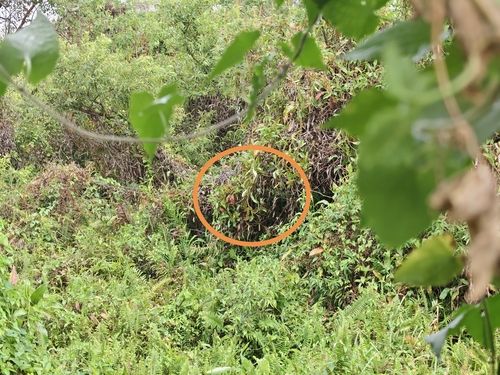
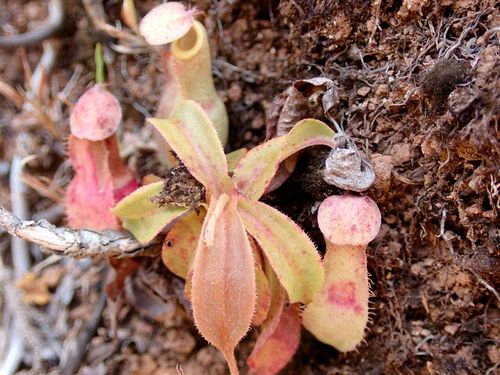
Etymology
- Nepenthes: see the genus sheet.
- mirabilis: from the Latin mirabilis, “admirable, wonderful”.
- “Viking”: horticultural name of var. globosa, whose pitchers recall the prow of a Viking longship.
History of the description
- 1790: the Portuguese Jesuit João de Loureiro, who lived in Cochinchina (Vietnam), described it as Phyllamphora mirabilis.
- 1805: Willdenow placed it in Nepenthes under an incorrect name.
- The current name is attributed to George Claridge Druce, generally to a publication of 1916.
- It is the Nepenthes species with the most synonyms.
Description (how to recognise it)
- Leaves: usually thin, like paper.
- Pitchers: the lower pitchers bear fringed wings; the swollen part is low on the lower pitchers, higher on the upper pitchers.
Distribution
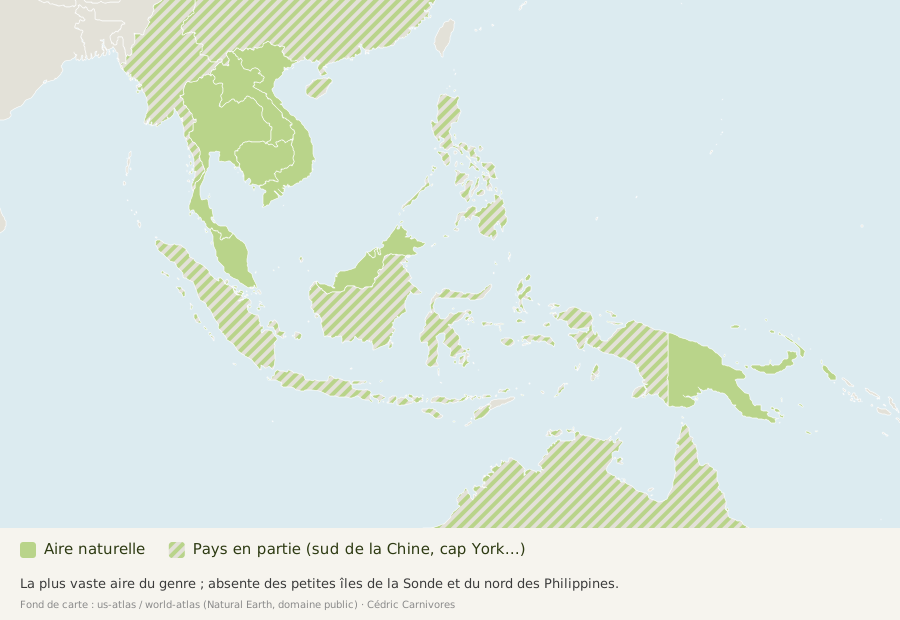
The largest range of all Nepenthes: mainland Southeast Asia and most of the large islands of the Malay Archipelago, except the Lesser Sunda Islands and the northern Philippines.
- China (Guangdong, Hainan, Hong Kong, Macau), Myanmar, Thailand, Laos, Cambodia, Vietnam;
- Peninsular Malaysia, Sumatra, Java, Borneo, Sulawesi, New Guinea;
- as far as Cape York, in Australia.
Varieties
| Variety | Distinctive feature | Range |
|---|---|---|
| var. mirabilis | typical form | the whole range |
| var. echinostoma | extremely wide peristome; collected by Beccari in 1865, described as a species by Hooker in 1873 | Borneo |
| var. globosa (“Viking”) | pitchers shaped like a longship's prow | an island kept secret in the Andaman Sea off Phang Nga, and near Trang (Thailand) |
Ecology
- Its fluid can be very acidic (pH 2). Yet tree frogs live in its pitchers in southern China, probably protected by the mucus on their skin.
- Its pitchers host mosquitoes (on Palau and Yap) and yielded the first aquatic fungus known from a carnivorous plant's pitcher (Jardine River, Australia), as well as a nematode worm described from it in Thailand, Baujardia mirabilis.
Natural hybrids
It is the species with the most known natural hybrids: with N. alata, N. ampullaria, N. andamana, N. bicalcarata, N. gracilis, N. rafflesiana, N. rowaniae, N. tenax, N. thorelii, N. reinwardtiana, N. merrilliana, N. spathulata and many others.
Relationships
Its closest relatives are the three species endemic to Australia: N. rowaniae, N. tenax and N. parvula.
Threats and protection
“Least concern” according to the IUCN. It is protected in Hong Kong.
Did you know?
- In Vietnam, the Jarai people of Kon Tum province use its pitchers to cook rice.
Sources
- Wikipedia (English), Nepenthes mirabilis: Loureiro 1790, Willdenow 1805, Druce, etymology, “Viking”, synonyms, description, range, varieties, ecology of the pitchers, hybrids, relationships, status, uses.
- Wikipedia (English), Nepenthes reinwardtiana, merrilliana, spathulata: hybrids with N. mirabilis.
- (Loureiro “lived in Cochinchina”: general historical note, not confirmed)