Nepenthes sanguinea Lindl.
Species sheet, updated on 29/10/2026.
At a glance
| Scientific name | Nepenthes sanguinea John Lindley, 1849 |
| Synonym | N. pumila Griff. (1854) |
| Family | Nepenthaceae |
| Distribution | Peninsular Malaysia and the far south of Thailand |
| Habitat | Humid montane forests, from 300 to 1,800 m |
| Status | Least concern (IUCN) |
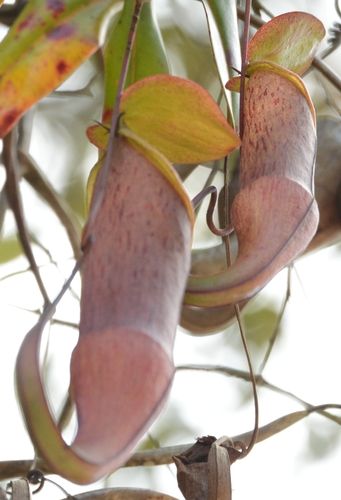
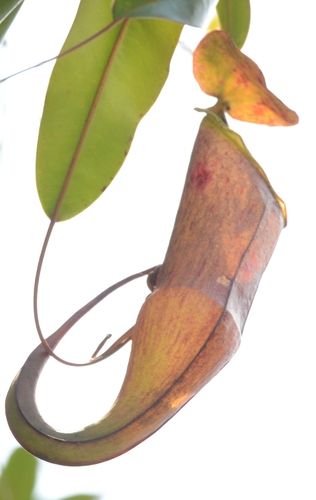
Photos in the wild
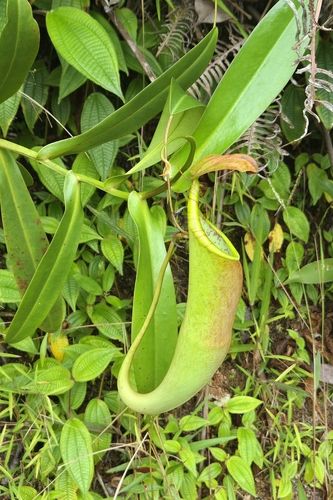
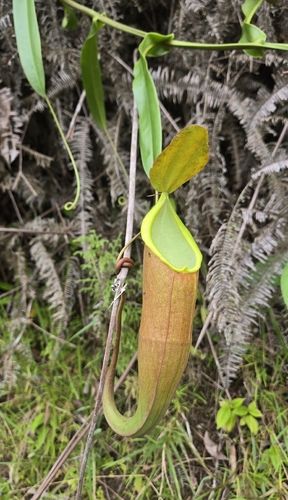
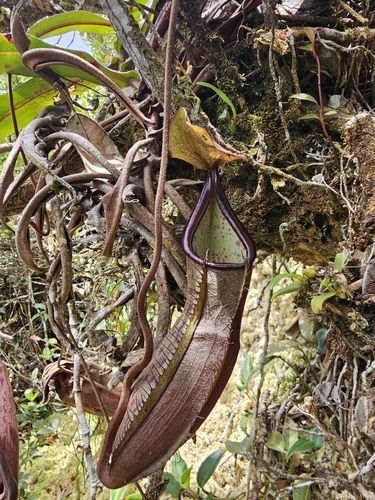
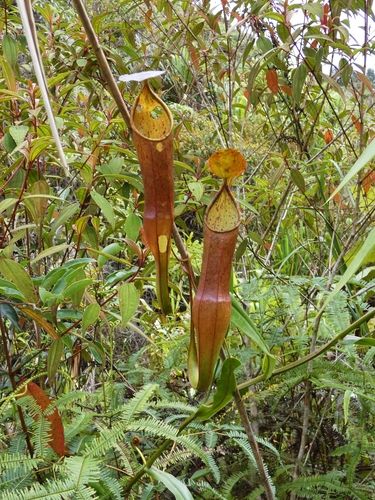
Etymology
- Nepenthes: see the genus sheet.
- sanguinea: from the Latin sanguineus, “blood red”.
History of the description
- Around 1847: the Cornish plant hunter Thomas Lobb introduced it to England for the Veitch nursery.
- 1849: John Lindley described it.
- The name was later wrongly applied to other species, such as N. veitchii and N. benstonei.
Description (how to recognise it)
- A large, vigorous plant.
- Pitchers: 10 to 30 cm, from green and yellow to orange and red, the inside speckled with its two main colours.
Distribution
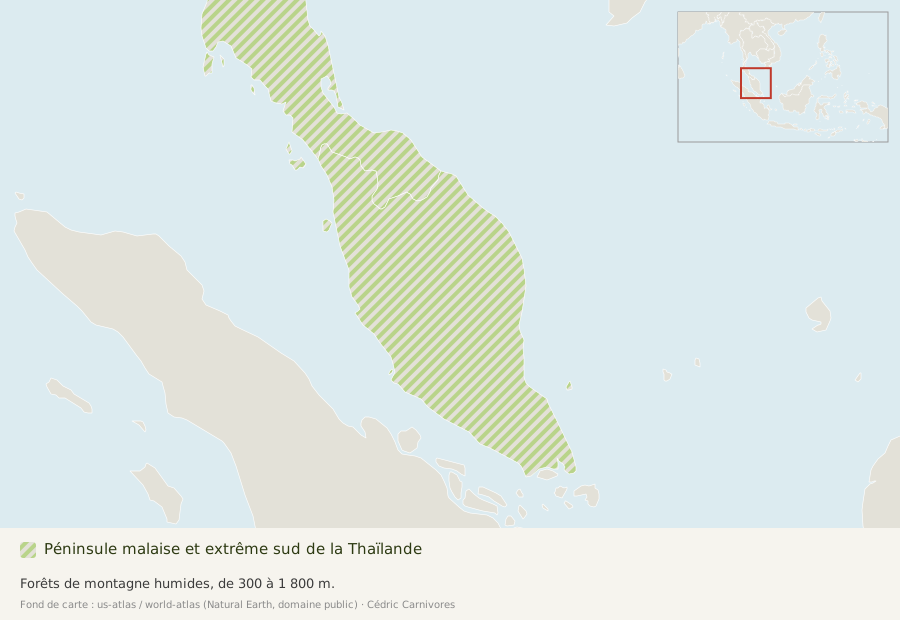
Peninsular Malaysia and the far south of Thailand, from 300 to 1,800 m.
Habitat
Mostly on the ground, sometimes on trees, in humid upper montane forests.
Natural hybrids
With N. macfarlanei and N. ramispina; doubtful with N. albomarginata.
Did you know?
- In 1882 Burbidge suggested that N. northiana from Borneo was a hybrid of N. sanguinea; the idea was rejected, because N. sanguinea does not grow on Borneo.
Sources
- Wikipedia (English), Nepenthes sanguinea: Lindley 1849, Lobb and Veitch, synonym, etymology, description, range, altitude, habitat, hybrids, status, confusions.
- Wikipedia (English), Nepenthes northiana: Burbidge's hypothesis.