Nepenthes × alisaputrana J. H. Adam & Wilcock
Natural hybrid sheet, 29/10/2026.
At a glance
| Scientific name | Nepenthes × alisaputrana J. H. Adam & C. C. Wilcock, 1992 |
| Parents | N. burbidgeae × N. rajah |
| Common names | Leopard pitcher-plant; in French “népenthès léopard” |
| Distribution | A few isolated sites in Kinabalu National Park, Sabah (Borneo) |
| Habitat | Low, open vegetation on serpentine, at about 2,000 m |
Etymology
- alisaputrana: in honour of Datuk Lamri Ali, former director of Sabah's parks (Sabah Parks).
- “Leopard”: the botanists Anthea Phillipps and Anthony Lamb gave it this name for its spotted pitchers.
History of the description
The botanists J. H. Adam and C. C. Wilcock described this natural hybrid in 1992.
Description (how to recognise it)
- Giant pitchers: up to 35 cm high and 20 cm wide, almost as large as those of N. rajah.
- Colours: usually yellowish green, spotted with red or brown, like a leopard's coat.
- Peristome: green to dark red, striped with purple bands; narrower and more cylindrical than that of N. rajah, but wider than that of N. burbidgeae, with a larger lid.
- Habit: a vigorous climber, which often produces upper pitchers.
Distribution
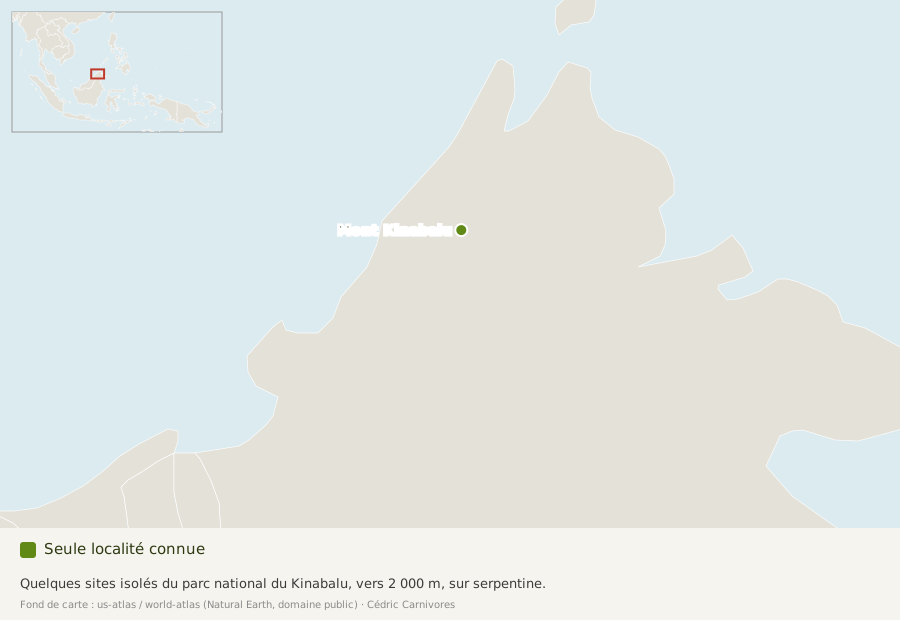
Limited to Mount Kinabalu, in a few isolated sites in Kinabalu National Park. For example, it has been found between 1,930 and 1,950 m on Pig Hill.
Habitat
- Stunted, open vegetation on serpentine soils, at about 2,000 m;
- often among its parents, especially N. burbidgeae.
Did you know?
- It is a hybrid born in the wild, where its two parents flower together.
Sources
- Wikipedia (English), Nepenthes × alisaputrana: parents, Adam & Wilcock 1992, etymology, “leopard” name (Phillipps & Lamb), range, habitat, altitude, description.