Pinguicula acuminata Benth.
Species sheet, updated on 30/10/2026.
At a glance
| Scientific name | Pinguicula acuminata George Bentham, Plantae Hartwegianae, 1839 |
| Family | Lentibulariaceae (section Heterophyllum) |
| Distribution | Around El Chico National Park (Hidalgo, Mexico) |
| Habitat | Shady banks in misty oak and fir forests, at about 2,400 to 2,800 m |
Photos in the wild
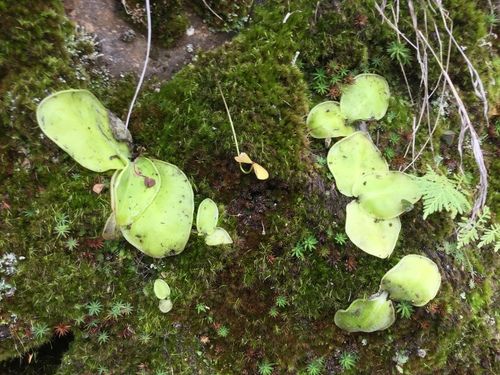
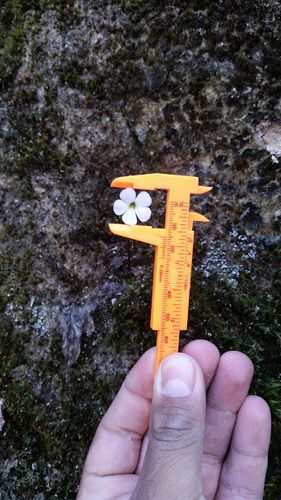
Etymology
- Pinguicula: see the genus sheet.
- acuminata: from the Latin, “ending in a point” (probably for its leaves, not confirmed).
History: 150 years of absence
- 1839: Bentham described it from a winter rosette; the herbarium specimen was later lost.
- 1989: Hans Luhrs found it again, about 150 years later, by digging up leaves buried a few centimetres below the soil. Eight sites have been known since, including the type locality.
Description (how to recognise it)
- Winter rosette: small, succulent, with hairy leaves, sometimes just below the soil surface.
- Carnivorous summer leaves, with a long petiole and a broad, heart-shaped to oval blade.
- Flowers 1.7 to 2.2 cm, whitish, pale bluish pink or lilac, with a sharply bent tube, from March to May.
Distribution
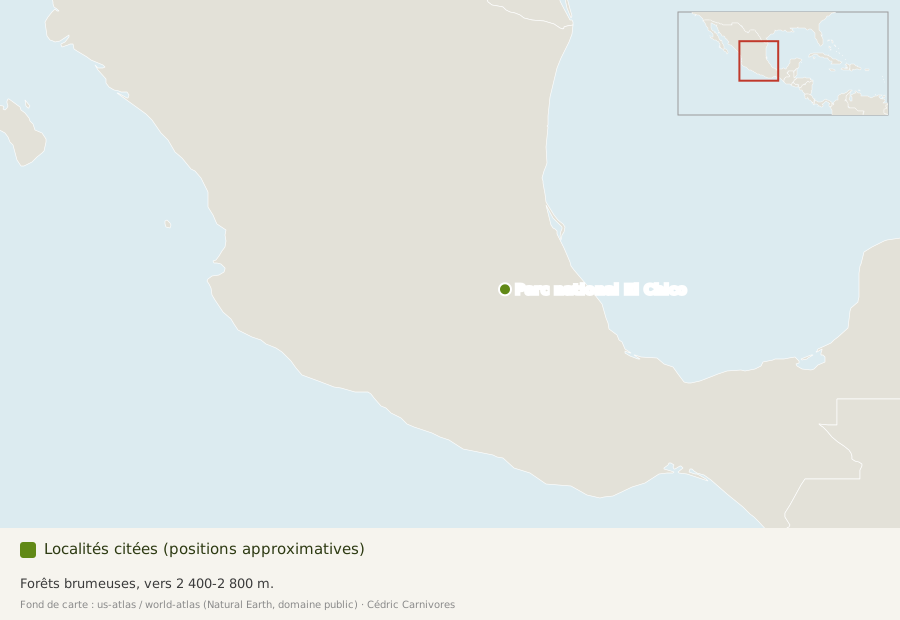
Hidalgo (Mexico), around El Chico National Park, at about 2,400-2,800 m.
Habitat
Shady banks in misty forests, in loamy soil between rocks, with mosses, ferns and succulent plants, under oaks and firs; often with P. moranensis.
Sources
- pinguicula.org, P. acuminata: Bentham 1839, lost specimen, 1989 rediscovery, description, range, altitude, habitat, flowering.