Pinguicula alpina L.
Species sheet, updated on 29/10/2026.
At a glance
| Scientific name | Pinguicula alpina Linnaeus, Species Plantarum, 1753 |
| Common names | Alpine butterwort; in French grassette des Alpes |
| Family | Lentibulariaceae (type species of section Micranthus) |
| Distribution | High latitudes and high mountains of Europe and Asia, from Iceland to the Himalayas |
| Habitat | Seeps, bogs and rocky alpine grassland, on alkaline to neutral soil; from sea level to 4,100 m |
| Status | Considered secure; protected in Germany, and in parts of Switzerland and Austria |
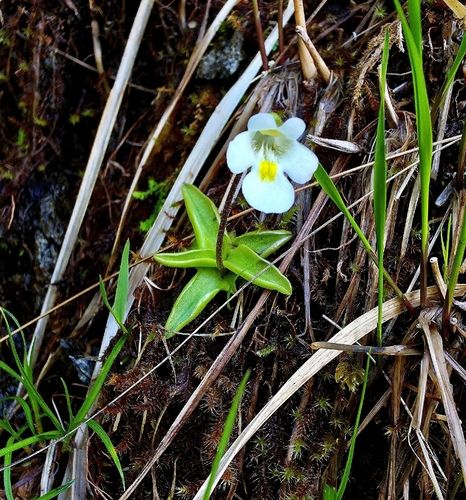
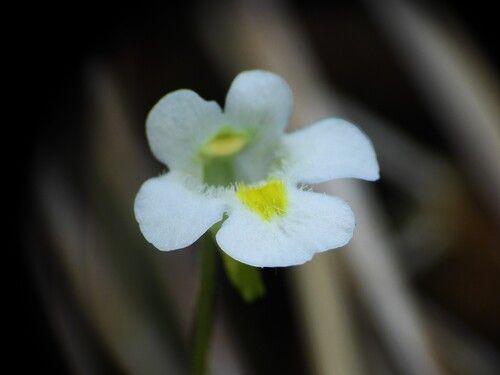
Photos in the wild
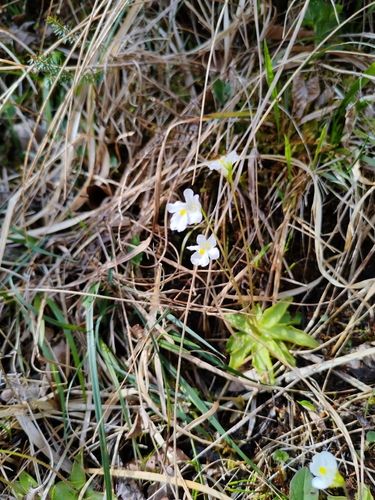
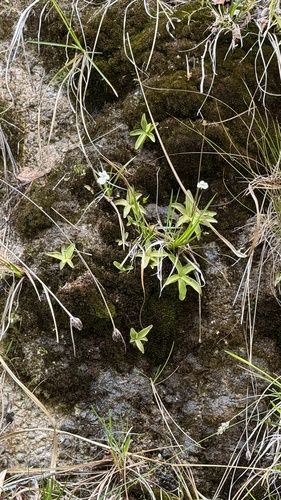
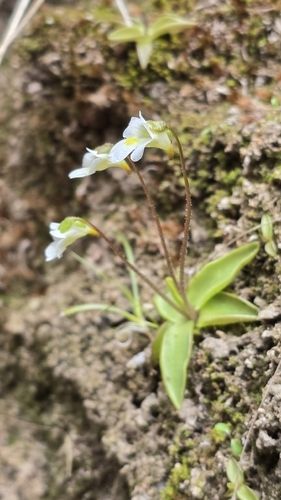
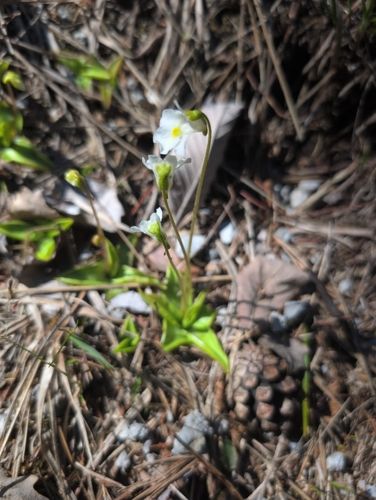
Etymology
- Pinguicula: see the genus sheet.
- alpina: “of the Alps”.
History
1583: Clusius distinguishes this white-flowered butterwort from the blue-flowered common butterwort. Linnaeus describes it in 1753.
Description (how to recognise it)
- A rosette of 5 to 8 light green to reddish leaves, up to 6 cm, whose edges roll over the prey; 5 to 15 cm tall in flower.
- A white flower, usually marked with one yellow spot (sometimes three) on the lower lip. It only flowers after several years.
- Fleshy roots, yellowish-white: it is the only temperate butterwort that keeps its roots in winter.
- In winter, a hibernaculum sitting on the ground. Healthy plants also form small bulbils in the leaf axils.
Distribution
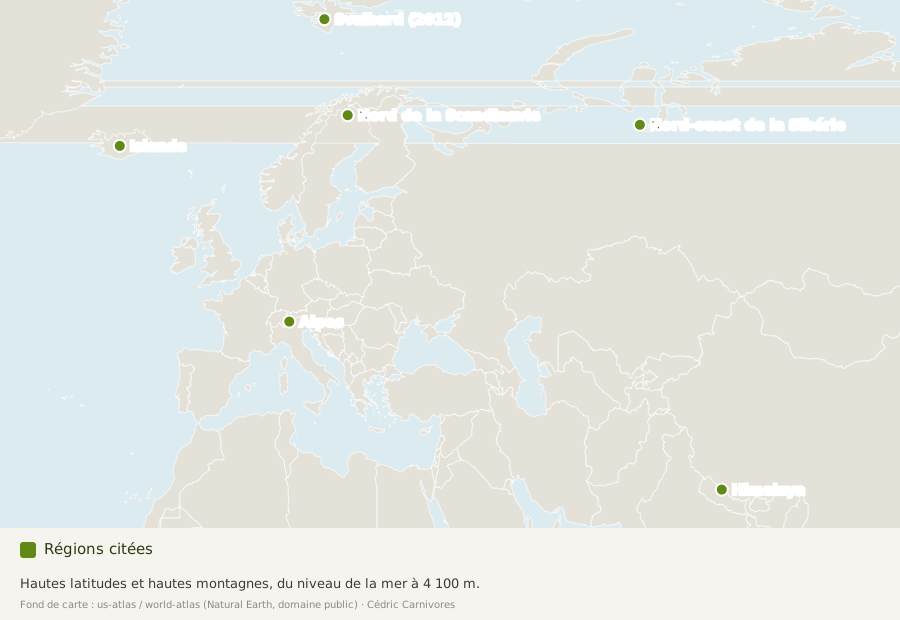
High latitudes and high mountains of Europe and Asia, from Iceland to the Himalayas; mainly in the Alps and northern Scandinavia. In 2012, more than 1,000 plants were found on Svalbard: its northernmost known population.
Altitude: from sea level (north-western Siberia) up to about 4,100 m.
Habitat
Open, sunny places: seeps, bogs, rocky alpine grassland, on alkaline to neutral soil. It tolerates drought better than the other temperate butterworts. It often grows with firm sedge (Carex firma) and mountain avens (Dryas octopetala) at altitude, and with bog-rushes (Schoenus) and P. vulgaris lower down.
Ecology
Its flowers, whose stigmas mature before the pollen, are pollinated by flies.
Natural hybrids
With P. vulgaris: P. × hybrida.
Threats and protection
Widespread and considered secure overall. It has disappeared from northern Scotland and is no longer native to the British Isles. It is protected in Germany and in parts of Switzerland and Austria.
Uses
European folk medicine used it against various ailments; its effects are attributed to cinnamic acid.
Sources
- Wikipedia (English), Pinguicula alpina: Linnaeus 1753, Clusius 1583, description, roots, hibernaculum, bulbils, range, Svalbard 2012, altitude, habitat, companion plants, pollination, hybrid, status, disappearance in Scotland, uses.