Pinguicula balcanica Casper
Species sheet, updated on 29/10/2026.
At a glance
| Scientific name | Pinguicula balcanica Siegfried Jost Casper, 1962 |
| Common name | In French “Grassette des Balkans” |
| Family | Lentibulariaceae (section Pinguicula) |
| Distribution | Albania, Bulgaria, Greece, North Macedonia, Serbia, northern Montenegro |
| Habitat | Marshes, bogs and stream banks on siliceous soil; around 1,700-2,000 m in Bulgaria |
Photos in the wild
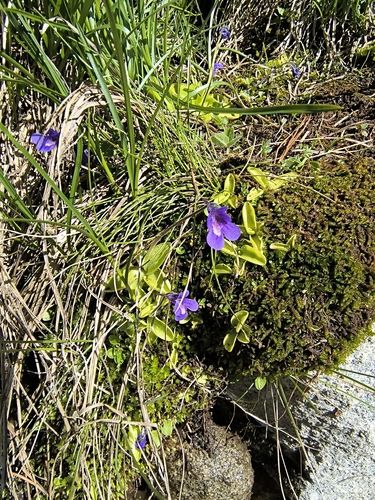
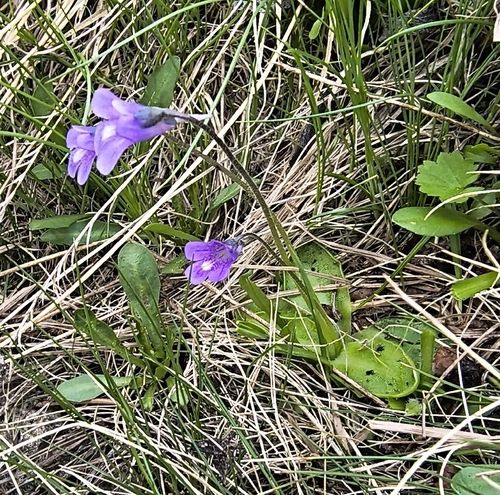
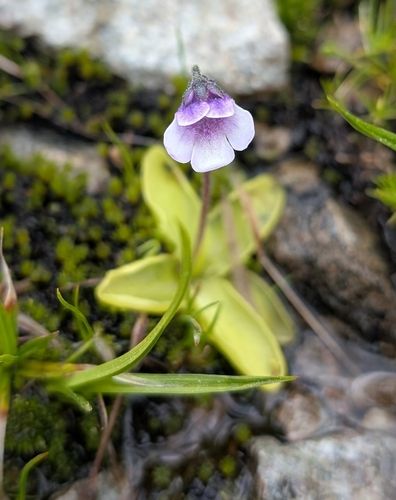
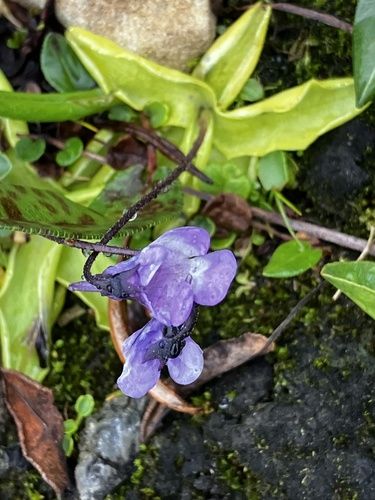
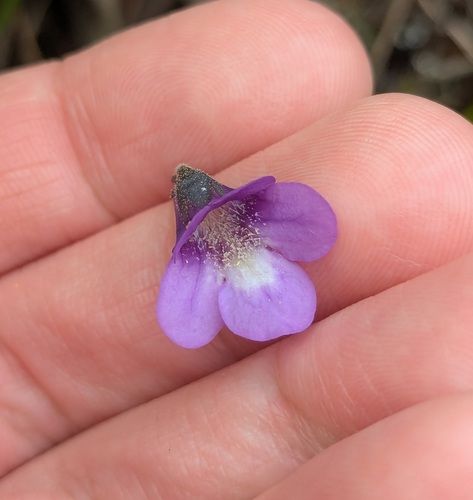
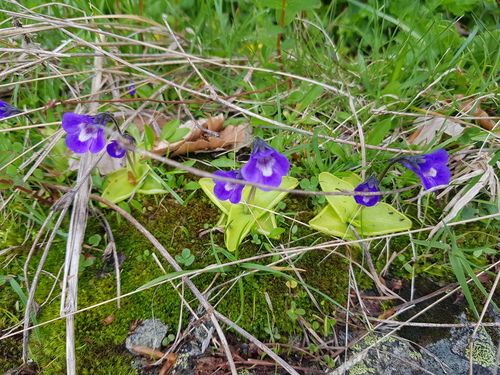
Etymology
- Pinguicula: see the genus sheet.
- balcanica: “of the Balkans”.
History of the description
Casper described it in 1962. Before that, Balkan botanists took it for P. vulgaris or P. leptoceras.
Description (how to recognise it)
- A rosette of 4 to 9 leaves, 2 to 5 cm long.
- Blue flowers with white markings on the lower lip, 16 to 27 mm, with a spur of 5 to 7 mm; 1 to 5 scapes in spring and early summer.
- Hibernaculum in winter.
Varieties and subspecies
- var. tenuilaciniata (genus list);
- subsp. pontica.
Distribution
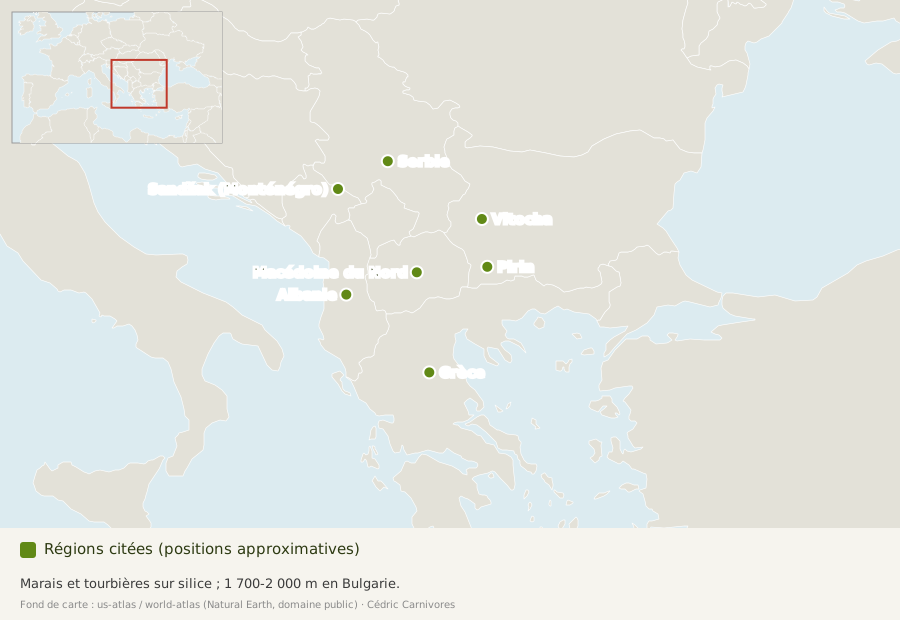
Endemic to the Balkans: Albania, Bulgaria, Greece, North Macedonia, Serbia and northern Montenegro (Sandžak). In Bulgaria, at around 1,700 to 2,000 m on Vitosha and Pirin.
Habitat
Wet, nutrient-poor places: marshes, bogs, stream banks, on siliceous soils.
Did you know?
- In Bulgaria, it forms a kind of gemmae that probably help it multiply: a trait never reported before in this species or its relatives.
Sources
- Wikipedia (English), Pinguicula balcanica: Casper 1962, description, range, altitude, habitat, gemmae, confusions, flowering, subsp. pontica.
- Genus list: var. tenuilaciniata.