Pinguicula caerulea Walter
Species sheet, 31/10/2026, completed with the Atlas of Florida Plants.
At a glance
| Scientific name | Pinguicula caerulea Thomas Walter, Flora Caroliniana: 63, 1788 |
| Common names | Blue butterwort, blueflower butterwort, violet butterwort; in French grassette bleue |
| Family | Lentibulariaceae (section Isoloba) |
| Distribution | South-eastern United States: Florida, Georgia, North Carolina and South Carolina |
| Habitat | Wet sandy pinelands and seeps, always on wet ground |
| Status | “Threatened” on the State of Florida list |
Photos in the wild
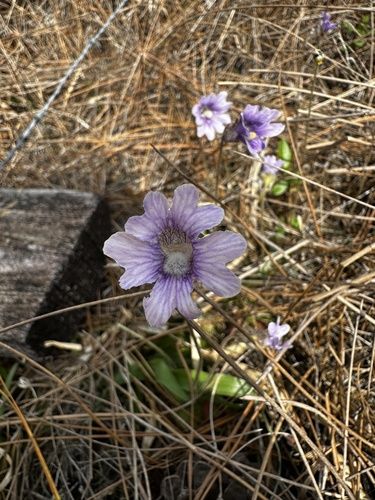
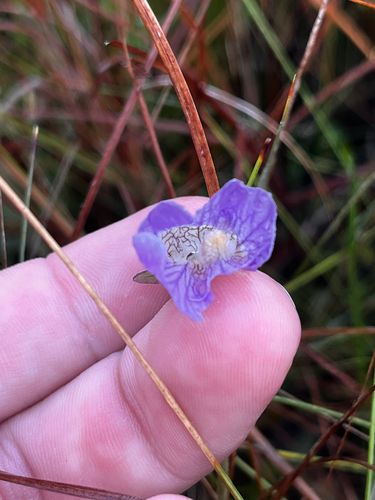
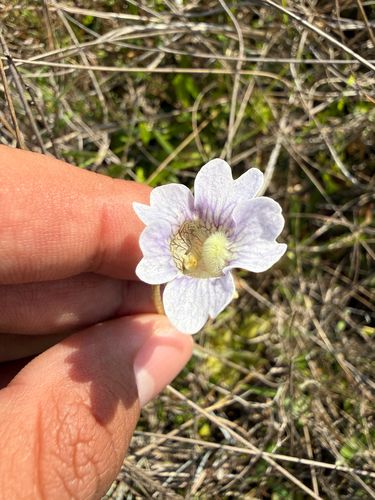
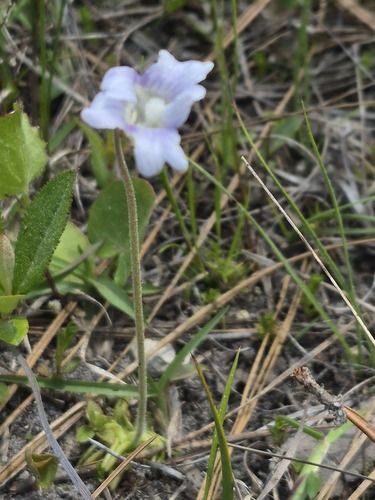
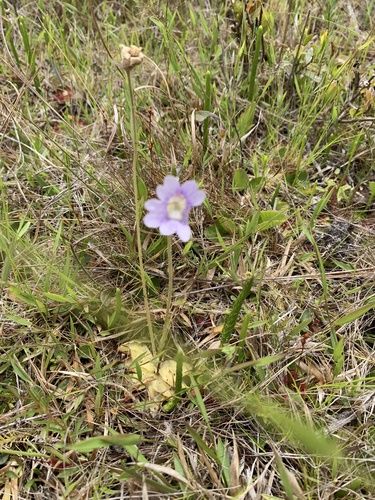
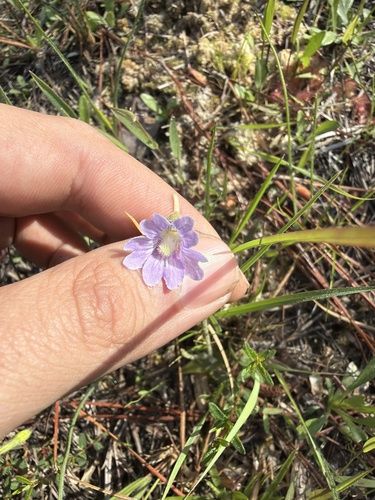
Etymology
- Pinguicula: see the genus sheet.
- caerulea: from the Latin caeruleus, “sky blue or sea blue”, for the colour of its flowers. On herbarium labels, botanists often record “pale mauve” or “pale violet” flowers.
History of the name
- 1788: the botanist Thomas Walter describes it in his Flora Caroliniana, the flora of the Carolinas, from plants from South Carolina.
- Walter's original specimen has not been found. In 1948, the botanists Fernald and Schubert designated a reference specimen in its place (a “neotype”), collected in South Carolina by John Fraser, the collector who worked with Walter, and kept at the Natural History Museum in London. Daniel Ward clarified this choice in 2007.
- Some old specimens also bear the name Pinguicula elatior Michaux, given to the same plant by another botanist.
Distribution
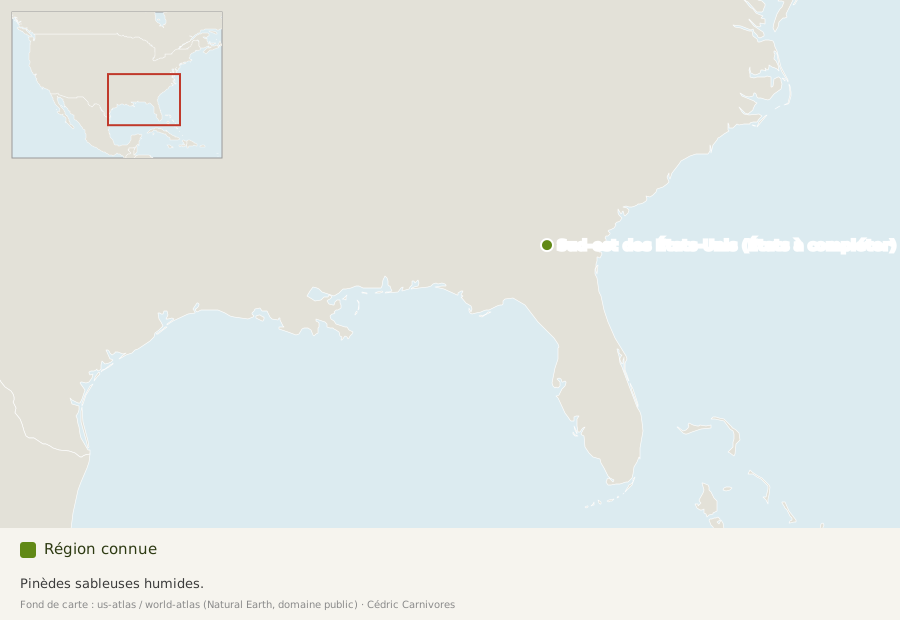
Endemic to the south-eastern United States. According to Kew's world checklist of plants (WCVP), it is native to the following regions: Florida, Georgia, North Carolina and South Carolina.
In Florida, the herbarium holds collections from 28 counties, from the north of the state (Nassau, Duval, Baker, Hamilton, Madison, Jefferson, Wakulla, Franklin, Taylor) to the centre (Alachua, Lake, Orange, Osceola, Polk, Hillsborough, Pinellas, Pasco) and down to the south of the peninsula (Palm Beach, Martin, Collier).
Habitat
The labels of 61 Florida herbarium specimens, collected between 1918 and 2015, describe habitats that are always wet. The Atlas also classes it among the “obligate wetland” plants: it only lives on wet ground.
- Wet pinelands (flatwoods) of longleaf pine (Pinus palustris) or slash pine (Pinus elliottii), with the saw palmetto Serenoa repens, the holly Ilex glabra and Aristida grasses;
- seeps and trickling slopes, small herbaceous bogs at the foot of slopes;
- wet prairies and marsh edges;
- edges of bald cypress swamps (Taxodium) and lakes;
- often also man-made habitats: wet ditches, mown roadsides, cleared strips under power lines, pine plantations.
Fire: several collections come from recently burned pinelands. These regular fires maintain the open habitats it needs.
Its neighbours: the labels mention sundews (Drosera), Calopogon orchids, Polygala, lobelias and Zephyranthes.
Flowering
Based on specimens collected in flower, it flowers in Florida from February to May, mainly in March and April (43 of the 56 collections in flower).
Threats and protection
- It is on the State of Florida list of threatened plants.
- A specimen collected on former ranch land notes that it is one of the “few surviving species” of a wet pineland turned into pasture. Drainage and the loss of wet pinelands are making it lose ground.
Sources
- Atlas of Florida Plants (University of South Florida), Pinguicula caerulea and its herbarium specimens: original publication (1788), neotype (Fernald and Schubert 1948, Ward 2007), names, status in Florida, wetland plant, counties, habitats, flowering, P. elatior on old labels.
- Wikipedia (English), Pinguicula caerulea: author, names, etymology, habitat, range.
- Kew, World Checklist of Vascular Plants (via GBIF): natural distribution.