Pinguicula calyptrata Kunth
Species sheet, updated on 30/10/2026.
At a glance
| Scientific name | Pinguicula calyptrata Carl Sigismund Kunth |
| Family | Lentibulariaceae (section Ampullipalatum) |
| Distribution | From central Colombia to Ecuador and northern Peru |
| Habitat | Páramos (high-altitude grasslands of the Andes) |
| Status | Classification still debated |
Photos in the wild
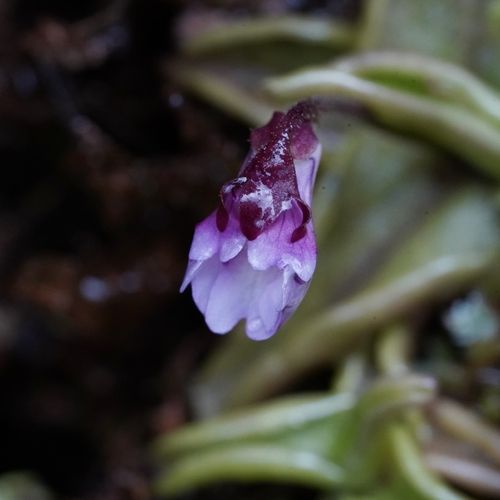
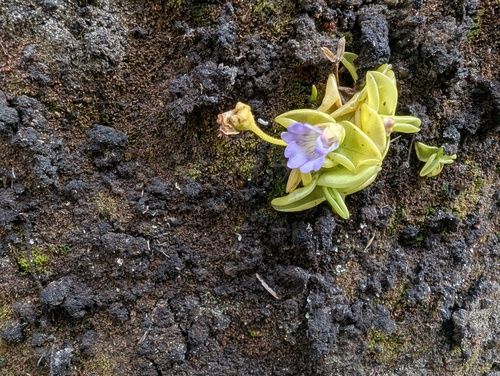
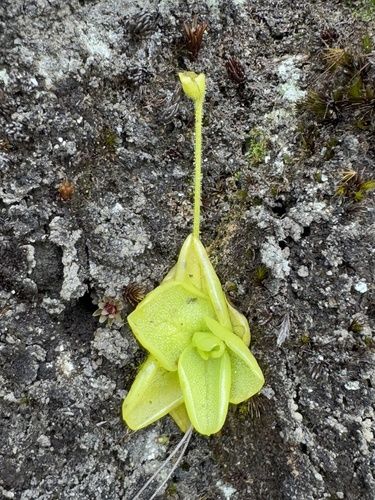
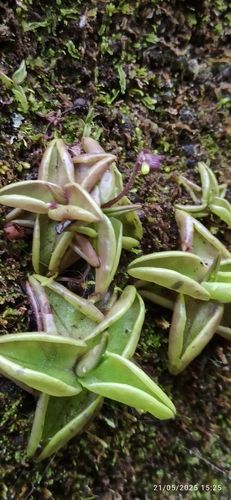
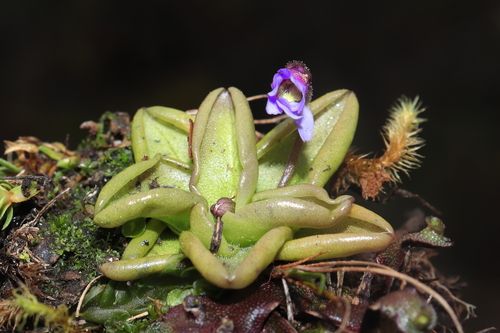
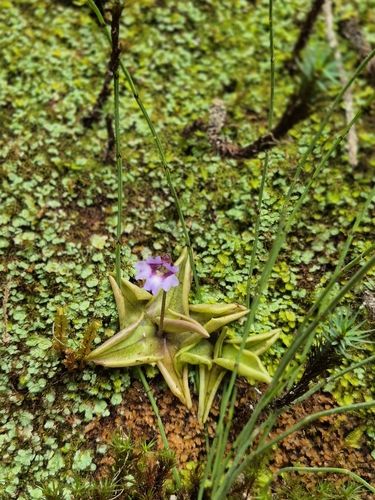
Etymology
- Pinguicula: see the genus sheet.
- calyptrata: from the Greek kalyptra, “cap, veil” (reason for the name, not confirmed).
Description (how to recognise it)
- According to Pérez et al. (2023): a very variable species throughout its range, with populations differing clearly in the size, shape and colour of all parts of the plant; its broad concept long hid several species, and the authors split off two new ones in Ecuador.
- Like most Andean butterworts, it belongs to section Ampullipalatum; P. rosmarieae (Peru) was separated from it in 2008.
Distribution
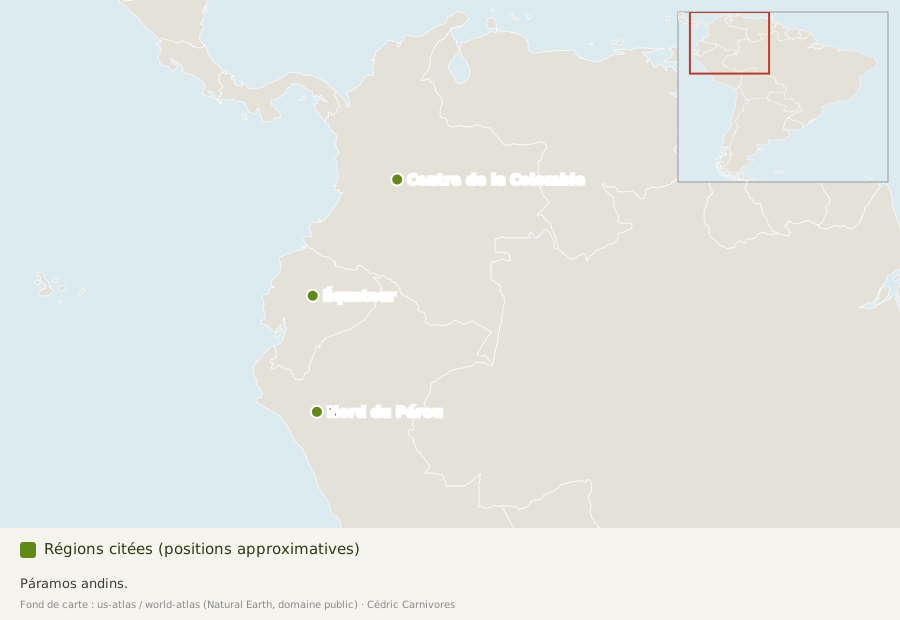
From central Colombia, through Ecuador, to northern Peru (Cajamarca, Amazonas, San Martín). The plants from Bolivia given this name are in fact P. involuta.
Habitat
The páramos, wet high-altitude grasslands of the Andes. The type specimen was collected by Humboldt and Bonpland in the Páramo de Saraguro (Loja province, Ecuador), during their 1799-1804 expedition, and published by Kunth in 1818; until 2023, it was the only butterwort known from Ecuador (Pérez et al., 2023).
A species in need of review
A 2023 revision still considers it poorly delimited. In southern Peru, it is replaced by P. involuta and P. jarmilae; in northern Peru, partly by P. rosmariae.
Sources
- Pérez et al. 2023, PhytoKeys 222: range, Bolivian errors, debated classification.
- PhytoKeys, “Jalca-Puna” butterworts and P. rosmariae: replacing species.
- Pérez et al., PhytoKeys 222, 2023 (archive.org): variability, history, split species.