Pinguicula caussensis (Casper) Roccia
Species sheet, updated on 29/10/2026.
At a glance
| Scientific name | Pinguicula caussensis (Casper) Roccia, 2016 |
| First name | P. longifolia subsp. caussensis Casper, 1962 |
| Common name | Causses butterwort; in French grassette des Causses |
| Family | Lentibulariaceae |
| Distribution | Grands Causses (France), notably the Gorges du Tarn |
| Habitat | Vegetation of the Pinguiculion longifoliae alliance (seeping limestone cliffs, not confirmed) |
Photos in the wild
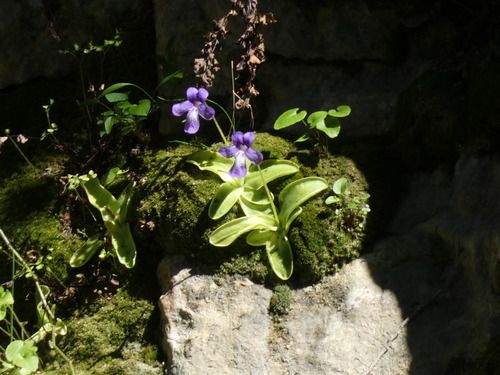
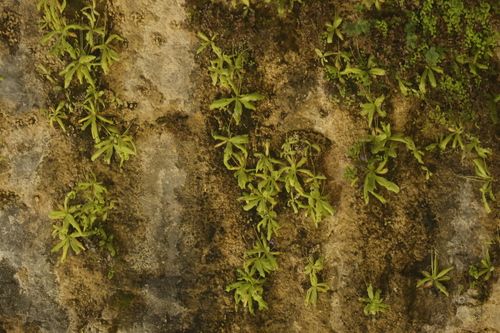
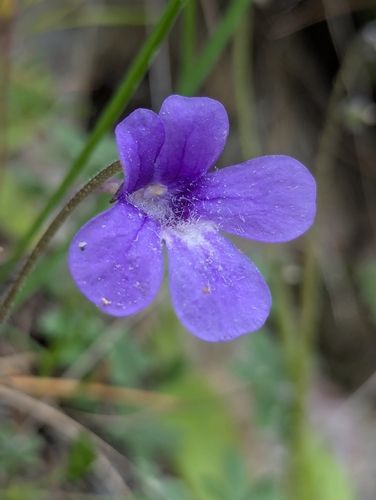
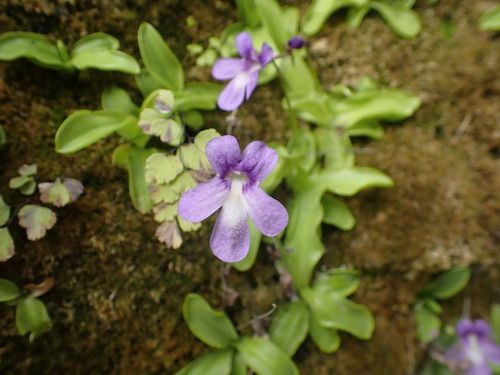
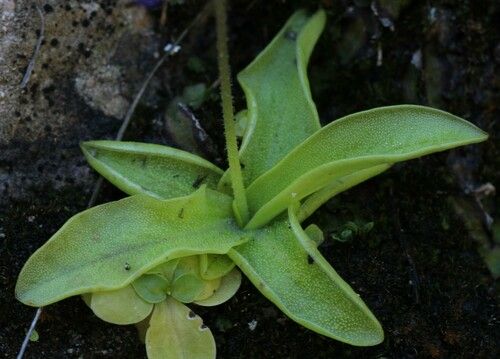
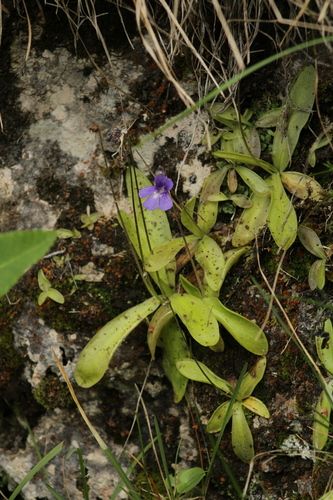
Etymology
- Pinguicula: see the genus sheet.
- caussensis: “of the Causses”, the high limestone plateaus of the southern Massif Central.
History of the description
- 1962: Casper describes it as a subspecies of P. longifolia.
- 2016: Roccia raises it to species rank.
Description (how to recognise it)
According to Jurg Steiger, it has clearly smaller flowers than the plants of the Pyrenees (P. longifolia) and no glands under the leaves.
Distribution
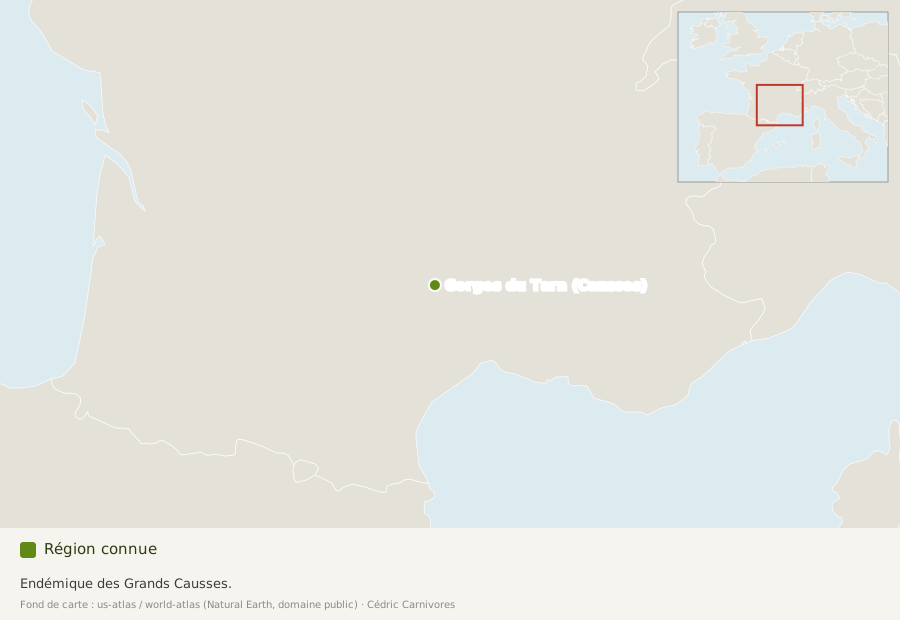
Endemic to a small area of France, the Causses, notably around the Gorges du Tarn, the limestone canyon about 400 m deep that separates the causses of Sauveterre and Méjean.
Habitat
The INPN links it to the plant alliance Pinguiculion longifoliae, the vegetation of seeping limestone cliffs where P. longifolia also lives (precise habitat, not confirmed).
Sources
- INPN, Pinguicula caussensis: name, authors, year, plant alliance.
- pinguicula.org, P. longifolia caussensis: Casper 1962, range, Gorges du Tarn, Steiger's comparison.