Pinguicula crenatiloba A. DC.
Species sheet, updated on 30/10/2026.
At a glance
| Scientific name | Pinguicula crenatiloba Alphonse de Candolle |
| Family | Lentibulariaceae (section Temnoceras) |
| Distribution | Tejupilco (State of Mexico) and Oaxaca (trail from Totontepec to Ocotepec), Mexico |
| Habitat | Mossy ground in humid forest |
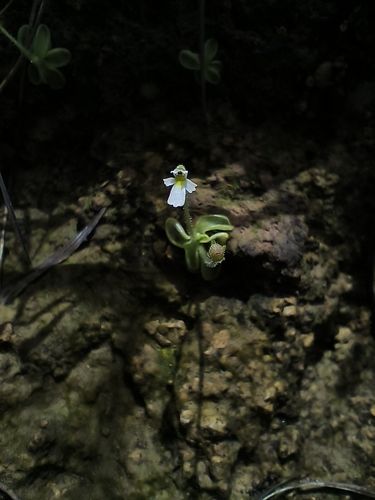
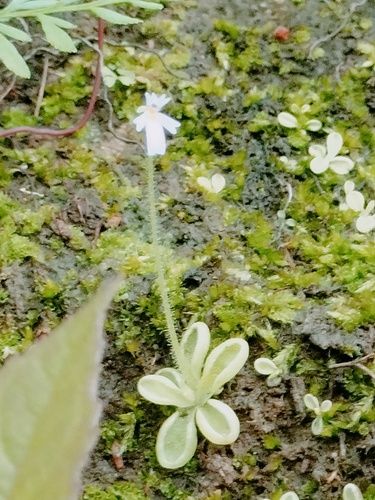
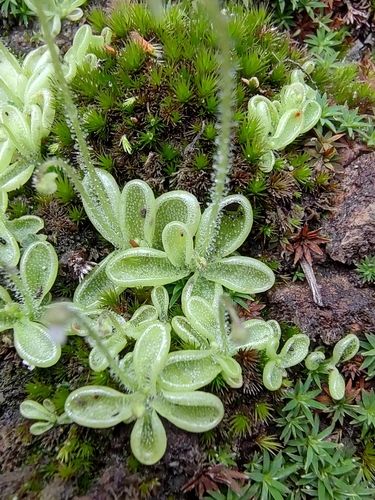
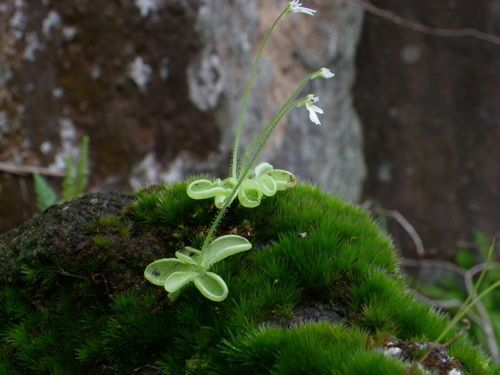
Photos in the wild
Etymology
- Pinguicula: see the genus sheet.
- crenatiloba: from the Latin, “with crenate lobes” (probable meaning, not confirmed).
History
The name goes back to the drawings of the Mociño and Sessé expedition to New Spain (late 18th century) (historical note, not confirmed). The collector Ed Greenwood collected and photographed it in Oaxaca; P. greenwoodii is dedicated to him.
Description (how to recognise it)
- A tiny plant with leaves 5 to 6 mm long.
- Thin, hairy scapes.
- Whitish flowers 1.5 to 2 mm (depending on the source), half-tubular, with a spur curved forwards.
- It self-pollinates. Close to P. villosa and P. pumila.
Distribution
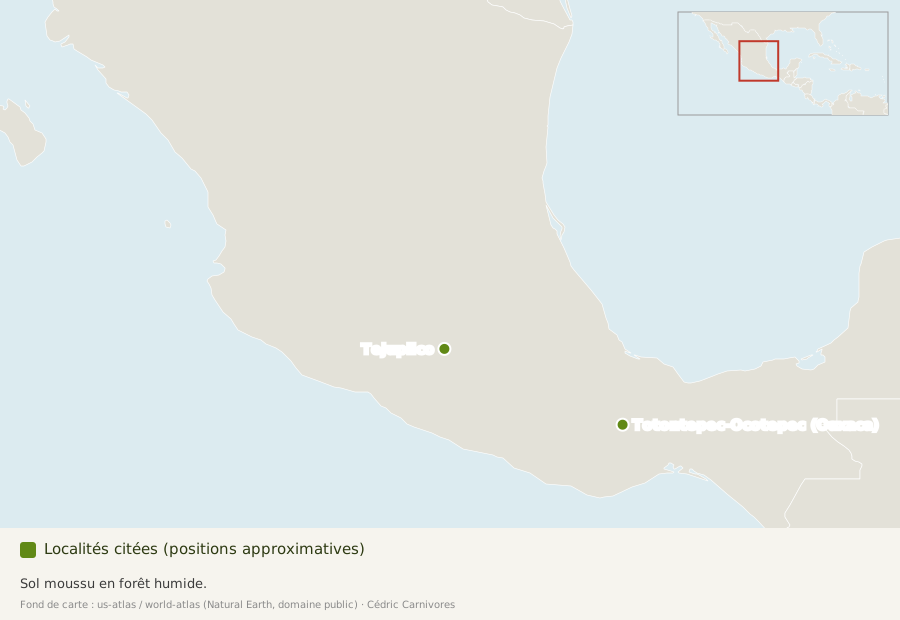
Mexico: Tejupilco (State of Mexico) and Oaxaca, on the trail from Totontepec (Mixe) to Ocotepec. According to Kew's world checklist of plants (WCVP), it is native to the following regions: Costa Rica, El Salvador, Guatemala, Honduras, central Mexico, north-western Mexico, south-eastern Mexico, south-western Mexico and Panama.
Habitat
Moss-covered ground in humid forest.
Sources
- pinguicula.org, P. crenatiloba: name, Greenwood, description, self-pollination, relationships, range, habitat.
- Kew, World Checklist of Vascular Plants (via GBIF): natural distribution.