Pinguicula cyclosecta Casper
Species sheet, updated on 30/10/2026.
At a glance
| Scientific name | Pinguicula cyclosecta Siegfried Jost Casper, Feddes Repertorium 67, 1963 |
| Family | Lentibulariaceae (section Orcheosanthus) |
| Distribution | Nuevo León (Mexico) |
| Habitat | North-facing vertical limestone cliff, above a fir and oak forest |
Photos in the wild
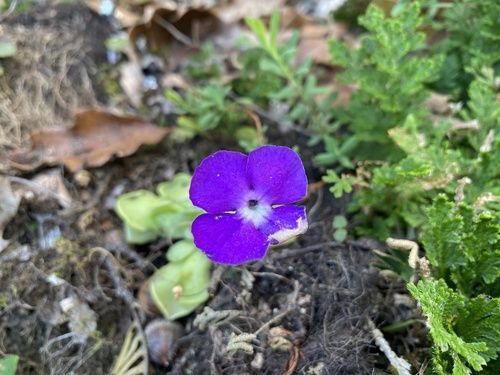
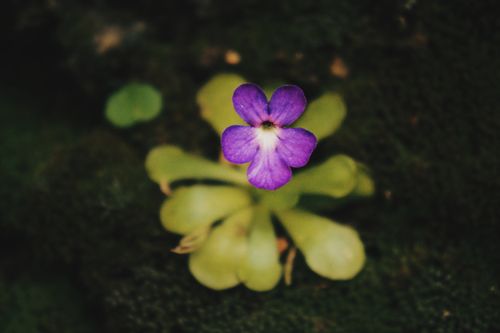
Etymology
- Pinguicula: see the genus sheet.
- cyclosecta: from the Greek kyklos, “circle”, and the Latin sectus, “cut” (meaning, not confirmed).
History
- 1948: collected by Meyer and Rogers in Nuevo León.
- 1963: description by Casper.
- 1995: Johan Van Marm finds it again in the wild.
Description (how to recognise it)
- Winter rosette: small, thick, non-carnivorous leaves, fringed with long hairs at the base.
- Summer rosette: bluish-green carnivorous leaves, 1.5 to 3 cm long.
- Dark violet flowers 2.5 to 3.5 cm across, with a long spur (1.5 to 2.2 cm).
Distribution
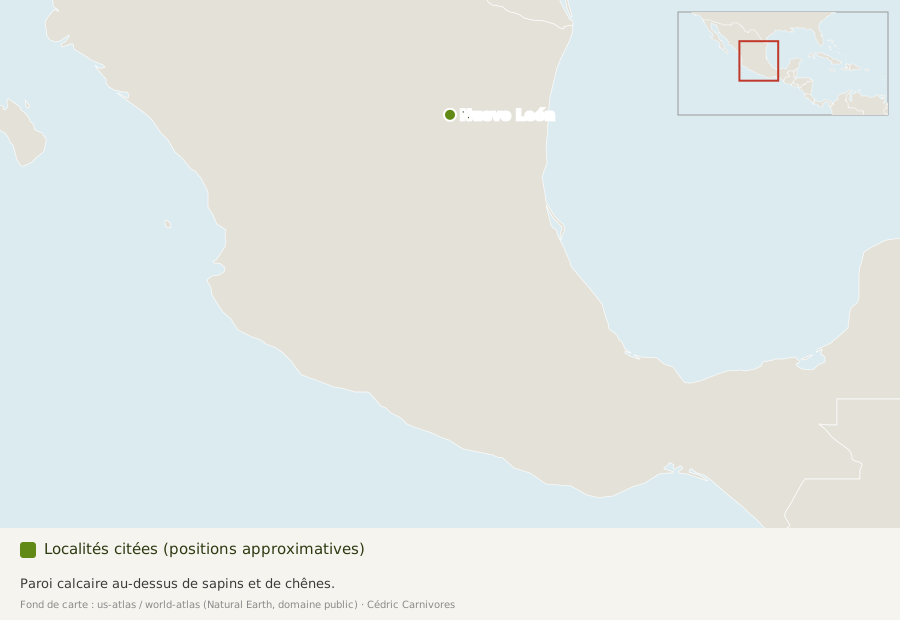
Nuevo León (Mexico).
Habitat
A north-facing vertical limestone cliff, above a forest of firs (Abies) and oaks, in cool, windy air. The plants grow on mats of moss with spikemosses and ferns, or in shaded crevices under agaves and Hechtia.
Did you know?
- The pale-flowered clone '1715', collected by the Yucca Do nursery, is very widespread among growers.
Sources
- pinguicula.org, P. cyclosecta: Casper 1963, Meyer & Rogers 1948, Van Marm 1995, description, range, habitat, clone '1715'.