Pinguicula ehlersiae Speta & F. Fuchs
Species sheet, updated on 30/10/2026.
At a glance
| Scientific name | Pinguicula ehlersiae Franz Speta & Franz Fuchs, Stapfia 10, 1982 |
| Synonym | P. hintoniorum B. L. Turner (1994) |
| Family | Lentibulariaceae (section Crassifolia) |
| Distribution | San Luis Potosí and Hidalgo (Mexico); Nuevo León (under the name hintoniorum) |
| Habitat | Gypsum, from 1,200 to 1,650 m |
Etymology
- Pinguicula: see the genus sheet.
- ehlersiae: probably in honour of Renate Ehlers, who collected the type plant (not confirmed).
History
1979: the type plant is collected near Guadalcázar (San Luis Potosí), then grown at the Linz botanical garden (Austria), where it was described in 1982.
Description (how to recognise it)
- Small, succulent, non-carnivorous winter rosette; carnivorous leaves in spring and summer.
- var. albiflora: white flowers; the plants from Ascensión have a hooked spur.
Distribution
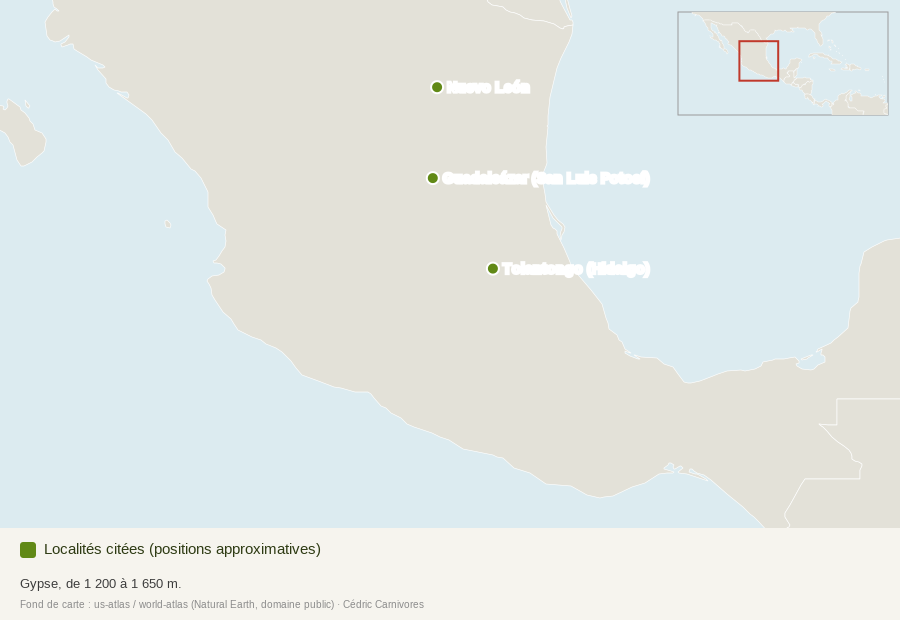
Mexico:
- San Luis Potosí: Guadalcázar, Santa Gertrudis, Santa Catarina, Núñez, El Huizache, perhaps Ascensión;
- Hidalgo: north of Ixmiquilpan, San Andrés de Debortha, Tolantongo;
- Nuevo León (type of P. hintoniorum).
From 1,200 to 1,650 m.
Habitat
On gypsum.
Did you know?
- It is a Mexican butterwort very widespread in cultivation, with several geographical forms: 'Tolantongo', 'Ixmiquilpan', 'Santa Catarina'.
Sources
- pinguicula.org, P. ehlersiae: Speta & Fuchs 1982, history, synonym, description, forms, range, altitude, gypsum.