Pinguicula elongata Benj.
Species sheet, updated on 30/10/2026.
At a glance
| Scientific name | Pinguicula elongata Ludwig Benjamin |
| Family | Lentibulariaceae (section Ampullipalatum) |
| Distribution | Colombia and north-western Venezuela |
| Habitat | High mountains: from 2,760 to 4,390 m in the Sierra Nevada de Santa Marta |
Photos in the wild
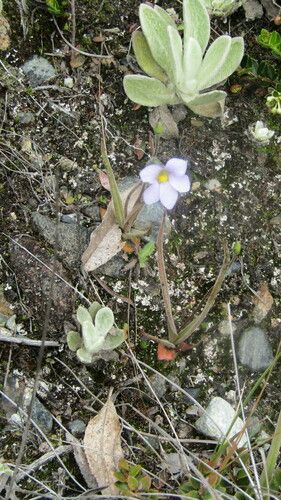
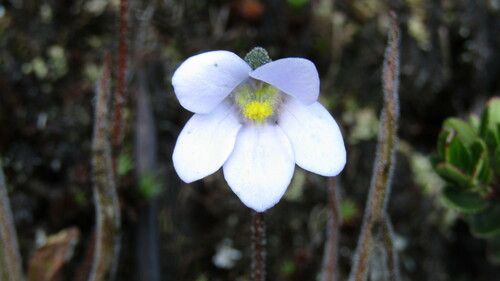
Etymology
- Pinguicula: see the genus sheet.
- elongata: from the Latin, “elongated” (reason for the name, not confirmed).
Description (how to recognise it)
- According to Hernández-Melán (2009), in Colombia: a perennial rosette butterwort, with elongated leaves up to 15 cm, which twist as they rise and become covered with insects; white to pale violet flowers, with a spur pointing backwards.
- Dormant during the short dry season (December-February), it keeps only short leaves; with the first rains in March, it grows long pale green to lemon yellow leaves again, which turn dark rust red in June. Two flowering periods: from June to August, then from November to January.
Distribution
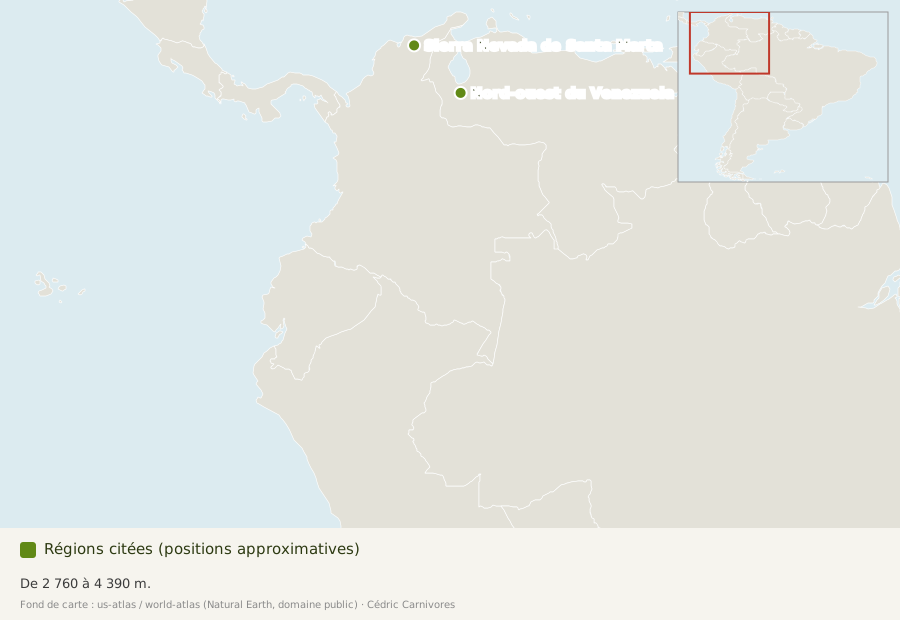
From Colombia to north-western Venezuela; in the Sierra Nevada de Santa Marta, from 2,760 to 4,390 m: one of the butterworts that grow highest.
Habitat
Hernández-Melán (2009) found it near Bogotá, at around 3,000 m, in a small hollow at the top of a mountain, over barely 60 m², in the páramo with Espeletia (frailejones), lupins and Diplostephium, on sandstone of the Guadalupe formation; the soil there is not waterlogged, and the plants benefit from night-time fogs. Nights close to 0 °C all year round.
Sources
- Kew, Plants of the World Online (based on a search): range, altitude.
- Hernández-Melán, Carnivorous Plant Newsletter 38, 2009 (archive.org): field observations in Colombia.