Pinguicula gracilis Zamudio
Species sheet, updated on 30/10/2026.
At a glance
| Scientific name | Pinguicula gracilis Sergio Zamudio, Acta Botanica Mexicana 3, 1988 |
| Family | Lentibulariaceae (section Temnoceras) |
| Distribution | North slope of the Cerro de las Mitras, Monterrey (Nuevo León, Mexico) |
| Habitat | Limestone rock faces under oaks, mosses under cypresses, from 1,000 to 1,800 m |
Photos in the wild
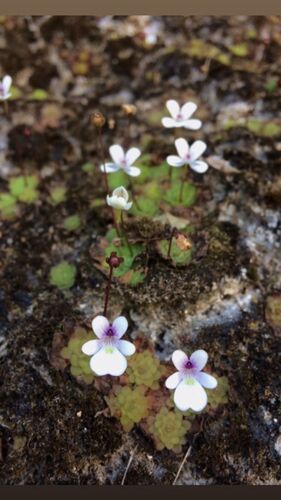
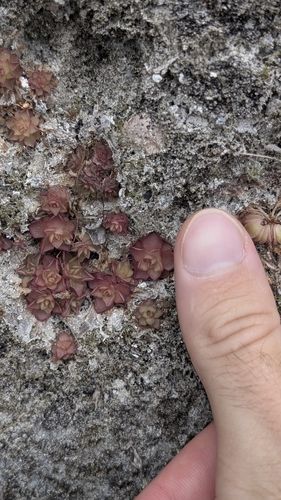
Etymology
- Pinguicula: see the genus sheet.
- gracilis: from the Latin, “slender, thin”.
Description (how to recognise it)
- Winter leaves: 10 to 35 small, succulent, non-carnivorous leaves with ciliate edges.
- Summer leaves: 5 to 15 carnivorous leaves of 8 to 16 mm.
- Small white flowers of 1 to 1.9 cm, with a purple throat and veins, and a yellow-green spot on the lower lip.
Distribution
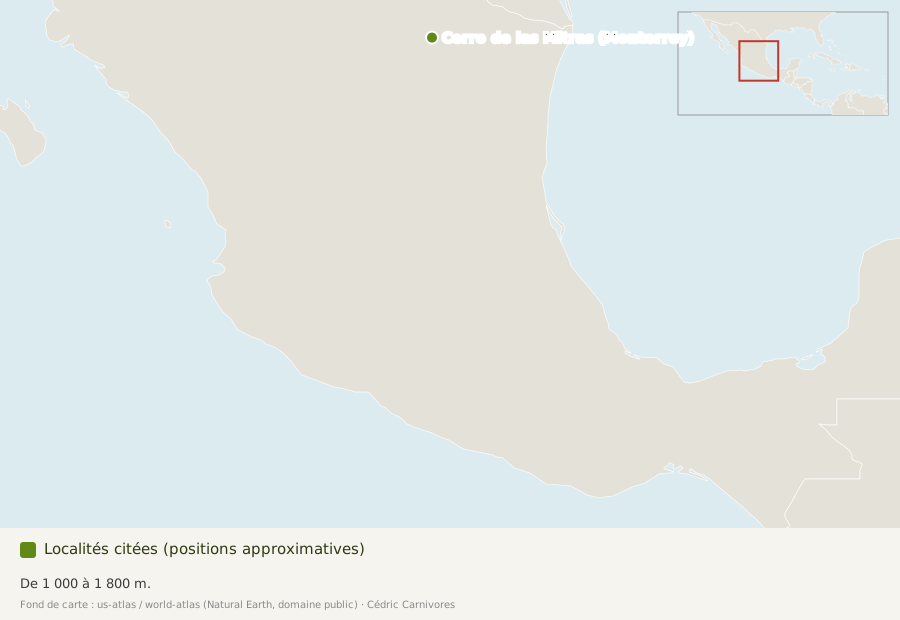
Nuevo León, municipality of Monterrey: north slope of the Cerro de las Mitras (Sierra de las Mitras).
Habitat
- at about 1,000 m: oak groves;
- at about 1,450 m (type locality): limestone rock faces under oaks;
- at about 1,800 m: mosses under Lindley's cypress (Cupressus lindleyi).
Did you know?
- It was first mistaken for P. pumila from the United States, before Zamudio recognised it as a new species.
Sources
- pinguicula.org, P. gracilis: Zamudio 1988, description, range, altitudes, habitats, confusion with P. pumila.