Pinguicula heterophylla Benth.
Species sheet, updated on 30/10/2026.
At a glance
| Scientific name | Pinguicula heterophylla George Bentham, Plantae Hartwegianae, 1839 |
| Family | Lentibulariaceae (section Heterophyllum) |
| Distribution | Oaxaca, Guerrero and Michoacán (Mexico) |
| Habitat | Oak, pine and mixed woods on red soils, in moss or on rock, from 1,500 to 3,000 m |
Photos in the wild
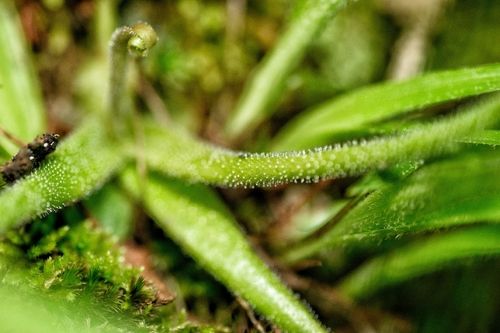
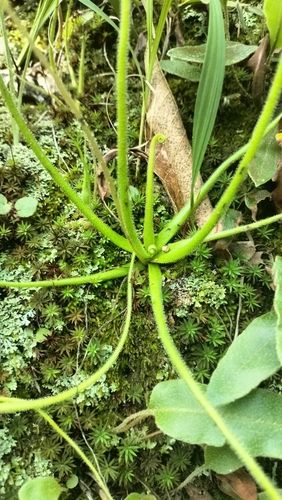
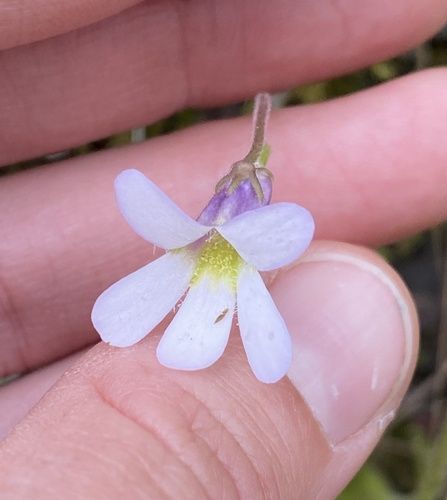
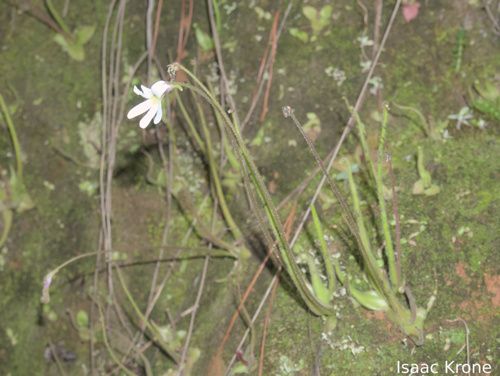
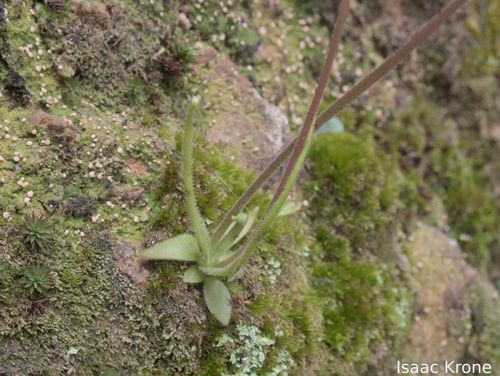
Etymology
- Pinguicula: see the genus sheet.
- heterophylla: from the Greek, “with different leaves”, for its two kinds of rosettes (probable meaning, not confirmed).
History of the description
Bentham describes it in 1839 from the collections of the collector Karl Theodor Hartweg (identity of Hartweg: historical reminder).
Description (how to recognise it)
- A winter bulb: a compact rosette like an onion, of many leaves 1 to 2.5 cm long, buried and protected by the dry leaves.
- Summer rosette: a few upright carnivorous leaves, 6 to 9 cm long (rarely 15), with strongly rolled-in edges.
- Flowers of 2 to 2.4 cm, violet, purple, whitish pink or white, with a yellow-green spot in the throat, on stems of 6 to 23 cm, in May-June.
Distribution
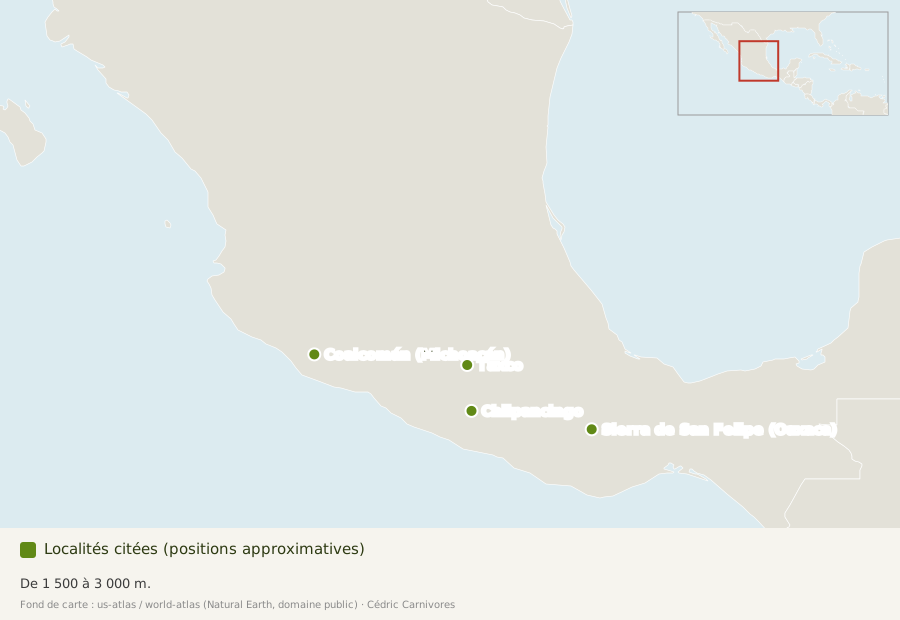
Mexico: Oaxaca (Sierra de San Felipe), Guerrero (near Chilpancingo, Taxco, El Huixteco National Park) and Michoacán (Coalcomán), from 1,500 to 3,000 m.
Habitat
Oak woods, pine woods and mixed woods, on coffee-red soils derived from andesite or metamorphic granite; in moss or directly on rock.
Ecology
The winter rosette forms around October and lasts until April; the summer leaves grow during the warm season.
Relationships
Close to P. medusina, which forms plantlets on its summer leaves, something P. heterophylla does not do.
Sources
- pinguicula.org, P. heterophylla: Bentham 1839, description, range, altitude, habitat, seasons, relationships.