Pinguicula hirtiflora Ten.
Species sheet, updated on 29/10/2026.
At a glance
| Scientific name | Pinguicula hirtiflora Michele Tenore |
| Common name | Hairy-flowered butterwort; in French “grassette à fleurs velues” |
| Family | Lentibulariaceae (section Cardiophyllum) |
| Distribution | Italy (Campania), Balkan Peninsula, south-eastern Turkey |
| Habitat | Shaded, seeping rocks, springs, stream banks, from sea level to 1,900 m |
| Status | Endangered |
Photos in the wild
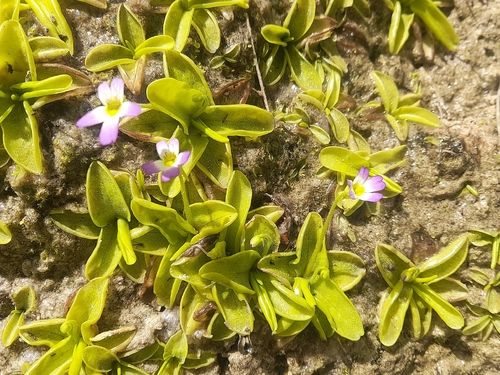
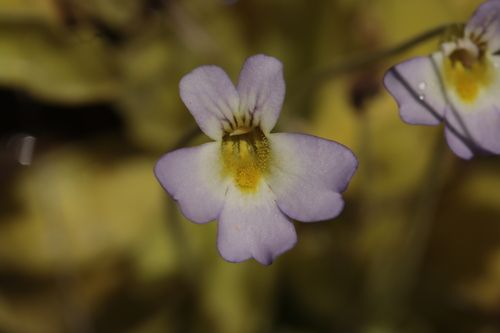
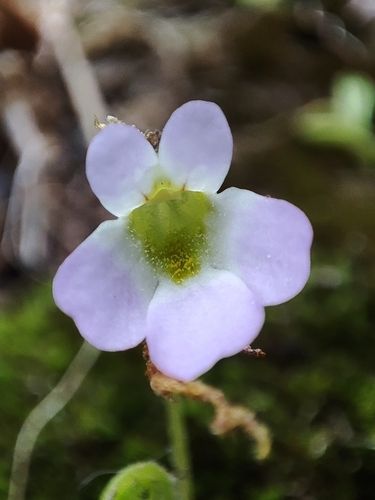
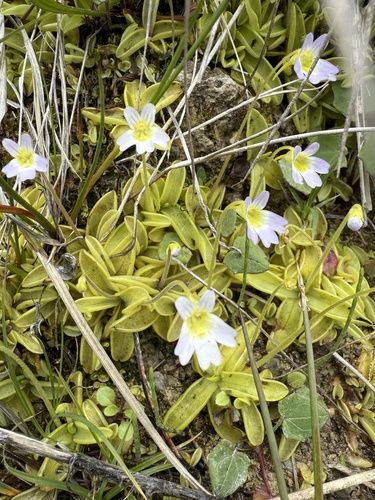
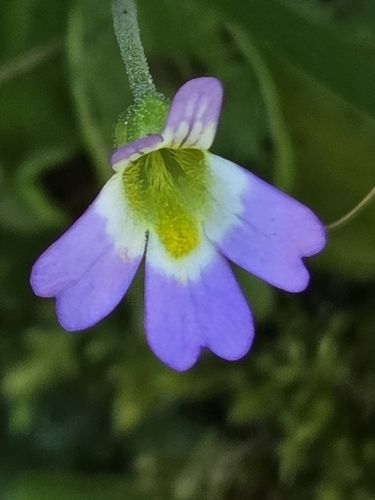

Etymology
- Pinguicula: see the genus sheet.
- hirtiflora: from the Latin hirtus, “bristly”, and flos, “flower”: “with hairy flowers”.
Description (how to recognise it)
- A winter rosette of about six leaves.
- 1 to 3 flowers on thin stems up to 15 cm; corolla of 16 to 25 mm, pale pink to pale blue, with a yellow throat and a spur up to 13 mm.
- Flowering: from April to October.
Distribution
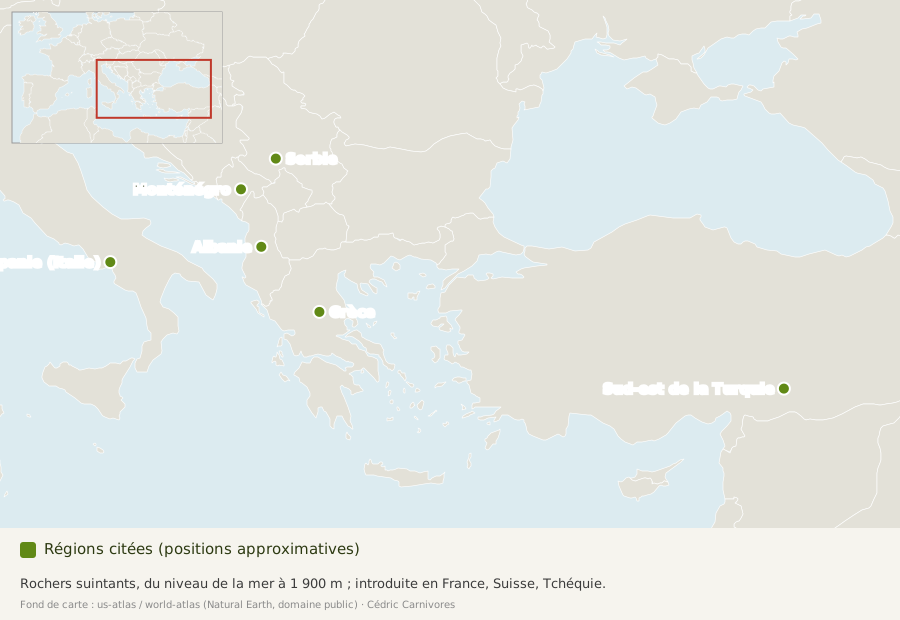
- Italy: only in Campania (Naples region);
- Balkans: Serbia, Montenegro, Albania, Greece;
- south-eastern Turkey.
Introduced populations in Switzerland, the Czech Republic and France.
Habitat
In colonies on steep, shaded, seeping rocks, around springs, along streams in wet meadows or bogs; on serpentine, limestone, dolomite, tufa and flysch, from sea level to 1,900 m.
Relationships
Close to P. crystallina from Cyprus: the Flora of Greece treats it as a subspecies of that plant.
Threats and protection
“Endangered”: drying-up of seeps, degradation of the rocks and road works.
Sources
- Wikipedia (English), Pinguicula hirtiflora: author, name, description, flowering, habitat, substrates, altitude, range, introductions, status, threats.
- Flora of Greece: subspecies rank.