Pinguicula lilacina Schltdl. & Cham.
Species sheet, updated on 30/10/2026.
At a glance
| Scientific name | Pinguicula lilacina Diederich von Schlechtendal & Adelbert von Chamisso, Linnaea 5, 1830 |
| Synonyms | P. obtusiloba A. DC., P. scopulorum Brandegee (1908) |
| Family | Lentibulariaceae (section Isoloba) |
| Distribution | Mesoamerica: Mexico (Oaxaca, Querétaro, San Luis Potosí, Veracruz…), Guatemala, perhaps Honduras |
| Habitat | Rocks and edges or slopes of oak, pine-oak or cloud forests, from 700 to 2,400 m |
| Status | Widespread |
Photos in the wild
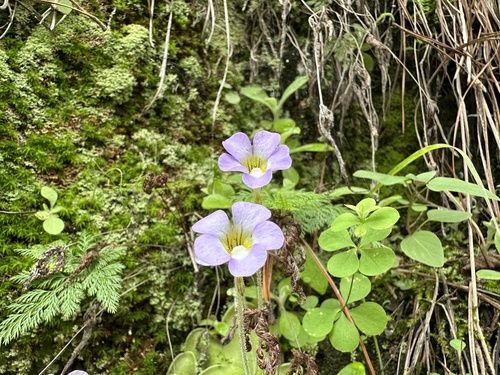
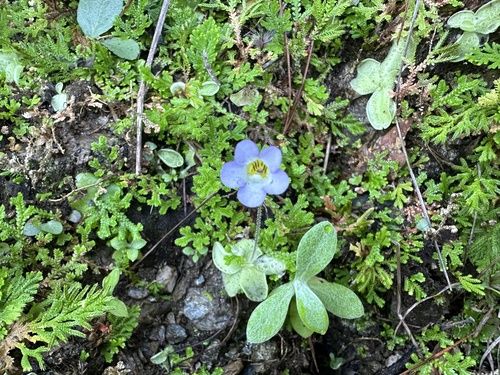
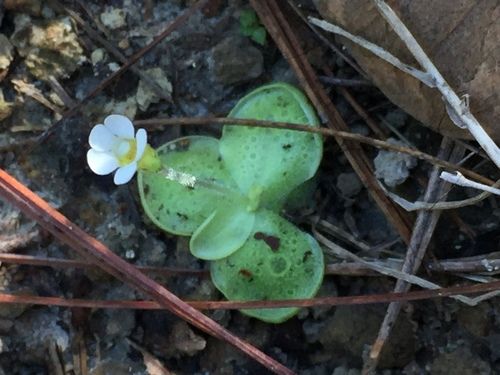
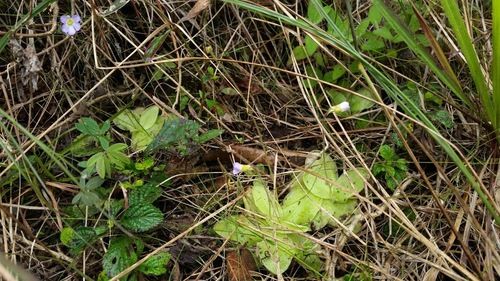
Etymology
- Pinguicula: see the genus sheet.
- lilacina: from the Latin, “lilac-coloured”, for its flowers (probable meaning, not confirmed).
Description (how to recognise it)
- A rosette of rounded leaves, 1.5 to 3.5 cm long (up to 4.5).
- Small flowers of 8 to 17 mm, lilac, pale blue or whitish with a yellow throat, on stems of 3.5 to 12 cm.
- Annual according to pinguicula.org: no winter rosette, it is said to spend the dry season as seeds.
Distribution
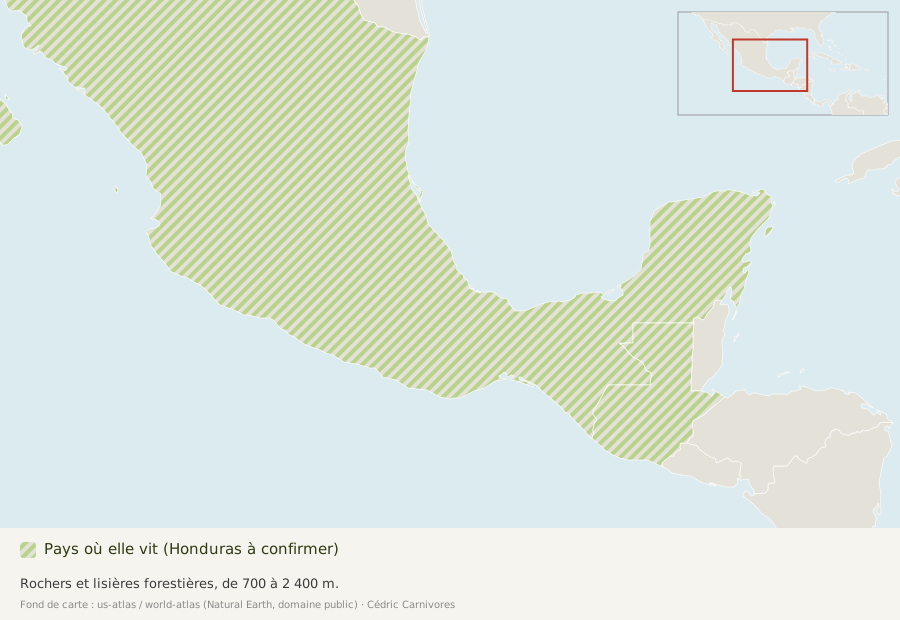
Mesoamerica: Mexico (Oaxaca, Querétaro, San Luis Potosí, Veracruz and other states), Guatemala, perhaps Honduras; from 700 to 2,400 m.
Habitat
On rocks and on the edges or slopes of oak, pine-oak or cloud forests, in a subhumid to humid climate.
Relationships
Often confused with P. takakii (smaller leaves, purple stems and calyces, on gypsum) and P. sharpii.
Sources
- pinguicula.org, P. lilacina: authors 1830, synonyms, description, range, altitude, habitat, life cycle, confusions.