Pinguicula longifolia Ramond ex DC.
Species sheet, updated on 29/10/2026.
At a glance
| Scientific name | Pinguicula longifolia Ramond ex Candolle, 1805 |
| Common names | Long-leaved butterwort; in French grassette à longues feuilles |
| Family | Lentibulariaceae |
| Distribution | Central Pyrenees, on both sides of the French–Spanish border |
| Habitat | Vertical or overhanging limestone walls, damp and shaded, from 700 to 1,900 m |
| Status | Threatened by habitat destruction and collecting |
Photos in the wild
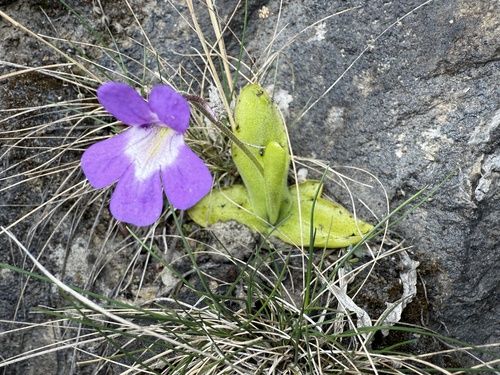
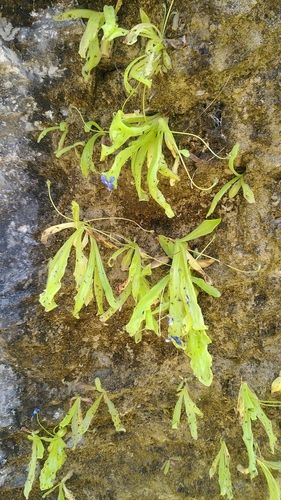
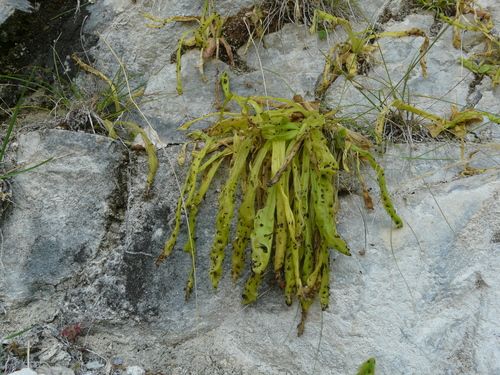
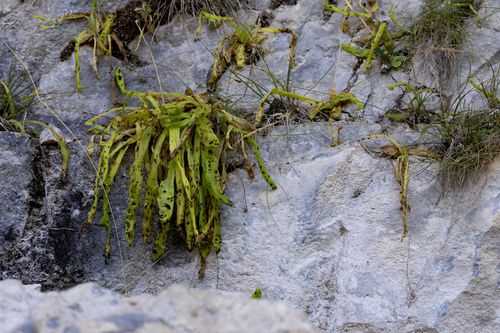
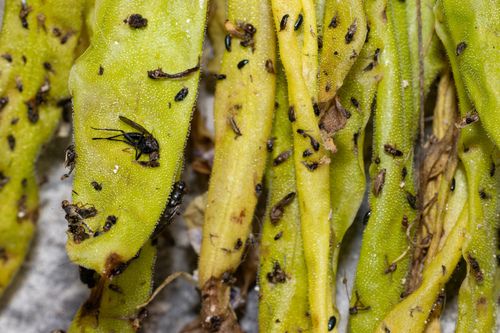
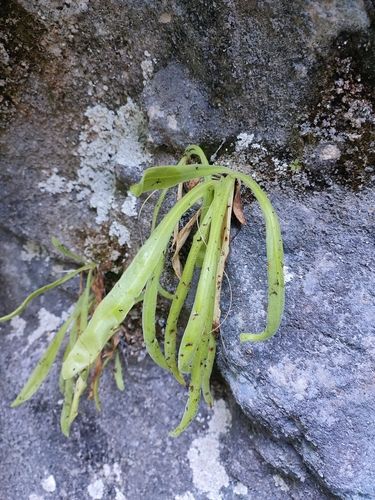
Etymology
- Pinguicula: see the genus sheet.
- longifolia: from the Latin, “with long leaves”.
History of the description
Described in 1805 by Candolle after Louis Ramond de Carbonnières, the great explorer of the Pyrenees (identity of Ramond: historical reminder).
Description (how to recognise it)
- Long leaves, up to about 14 cm, covered with glands on both sides.
- Flowers in early summer.
- Hibernaculum in the centre of the rosette in winter.
Distribution
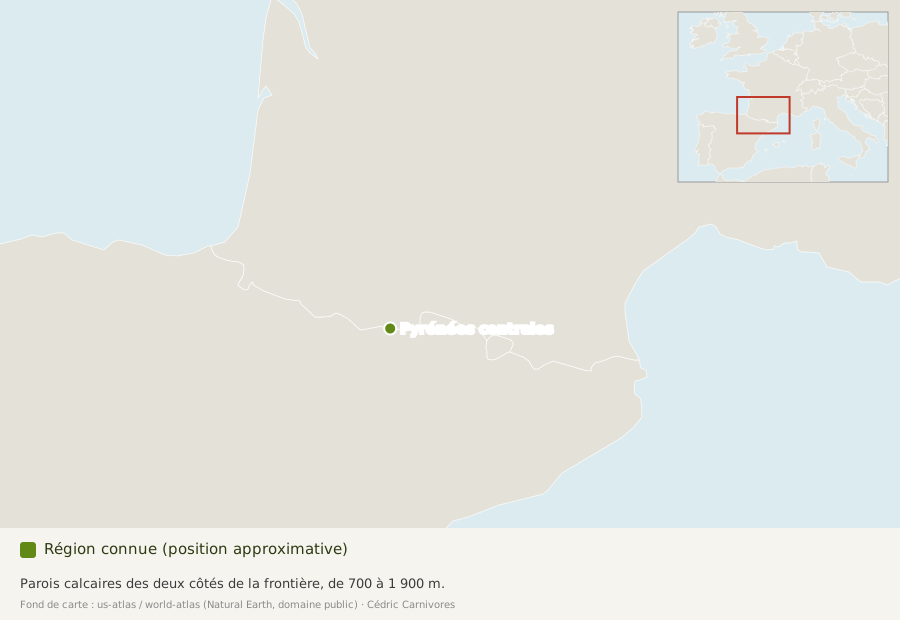
Endemic to the central Pyrenees, on both sides of the border between France and Spain, from 700 to 1,900 m.
Habitat
Damp, shaded places, on vertical or overhanging limestone walls.
Ecology
It gets its nitrogen mainly from flying insects, especially flies.
Subspecies and related species
Several plants once placed under P. longifolia are now treated separately: P. caussensis from the Causses (see its sheet), dertosensis and reichenbachiana.
Threats and protection
Habitat destruction and collecting by carnivorous-plant enthusiasts threaten it.
Sources
- Wikipedia (English), Pinguicula longifolia: Ramond ex DC. 1805, range, altitude, habitat, description, prey, threats.
- Genus list: subspecies.