Pinguicula lusitanica L.
Species sheet, updated on 29/10/2026.
At a glance
| Scientific name | Pinguicula lusitanica Linnaeus, 1753 |
| Common names | Pale butterwort; in French grassette du Portugal |
| Family | Lentibulariaceae |
| Distribution | Atlantic Europe, from western Scotland and Ireland to the Iberian Peninsula, and Morocco |
| Habitat | Acid peat bogs |
| Status | Least concern (IUCN, 2018) |
Photos in the wild
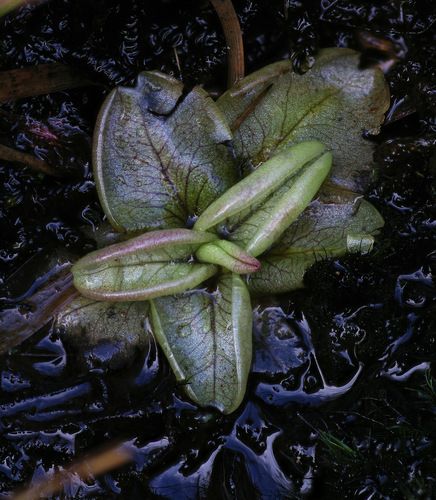
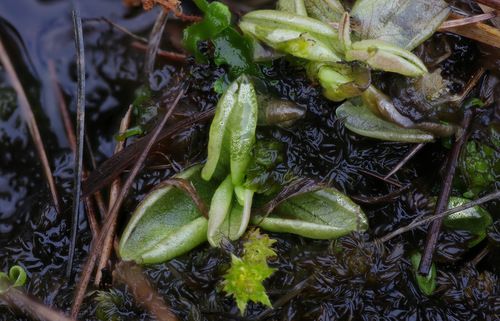
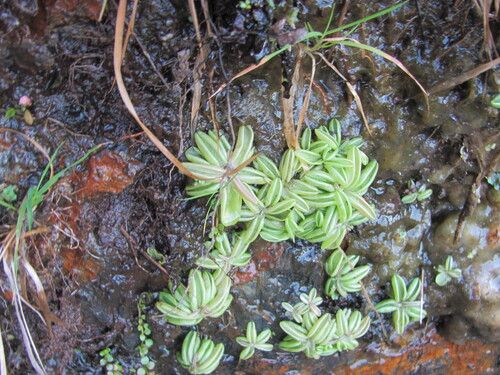
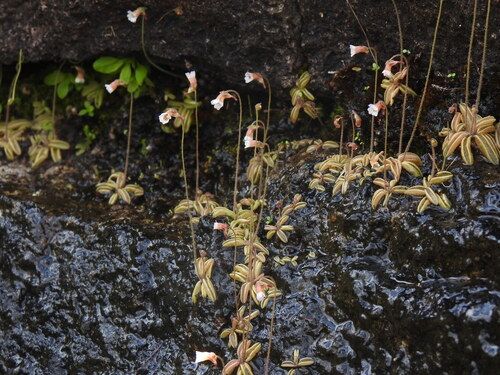
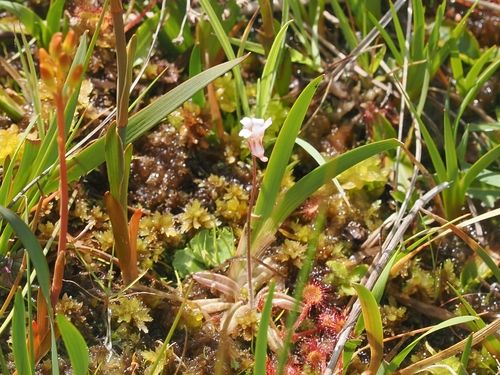
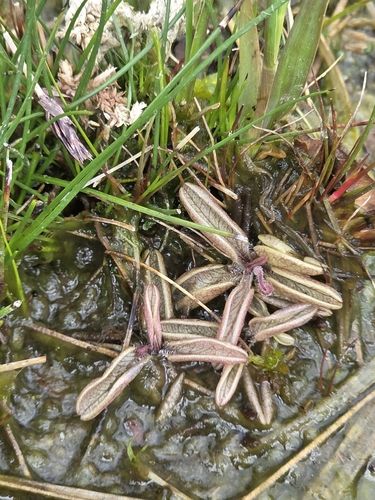
Etymology
- Pinguicula: see the genus sheet.
- lusitanica: “from Portugal”, the Lusitania of the Romans.
Description (how to recognise it)
- A small rosette 3 to 5 cm across.
- Small pale pink flowers with a yellow centre, funnel-shaped.
- It has 6 pairs of chromosomes (n = 6), an exception in the genus.
A very short life cycle
A perennial, it often behaves as an annual and can die after one season. It flowers a few months after germination, self-pollinates and produces so many seeds that it becomes a “weed” in collections.
Distribution
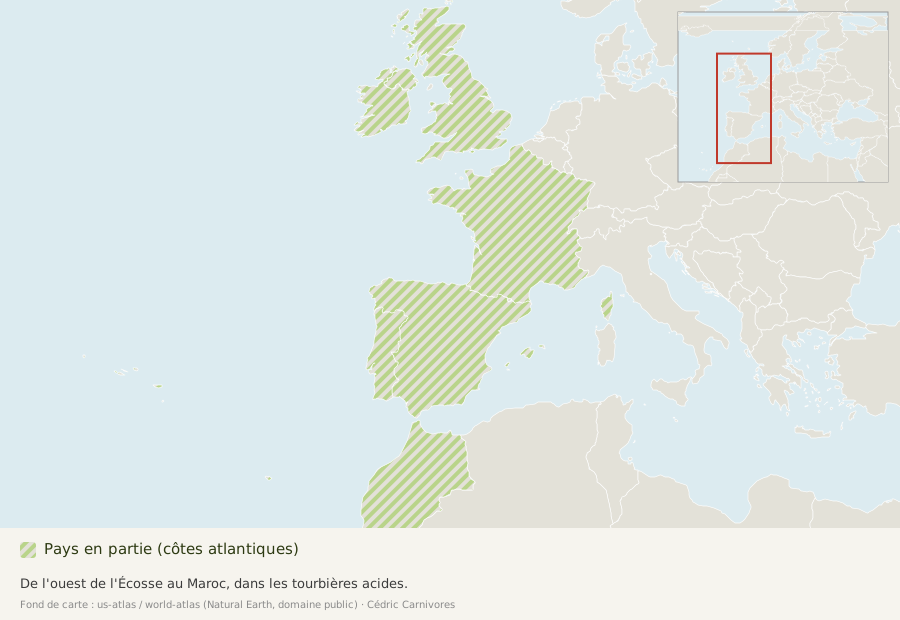
Atlantic coasts of western Europe: from western Scotland and Ireland, through the west of England and France, to the Iberian Peninsula; and Morocco.
Habitat
Acid peat bogs.
Ecology
It traps small insects: gnats, fruit flies, ants, small moths and mosquitoes.
Sources
- Wikipedia (English), Pinguicula lusitanica: Linnaeus 1753, name, description, life cycle, range, habitat, prey, status.
- Wikipedia (English), Pinguicula: chromosomes.