Pinguicula macroceras Pall. ex Link
Species sheet, updated on 30/10/2026.
At a glance
| Scientific name | Pinguicula macroceras Pallas ex Link, 1820 |
| Common names | Horned butterwort; in French grassette de Californie, grassette cornue |
| Family | Lentibulariaceae (section Pinguicula) |
| Distribution | Pacific coast of North America (California, Oregon, Washington, Canada); Russia and Japan |
| Habitat | Damp slopes and serpentine banks beside streams, seeping cliffs, below 1,800 m |
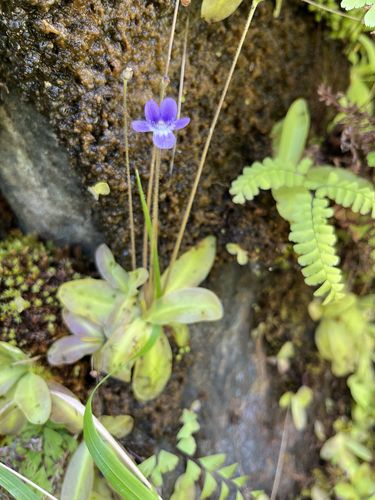
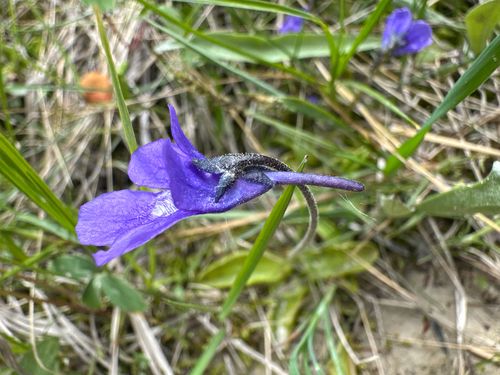
Photos in the wild
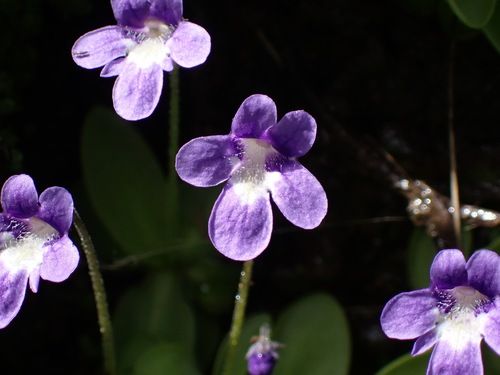
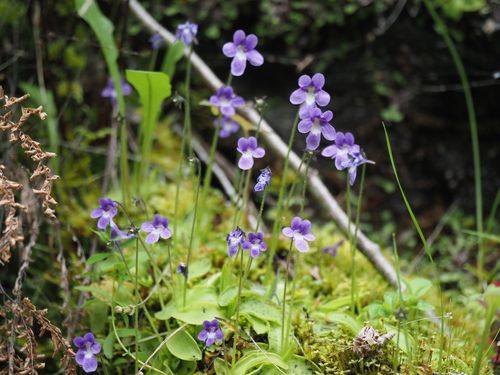
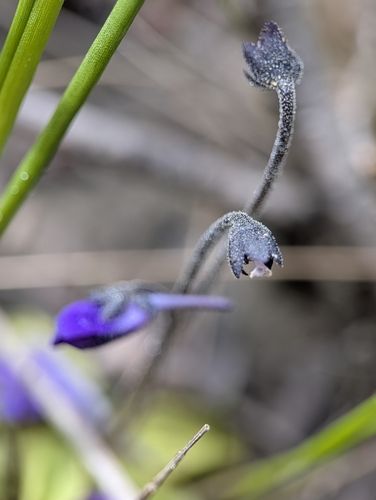
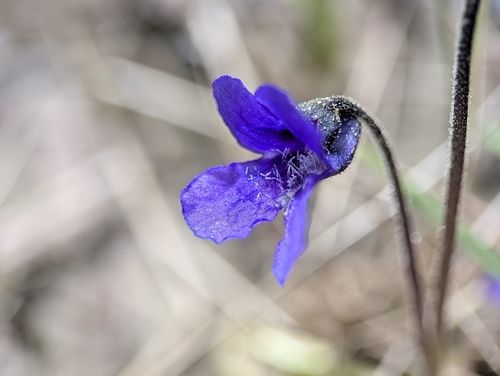
Etymology
- Pinguicula: see the genus sheet.
- macroceras: from the Greek, “with a large horn”, for its spur; hence the name “horned butterwort”.
Description (how to recognise it)
- A rosette of fleshy, sticky leaves; less than 20 cm tall in flower.
- 1 to 5 scapes, each bearing one blue-purple flower 13 to 21 mm long, with a well-marked spur.
Subspecies and varieties
var. macroceras and subsp. nortensis.
Distribution
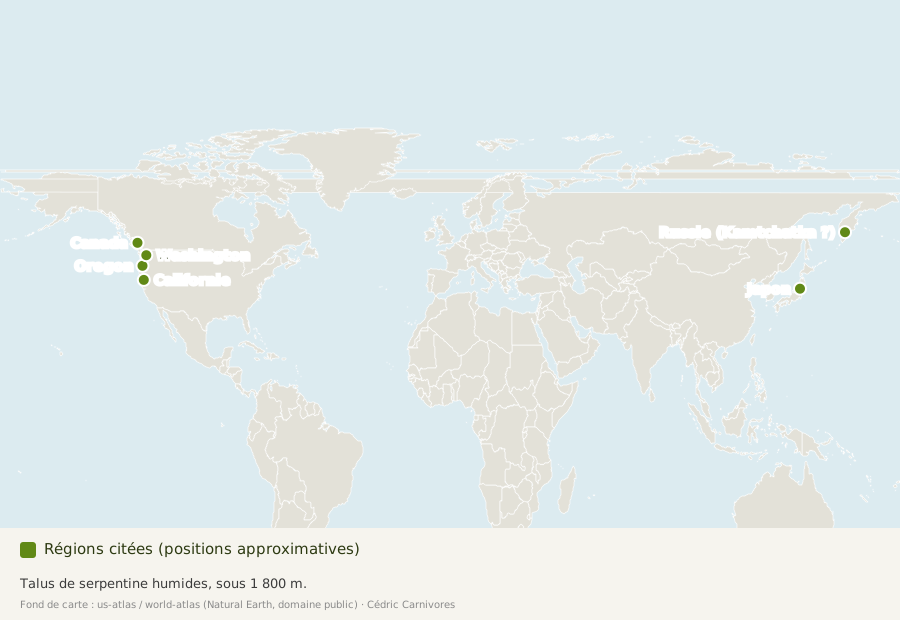
Within about 750 km of the Pacific coast: California, Oregon, Washington and Canada; also reported from Russia and Japan.
Habitat
Damp slopes and serpentine banks beside streams and rivers, below 1,800 m; north-facing serpentine cliffs with fast seepage, often in moss. Serpentine, poor in nutrients, makes carnivory valuable.
A debated classification
Link's specimens were destroyed during the Second World War. Plants collected in 1933, with a shorter spur, were named P. microceras; Casper thought that harsh conditions shorten the spur. Komiya (1972) treated it as a large-flowered subspecies of P. vulgaris. The debate continues.
Sources
- Wikipedia (English), Pinguicula macroceras: Pallas ex Link 1820, names, description, range, habitat, serpentine, history of the classification.
- Genus list: varieties.