Pinguicula medusina Zamudio & Studnička
Species sheet, updated on 30/10/2026.
At a glance
| Scientific name | Pinguicula medusina Sergio Zamudio & Miloslav Studnička, Acta Botanica Mexicana 53, 2000 |
| Former names | P. heterophylla f. alfredae, P. alfredae (in honour of Alfred Lau) |
| Family | Lentibulariaceae |
| Distribution | Near the Laguna Encantada, north of Santiago Juxtlahuaca (Oaxaca, Mexico) |
| Habitat | Damp, shaded gypsum slopes, from 1,600 to 1,700 m |
| Status | Only one known population |
Photos in the wild
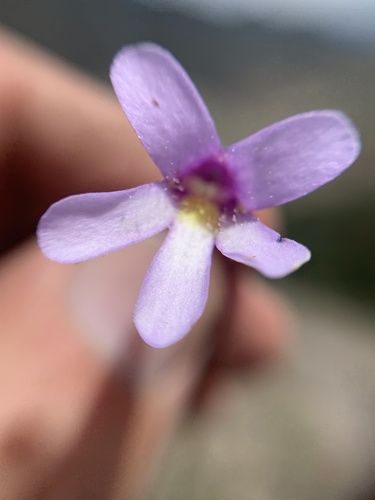
Etymology
- Pinguicula: see the genus sheet.
- medusina: “of Medusa”, probably for its long, rolled leaves like snakes (probable meaning, not confirmed).
History
1977: Alfred Lau discovers it while looking for cacti. Only the plants sent to Linz (Austria) survived in cultivation. Described in 2000.
Description (how to recognise it)
- A buried winter bulb, like an onion, of 70 to 90 scale-like leaves.
- Summer leaves 7 to 19 cm long, with strongly rolled edges.
- Plantlets at the tips of the summer leaves, which root quickly: a rare form of vegetative propagation.
- White flowers, or edged with lilac, 1.6 to 2.3 cm, from late May to July.
Distribution
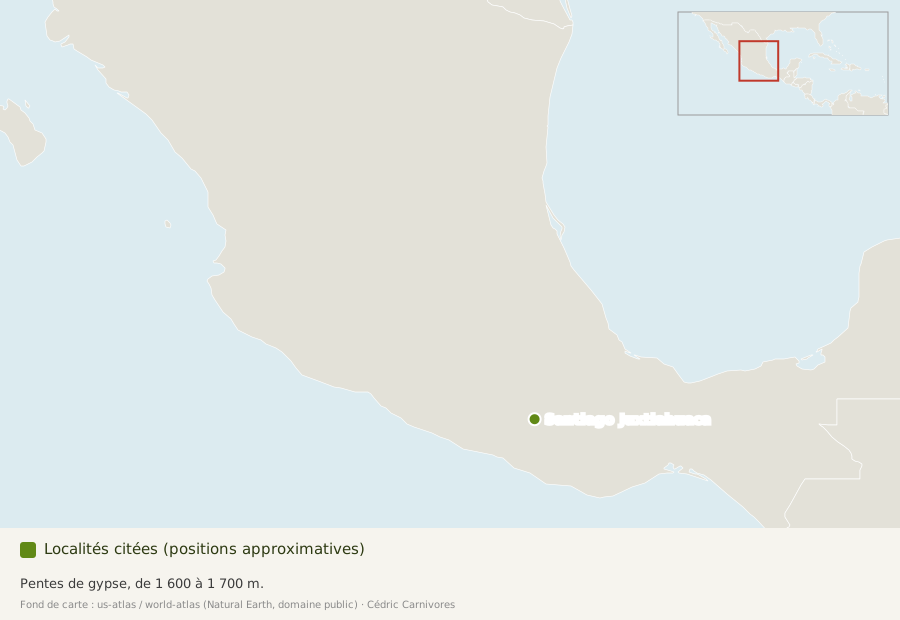
Oaxaca: known only near the Laguna Encantada, about 3 km north of Santiago Juxtlahuaca, at about 1,600–1,700 m.
Habitat
Damp, shaded gypsum slopes, in rosette scrub and a tropical forest with Bursera, Vallesia, Dasylirion and agaves. In winter, it rests completely dry.
Relationships
Close to P. heterophylla, from which it differs in its flowers, its seasonal cycle and its habitat.
Sources
- pinguicula.org, P. medusina: Zamudio & Studnička 2000, former names, Alfred Lau 1977, description, plantlets, range, altitude, habitat, seasons, relationships.