Pinguicula nevadensis (H. Lindb.) Casper
Species sheet, updated on 29/10/2026.
At a glance
| Scientific name | Pinguicula nevadensis (H. Lindberg) Casper, 1962 |
| Family | Lentibulariaceae (section Pinguicula) |
| Distribution | Sierra Nevada and Sierra de Alfacar (Spain) |
| Habitat | Alpine wet meadows and spring-fed slopes near lakes, on granite, from 2,160 to 3,100 m |
Photos in the wild
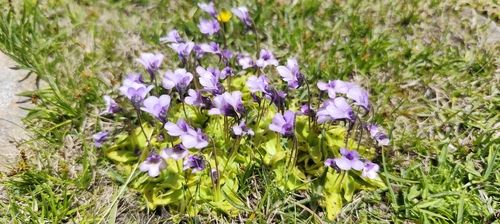
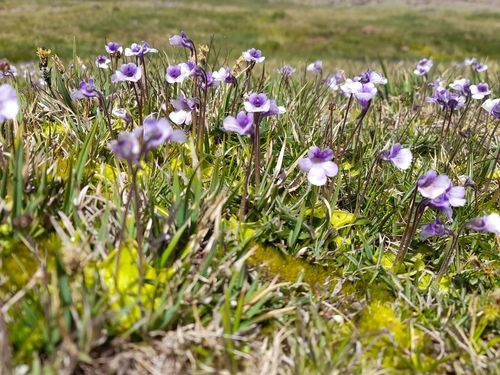
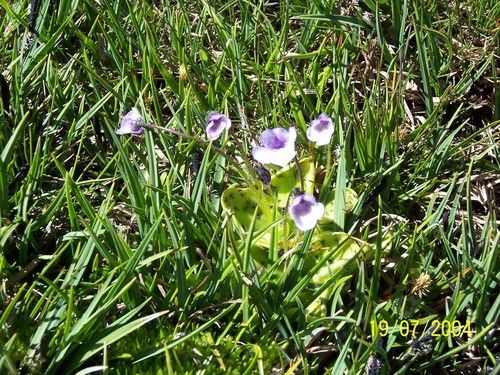
Etymology
- Pinguicula: see the genus sheet.
- nevadensis: “from the Sierra Nevada” (probable meaning, not confirmed).
Description (how to recognise it)
- A small rosette of 5 to 8 almost round leaves, up to about 5 cm.
- A small flower 10 to 16 mm, two-coloured: lilac with whitish lobes, with a short spur (2 to 5 mm), on a stem 4 to 5.5 cm long.
- Flowering: July–August.
Distribution
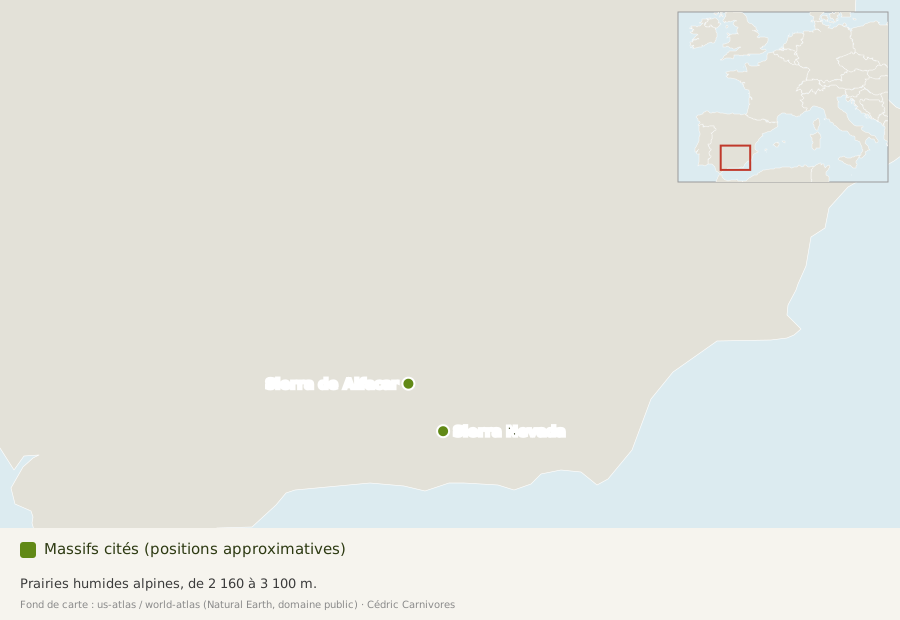
Endemic to Spain: Sierra Nevada and Sierra de Alfacar, from 2,160 to 3,100 m.
Habitat
Alpine wet meadows and sunny slopes fed by springs, near mountain lakes, on siliceous granitic soils. Frequent fog. Companion plants: Carex intricata, the alpine gentian, Gentiana sierrae and two buttercups.
Ecology: under snow half the year
- Snow covers it 5 to 7 months a year; average temperature about 6 °C, down to −10 °C in winter; almost no rain in July–August.
- Despite the intense sun, its leaves only turn slightly red.
- Propagation by seeds and by gemmae around the hibernacula.
Sources
- pinguicula.org, P. nevadensis: Casper 1962, description, chromosomes, flowering, range, altitude, habitat, companion plants, climate, propagation.