Pinguicula orchidioides A. DC.
Species sheet, updated on 30/10/2026.
At a glance
| Scientific name | Pinguicula orchidioides Alphonse de Candolle, Prodromus 8: 27, 1844 |
| Synonyms | Pinguicula stolonifera Luhrs (1995) |
| Family | Lentibulariaceae (subgenus Pinguicula, section Orcheosanthus) |
| Distribution | Southern Mexico (Oaxaca, Guerrero) and Guatemala (Sololá) |
| Habitat | Damp slopes in pine-oak forests, from 2,000 to 2,700 m (up to 3,000 m) |
Photos in the wild
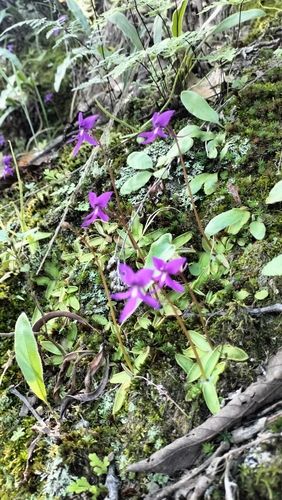
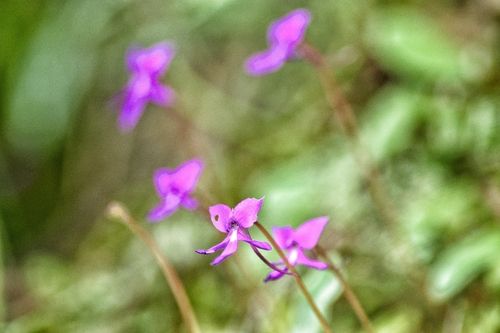
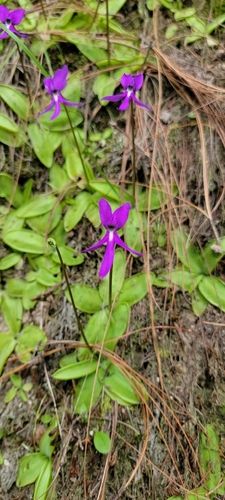
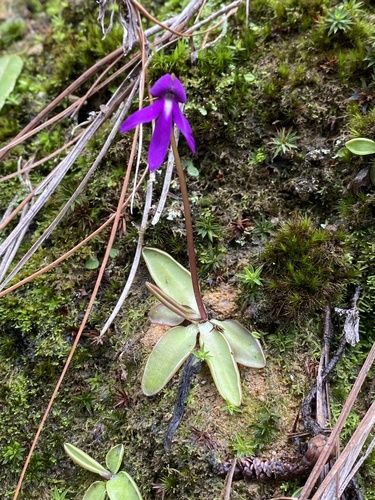
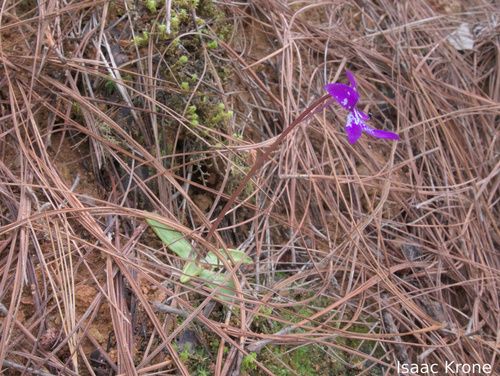
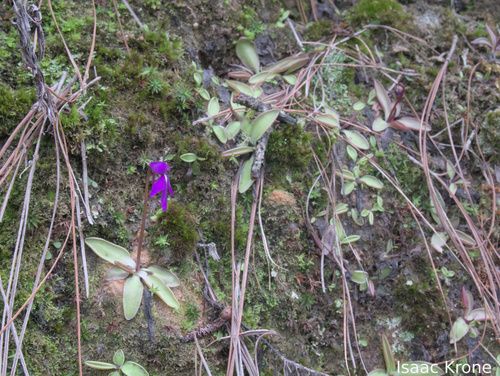
Etymology
- Pinguicula: see the genus sheet.
- orchidioides: from the Greek, “resembling an orchid”: its delicate flowers recall those of orchids.
History of the description
- 1844: Alphonse de Candolle describes it from collections by G. Andrieux and creates section Orcheosanthus for it.
- 1846: Hooker gives this name to a plant grown at Kew which is in fact another butterwort (P. moranensis var. neovolcanica). The confusion causes the species to be forgotten.
- 1995: Hans Luhrs describes stoloniferous butterworts under the name P. stolonifera.
- 1998: Sergio Zamudio shows that this is indeed De Candolle's plant and redescribes it under its true name.
Description (how to recognise it)
- Summer rosette up to 10 cm, with flat, fleshy, smooth leaves 2 to 4.6 cm long, covered with sticky glands that mainly catch flies.
- Winter rosette 6 to 13 mm, made of 25 to 36 small fleshy hairy leaves, without glands.
- Stolons up to 8 cm, which root and give rise to new plants: it is the only butterwort in the Americas to produce them.
- Violet-purple flowers 3 to 4.8 cm, with a spur 18 to 26 mm long, from July to September, on a cherry-red stem 7 to 22 cm long.
Distribution
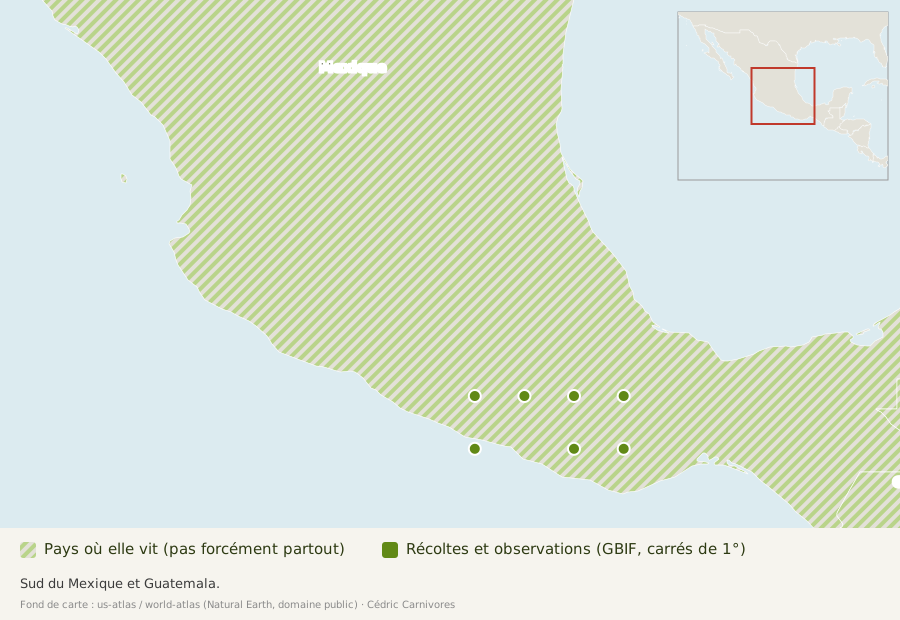
Only a few localities, mainly in Oaxaca, a few in Guerrero and in the department of Sololá in Guatemala. The absence of records from Chiapas is thought to be due to a lack of exploration.
Habitat
Damp slopes, banks and hillsides in pine-oak forests, on red-brown clay or sandy clay, from 2,000 to 2,700 m (up to 3,000 m), with strawberry trees (Arbutus), Arctostaphylos and Clethra.
Ecology
The summer leaves go dormant from November or December: the winter rosette waits for the first rains in May. The stolons form clumps of genetically identical plants.
Did you know?
For more than 150 years, almost all botanists mistook it for another species, because of a misidentification by Hooker in 1846.
Sources
- Wikipedia (English), Pinguicula orchidioides: history, description, stolons, flowering, range, altitude, habitat, companion plants.
- List of Pinguicula: section.
- GBIF, Pinguicula orchidioides: author, original publication, countries and localities of herbarium specimens and observations.