Pinguicula ramosa Miyoshi ex Yatabe
Species sheet, updated on 30/10/2026.
At a glance
| Scientific name | Pinguicula ramosa Miyoshi ex Ryōkichi Yatabe, 1890 |
| Japanese name | Kōshinsō (“herb of Mount Kōshin”) |
| Family | Lentibulariaceae (section Micranthus) |
| Distribution | Mountains of Nikkō National Park (Japan), mainly Mount Kōshin; also Mounts Kesamaru and Ozaku |
| Habitat | Damp, misty cliffs of weathered granite and volcanic rock, from 1,500 to 1,900 m |
| Status | Endangered; strictly protected by Japanese law |
Etymology
- Pinguicula: see the genus sheet.
- ramosa: from the Latin, “branched”, for its forked scape, unique in the genus.
Description (how to recognise it)
- A small rosette pressed to the ground, of 5 to 6 pale green, fleshy leaves, 8 to 15 mm long.
- A scape forked near the base: a feature unique among butterworts. Each stem bears 2 or 3 violet or white flowers, in June–July.
- Hibernaculum in winter; it regrows in April.
Distribution
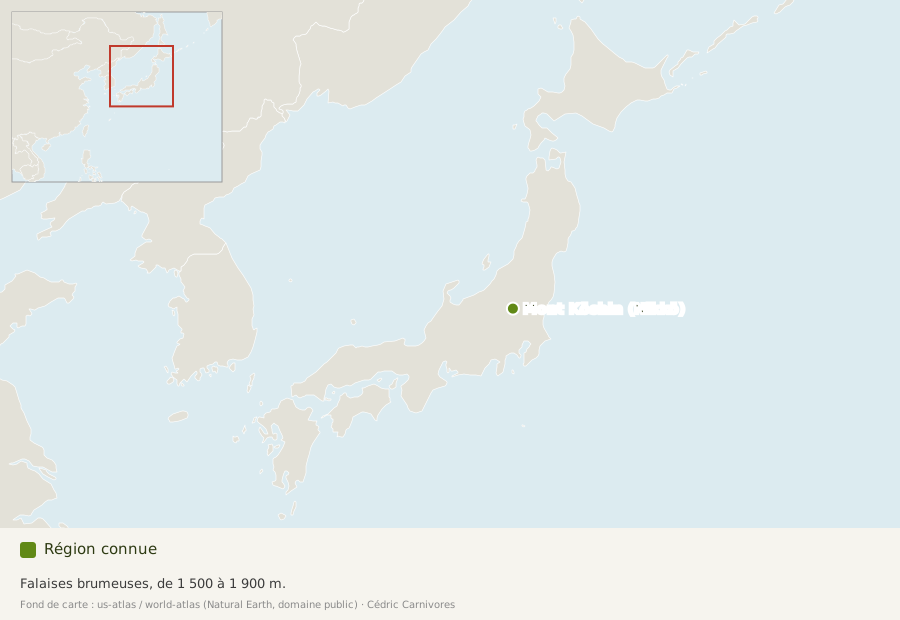
Endemic to Japan: mountains of Nikkō National Park, mainly Mount Kōshin; also Mounts Kesamaru and Ozaku, outside the park. From 1,500 to 1,900 m.
Habitat
Damp, misty, partly shaded cliffs of weathered granite and volcanic rock, with Saxifraga fortunei and Primula modesta.
Relationships
Close to P. variegata from Siberia.
Threats and protection
“Endangered”: tiny range, acid rain, climbing and grazing by deer. It is strictly protected in Japan.
Sources
- Wikipedia (English), Pinguicula ramosa: authors 1890, Japanese name, description, forked scape, range, altitude, habitat, relationships, status, threats.