Pinguicula rotundiflora Studnička
Species sheet, updated on 30/10/2026.
At a glance
| Scientific name | Pinguicula rotundiflora Miloslav Studnička, Folia Geobotanica et Phytotaxonomica 20, 1985 |
| Synonyms | P. jorgehintonii B. L. Turner (1994), P. rayonensis (unpublished name) |
| Family | Lentibulariaceae (section Heterophyllum) |
| Distribution | Tamaulipas and Nuevo León (north-eastern Mexico) |
| Habitat | Limestone soils under sweetgums and pines; gypsum; pine-oak forests; from 1,300 to 2,200 m |
Etymology
- Pinguicula: see the genus sheet.
- rotundiflora: from the Latin, “with round flowers”.
History
Around 1980, it was already circulating in Harald Weiner's seed catalogue under the name “new species no. 2”, before its description in 1985.
Description (how to recognise it)
- Winter rosette of small, succulent, non-carnivorous leaves; carnivorous leaves in spring and summer; some intermediate rosettes have round leaves.
- The flowers arise from the winter rosette.
Distribution
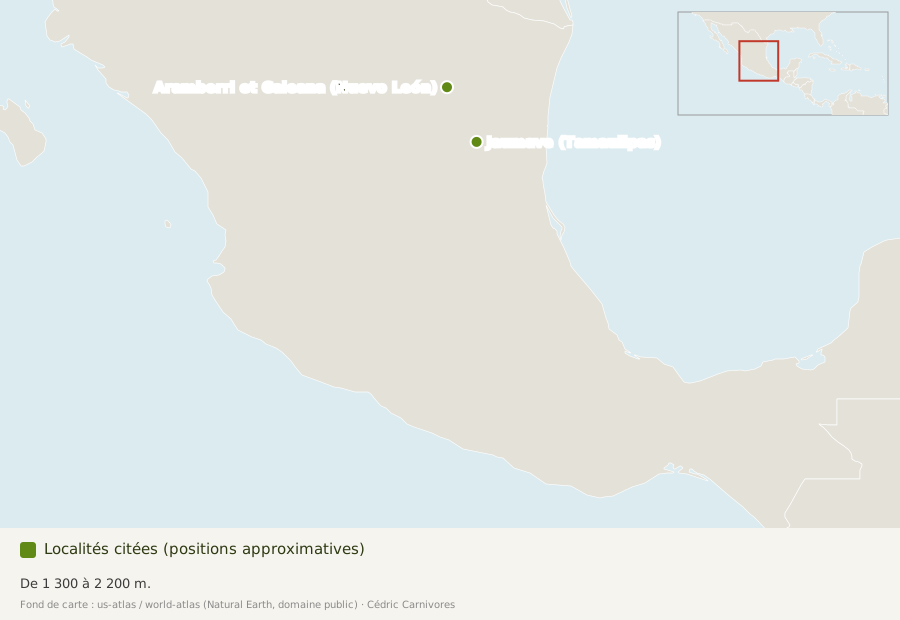
North-eastern Mexico:
- Tamaulipas: near the Minas de Asbesto (Jaumave), at about 2,200 m;
- Nuevo León: north of Aramberri, near the Rayones-Galeana gorge, at about 1,300 m; municipality of Galeana.
Habitat
- At Minas de Asbesto: limestone soil under sweetgums, pines and Mexican beech (Fagus mexicana);
- near Rayones: gypsum soils with dry-habitat vegetation;
- at Galeana: pine-oak forest.
Sources
- pinguicula.org, P. rotundiflora: Studnička 1985, synonyms, history, description, range, altitudes, habitats.