Pinguicula villosa L.
Species sheet, updated on 30/10/2026.
At a glance
| Scientific name | Pinguicula villosa Linné, Species Plantarum, 1753 |
| Common names | Hairy butterwort (in French grassette velue) |
| Family | Lentibulariaceae (only species of section Nana) |
| Distribution | Circumpolar, in patches: boreal zone of Eurasia and North America, as far as North Korea |
| Habitat | Sphagnum bogs, hummocks and muskegs around pools and streams, especially near the tree line |
Photos in the wild
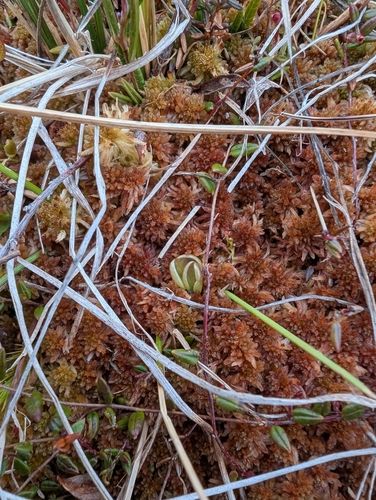
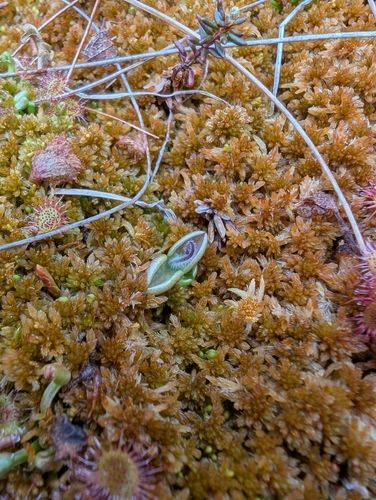
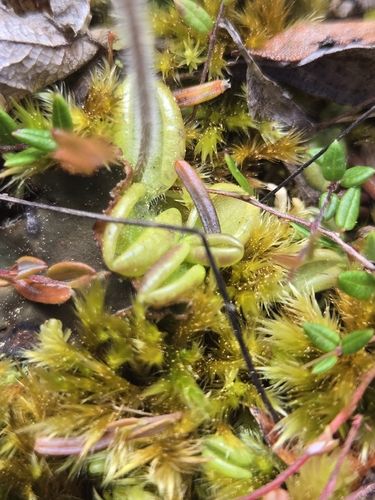
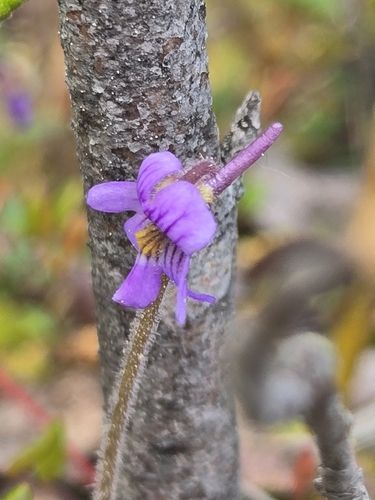
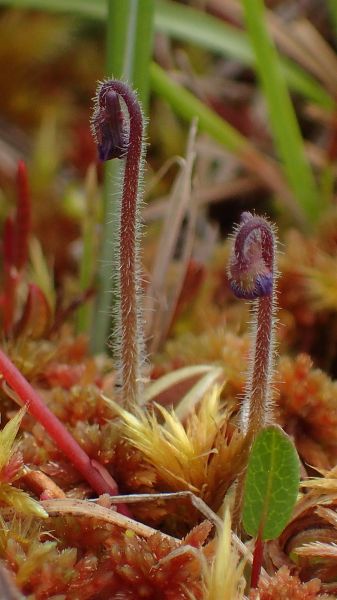
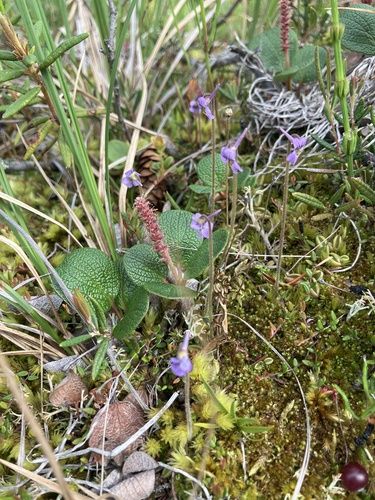
Etymology
- Pinguicula: see the genus sheet.
- villosa: from the Latin, “hairy”, probably for its hairy scape (not confirmed).
Description (how to recognise it)
- A tiny butterwort: 1 to 5 leaves of 7 to 10 mm, with strongly rolled-in edges.
- A hairy, glandular scape of 1.5 to 6 cm, with a single pale violet flower with yellow streaks, 6 to 9 mm.
- No gemmae: it reproduces only by seed.
Forms
- f. albiflora (Frödin, 1915): white flowers;
- lusus ramosa (Casper, 1962): branched scape with two flowers.
Distribution
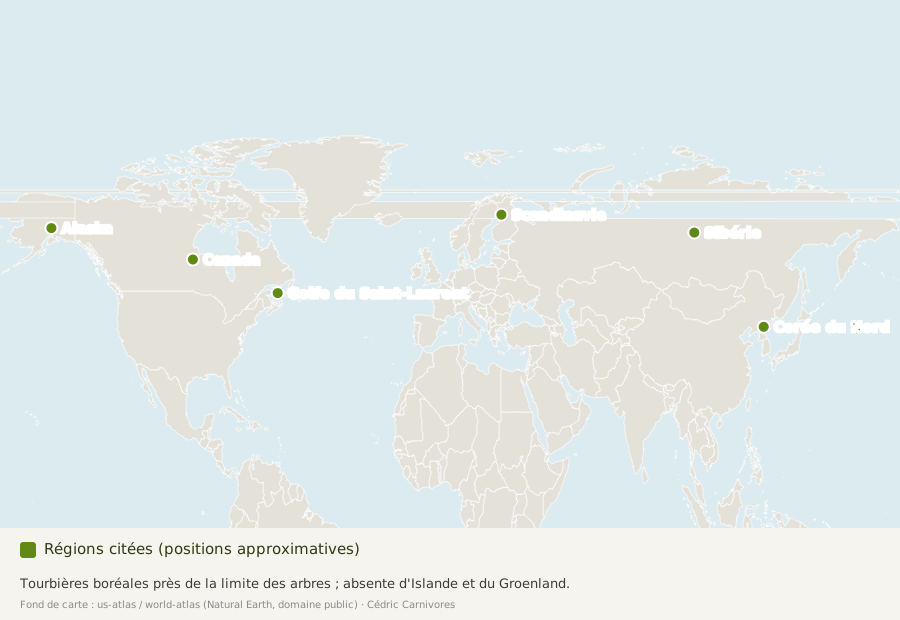
Circumpolar but in patches, in the boreal zone of Eurasia and North America; absent from Iceland, Greenland and Svalbard; southwards as far as North Korea. Mainly near the tree line.
Habitat
Sphagnum bogs, hummocks and muskegs (boreal peatlands) around pools and streams.
Ecology: living in sphagnum
- It has a very narrow tolerance: a harsh but regular and predictable climate.
- Its rolled-in leaf edges stop the sphagnum that covers it from irritating its digestive glands; by the end of summer, the sphagnum often overgrows it.
- According to Jurg Steiger, it may have survived the ice ages in the Gulf of St. Lawrence region.
Did you know?
- It is one of the smallest butterworts; it is very difficult to cultivate.
Sources
- pinguicula.org, P. villosa: Linné 1753, description, forms, range, habitat, ecology, glacial survival, cultivation.
- List of the genus: section Nana.