Pinguicula vulgaris L.
Species sheet, updated on 29/10/2026.
At a glance
| Scientific name | Pinguicula vulgaris Linné, 1753 |
| Common names | Common butterwort; in French grassette commune |
| Family | Lentibulariaceae |
| Distribution | Circumboreal: almost all of Europe, Russia, Canada, United States |
| Habitat | Bogs, fens, alvars, calcareous seeps, from the lowlands to the subalpine zone |
| Status | Least concern (IUCN) |
Photos in the wild
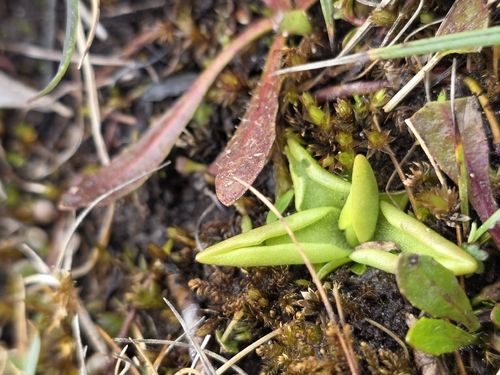
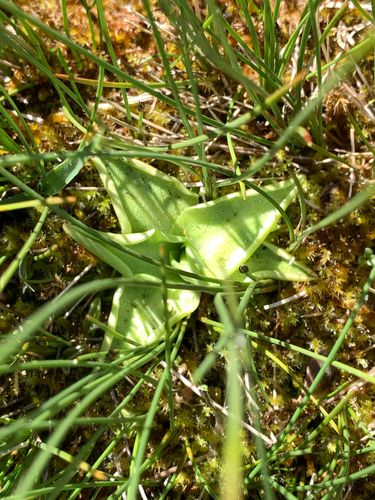
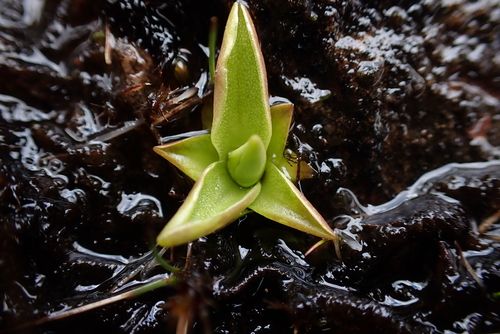
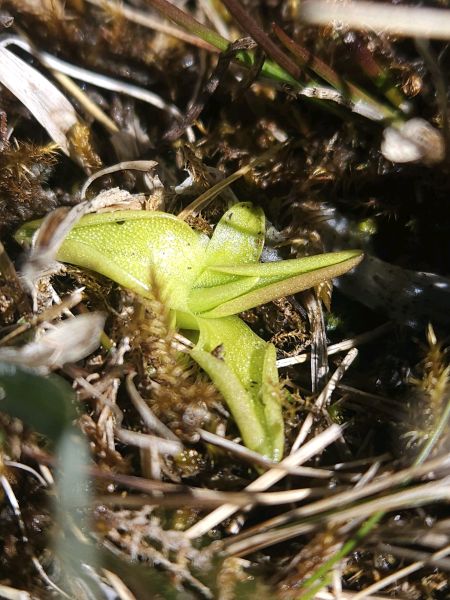
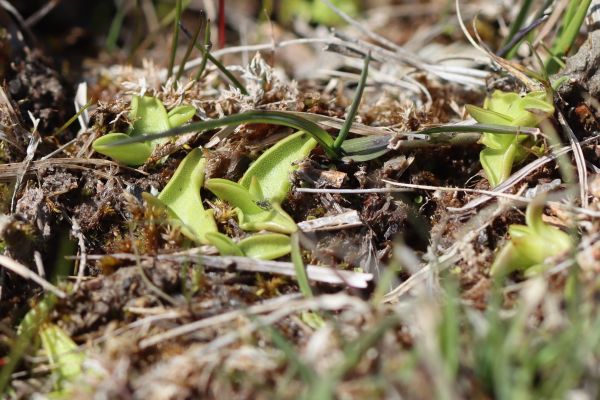
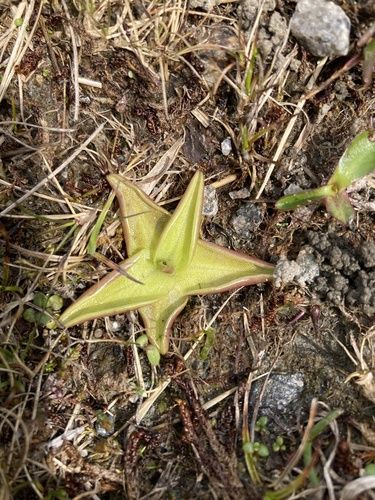
Etymology
- Pinguicula: see the genus sheet.
- vulgaris: from the Latin, “common”.
History
In 1583, Clusius already distinguished the butterwort with blue flowers (this one) from the one with white flowers (P. alpina). Linnaeus described it in 1753.
Description (how to recognise it)
- A rosette of fleshy, sticky, yellowish-green leaves, pressed flat against the ground; plant 3 to 16 cm tall in flower.
- A purple-violet flower (sometimes white), funnel-shaped, at least 15 mm, with a spur.
- In winter, it shrinks to a hibernaculum, a resting bud.
Forms
Three European forms, not always recognised:
- f. bicolor: white and purple petals;
- f. albida: entirely white flower;
- f. alpicola: larger flowers.
Distribution
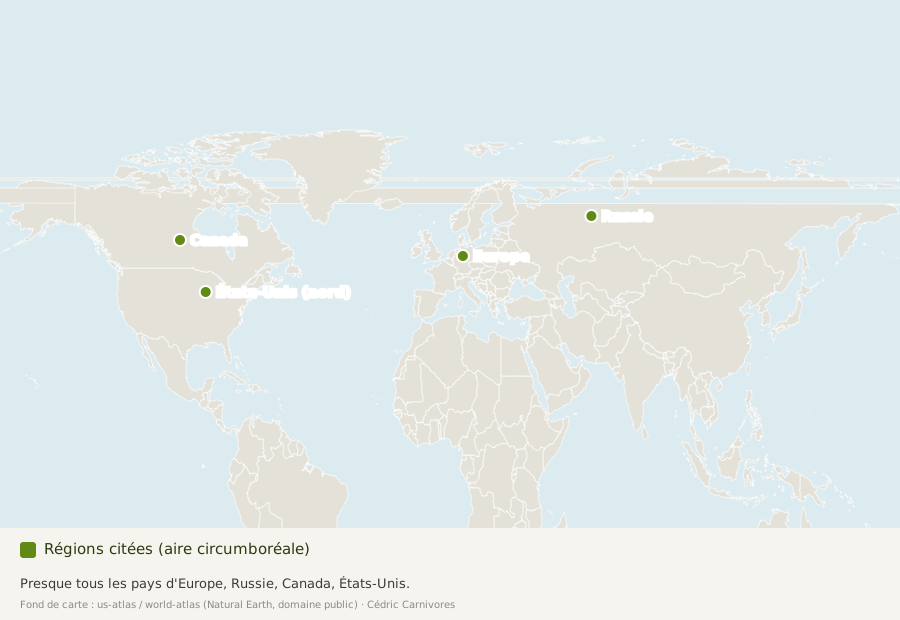
Circumboreal: in almost every country in Europe, in Russia, Canada and the United States.
Habitat
Bogs, fens, alvars (grasslands on limestone in Scandinavia), and places with limestone rock and alkaline water; from the lowlands to the subalpine zone.
Ecology
Its sticky leaves trap small insects and digest them: the nitrogen obtained makes up for a poor soil.
Natural hybrids
With P. alpina: P. × hybrida.
Uses
In Scandinavia, butterwort leaves were used to curdle milk (for this species in particular, not confirmed).
Sources
- Wikipedia (English), Pinguicula vulgaris: Linnaeus, description, hibernaculum, forms, carnivory, range, habitat, status.
- Wikipedia (English), Pinguicula and P. alpina: Clusius 1583, hybrid, use in dairying.