Roridula dentata L.
Species sheet, updated on 29/10/2026.
At a glance
| Scientific name | Roridula dentata Carl von Linné, 1764 |
| Common name | Northern dewstick |
| Family | Roridulaceae |
| Distribution | Inland mountains of the Western Cape (South Africa): around Clanwilliam, Tulbagh and Ceres |
| Habitat | Warmer, drier inland mountains |
| Status | Least concern (SANBI Red List) |
Photos in the wild
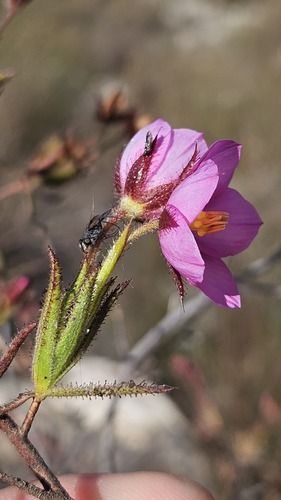
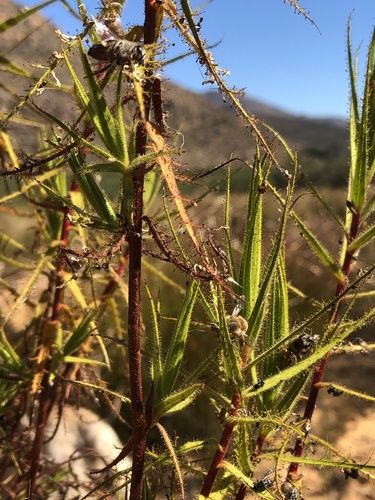
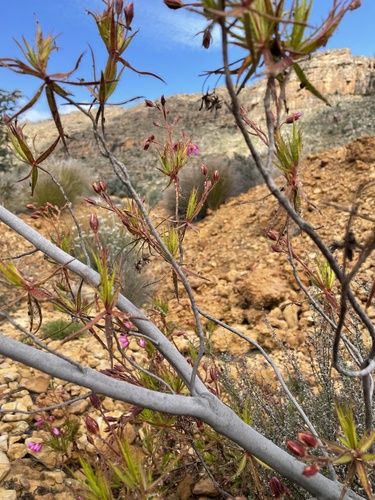
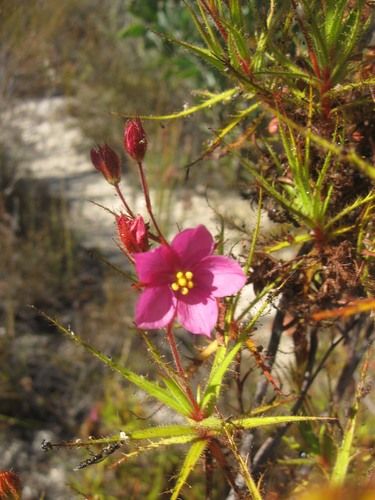
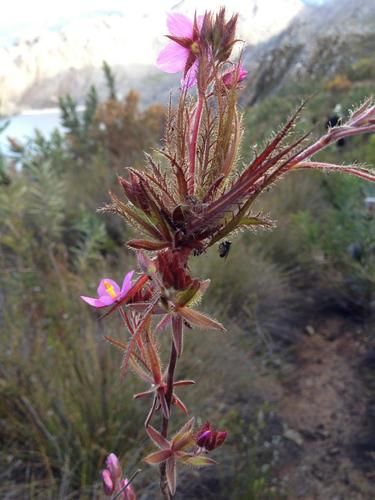
Etymology
- Roridula: see the sheet for R. gorgonias.
- dentata: from the Latin, “toothed” (probably for its leaves, not confirmed).
History of the description
Linnaeus described it in 1764.
Description (how to recognise it)
- A shrub that can exceed 1.50 m.
- Sticky hairs on the leaves, which secrete a resin, not a mucilage as sundews do. They hold insects such as wasps and bees, and sometimes even small birds.
Distribution
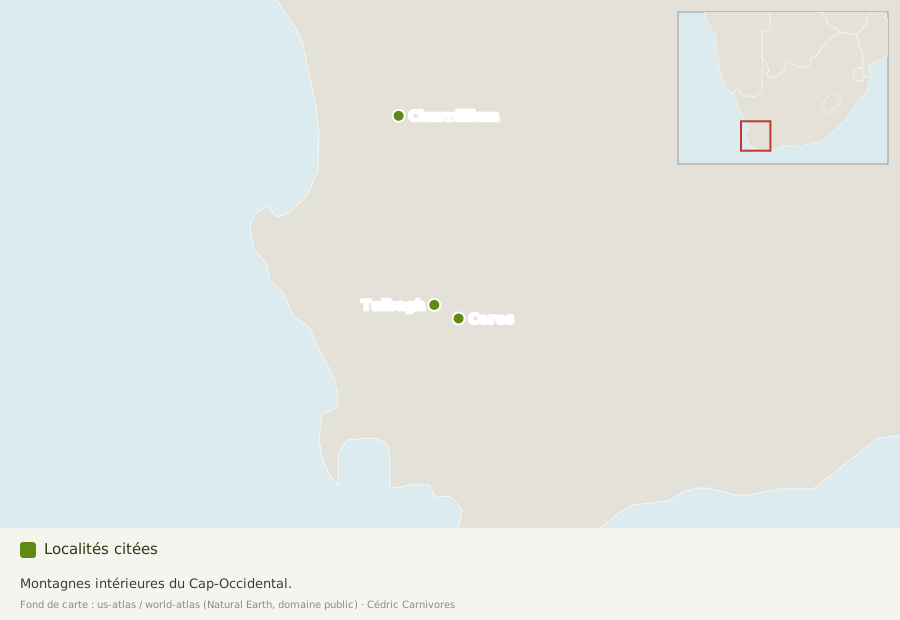
Endemic to the Western Cape (South Africa), in the inland mountains around Clanwilliam, Tulbagh and Ceres.
Ecology: digestion by proxy
- Like R. gorgonias, it does not digest its prey itself.
- Bugs of the genus Pameridea, unaffected by the glue, live on the plant and eat the captured insects.
- The plant absorbs the nitrogen in their droppings: an obligate association, an indirect carnivory.
Relationships
The Roridulaceae are one of the five flowering plant families endemic to the Cape Floristic Region.
Sources
- Wikipedia (English), Roridula dentata: Linnaeus 1764, common name, size, resin, prey, range, habitat, Pameridea bugs, indirect carnivory, status, family.