Utricularia asplundii P. Taylor
Species sheet, updated on 30/10/2026. Short sheet: sources on this species are still scarce.
At a glance
| Scientific name | Utricularia asplundii Peter Taylor, Opera Botanica, sér. B (Flora of Ecuador) 4: 16, 1975 |
| Family | Lentibulariaceae |
| Distribution | Western South America: Colombia, Ecuador (also Peru according to GBIF) |
| Habitat | Collections between 500 and 1 700 m (GBIF) |
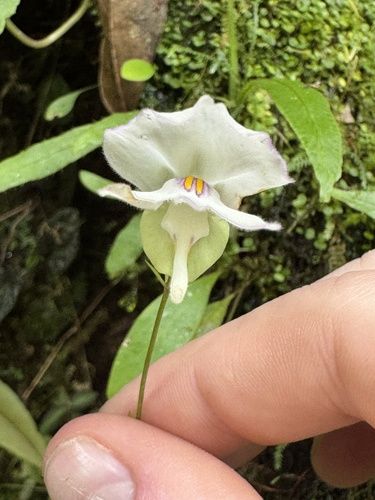
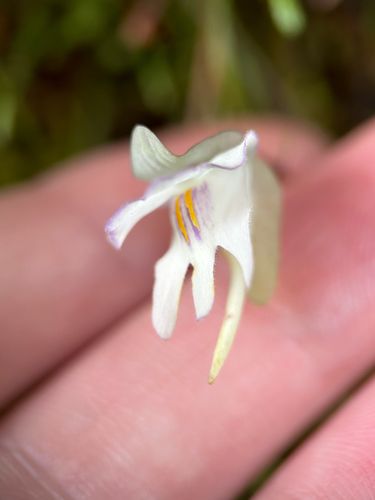
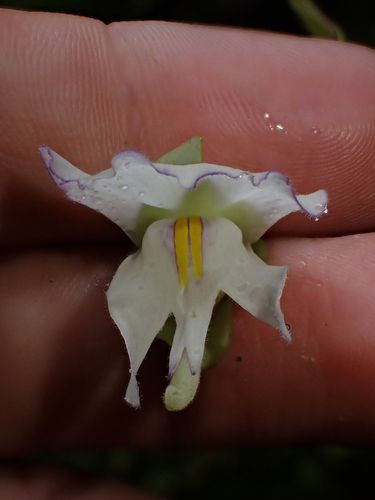
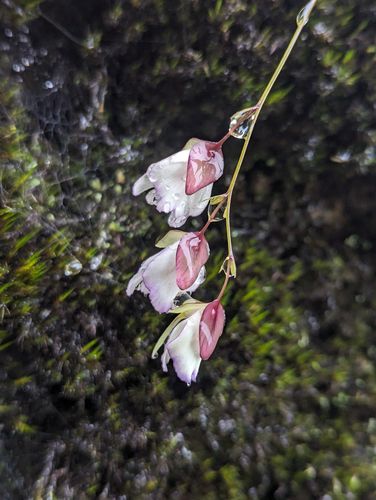
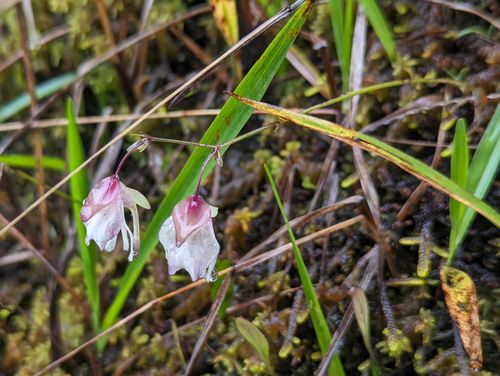
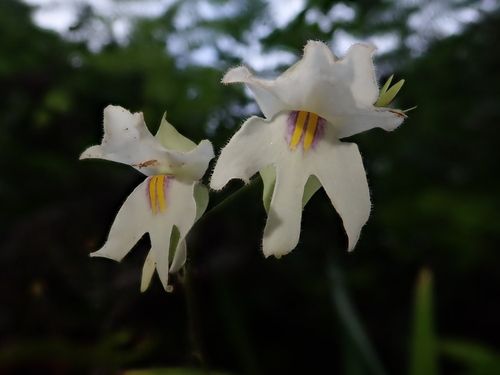
Photos in the wild
Etymology
- Utricularia: see the genus sheet.
- asplundii: probably in honour of the Swedish botanist Erik Asplund, who collected in Ecuador (not confirmed).
History of the description
- 1964: Álvaro Fernández-Pérez cites specimens of U. jamesoniana from Colombia; some of them actually belong to this species.
- 1975: Peter Taylor describes it.
Description (how to recognise it)
- A perennial bladderwort, small to medium-sized, terrestrial or epiphytic (on trees).
- In cultivation (Belanger, 1995): upright leaves about 12 cm long, produced continuously; drooping scapes 20 to 30 cm long, which lean on neighbouring plants, with up to 9 flowers; flowers white with a thin violet edge, palate with two yellow bands edged in violet; lower lip in three equal lobes “like a fork”; spur 2 cm. It needs a dry, warm rest in summer and cool temperatures to flower in winter.
Distribution
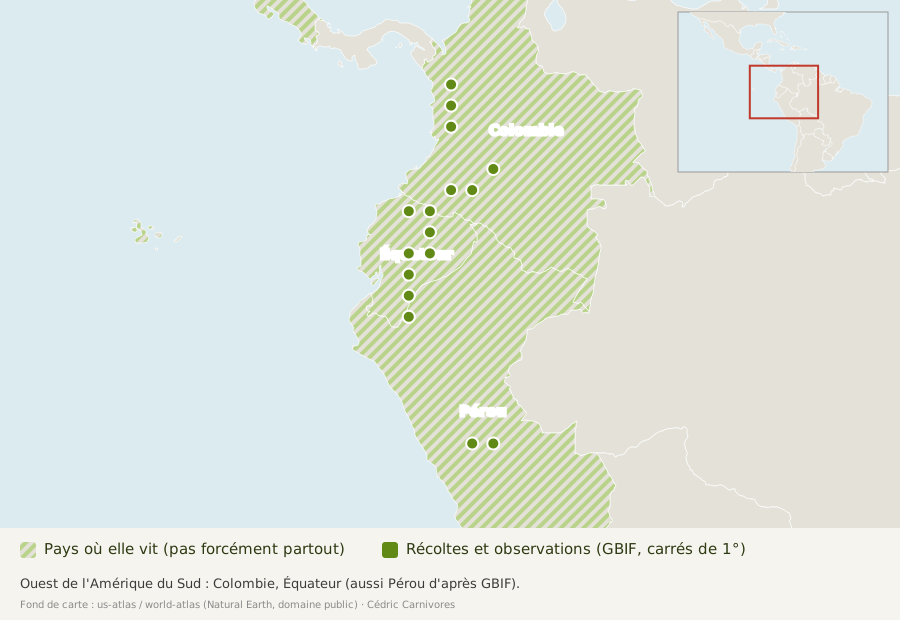
Colombia and Ecuador (Wikipedia); GBIF also has records from Peru and a few from Costa Rica and Venezuela.
Sources
- Wikipedia (English), Utricularia asplundii: author, year, range, life form, confusion with U. jamesoniana.
- Belanger, “Utricularia asplundii and Utricularia endresii”, Carnivorous Plant Newsletter 24, 1995 (archive.org): observations of cultivated plants.
- GBIF, Utricularia asplundii: author, original publication, countries and localities of herbarium specimens and observations.