Utricularia bifida L.
Species sheet, updated on 30/10/2026.
At a glance
| Scientific name | Utricularia bifida Carl von Linné, Species Plantarum: 18, 1753 |
| Family | Lentibulariaceae |
| Distribution | South and East Asia, Oceania, northern Australia |
| Habitat | Damp soils and rice fields |
| Status | in Western Australia: not threatened (FloraBase) |
Photos in the wild
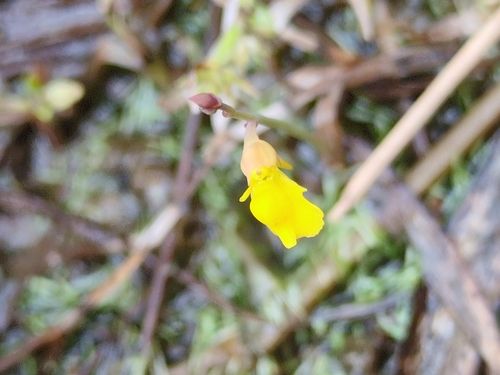
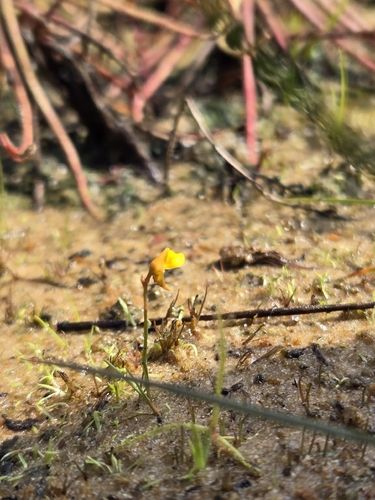
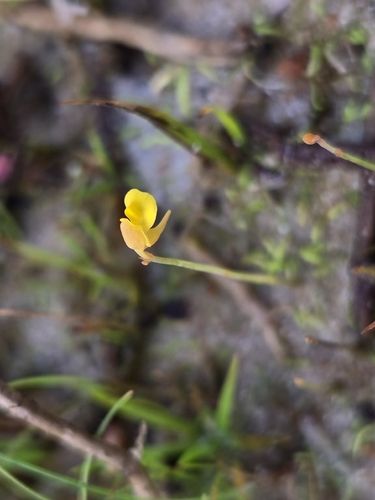
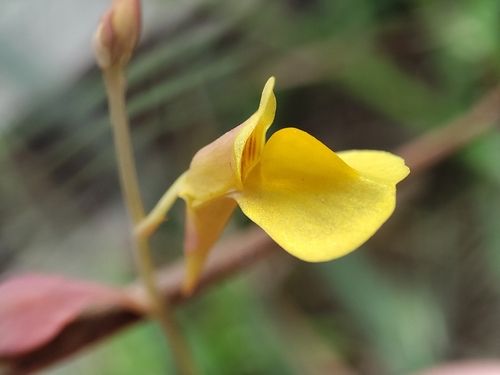
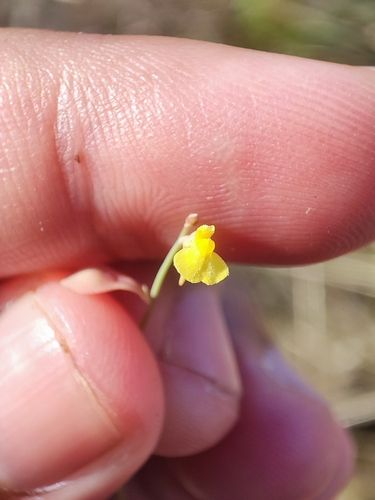
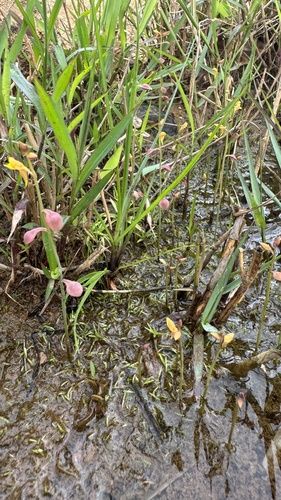
Etymology
- Utricularia: see the genus sheet.
- bifida: from the Latin, “split in two”.
Description (how to recognise it)
- A small annual terrestrial bladderwort.
- According to FloraBase: an annual terrestrial plant, about 15 cm tall. Flowers yellow, from May to August.
Distribution
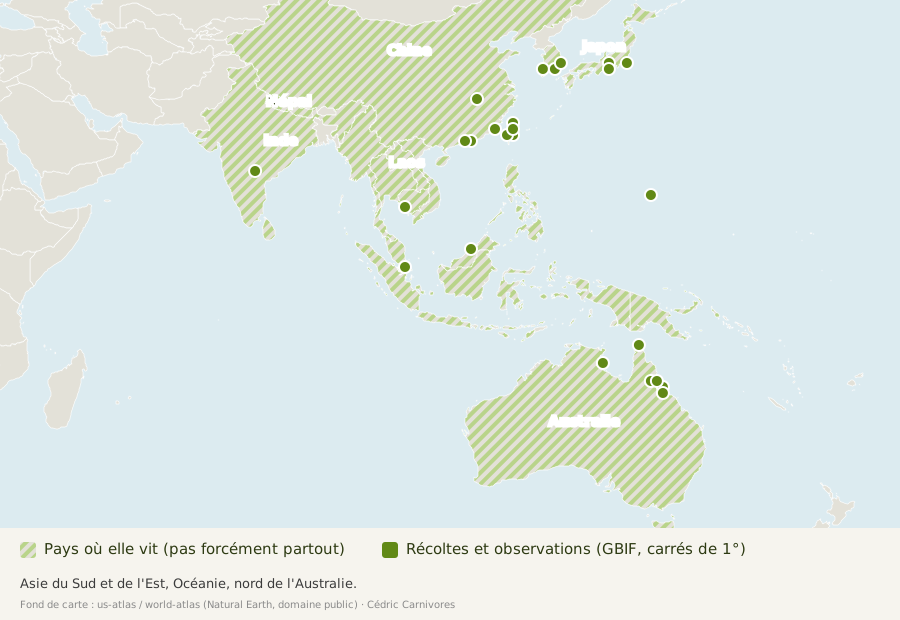
Asia and Oceania: Australia, Bangladesh, Myanmar, Cambodia, China, Guam, India, Indonesia, Japan, Korea, Laos, Malaysia, Nepal, New Guinea, Palau, Philippines, Sri Lanka, Thailand and Vietnam (Wikipedia). Nearly 3 000 records in GBIF. According to Kew's world plant list (WCVP), it is native to 31 regions of the world (see the map and the Kew source). In Western Australia, FloraBase records it in these natural regions (IBRA): Central Kimberley, Northern Kimberley.
Habitat
Damp soils and rice fields. According to FloraBase: sandy mud. On sandstone, in water, and on creek banks.
Sources
- Wikipedia (English), Utricularia bifida: author, year, range, habitat.
- Kew, World Checklist of Vascular Plants (via GBIF): natural distribution.
- FloraBase, Western Australian Herbarium, Utricularia bifida L.: description (Amanda Spooner, 17 January 1997), flowering, soil and habitat, regions, status in Western Australia.
- GBIF, Utricularia bifida: author, original publication, countries and localities of herbarium specimens and observations.