Utricularia bisquamata Schrank
Species sheet, updated on 30/10/2026.
At a glance
| Scientific name | Utricularia bisquamata Franz von Paula Schrank, Flora 7, 1824 |
| Family | Lentibulariaceae |
| Distribution | Southern Africa (South Africa, Lesotho, Eswatini, Namibia, Angola) and Madagascar |
| Habitat | Acid peaty or sandy soils among mosses, up to 1 200 m (2 250 m in Angola) |
Photos in the wild
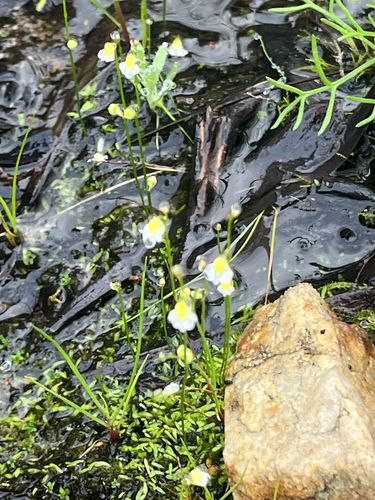
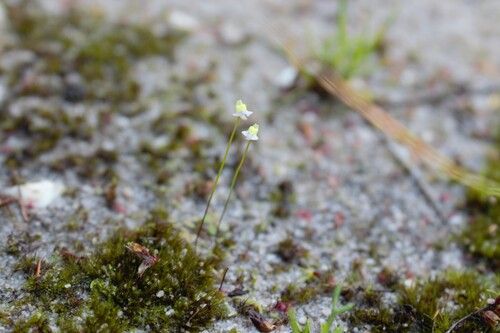
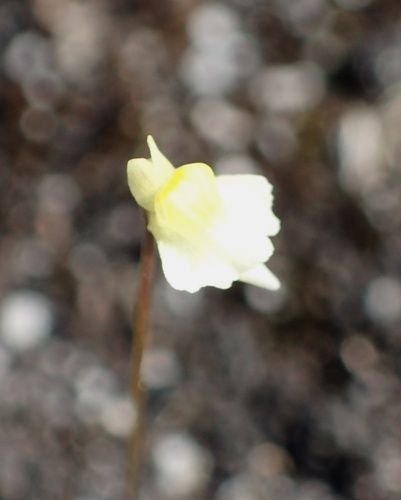
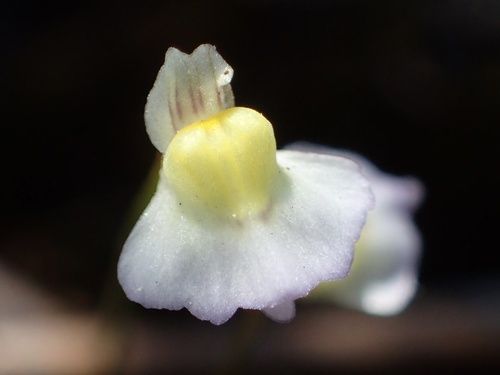
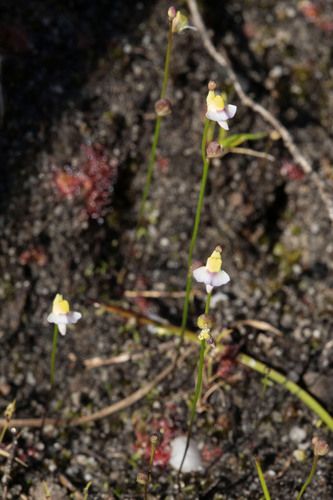
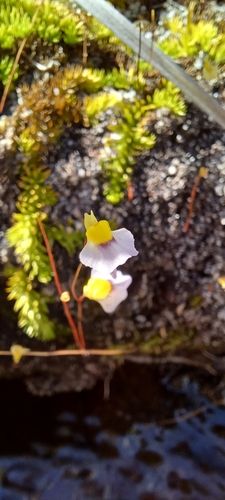
Etymology
- Utricularia: see the genus sheet.
- bisquamata: from the Latin, “with two scales”.
Description (how to recognise it)
- A small annual plant about 12 cm tall, with a rosette of narrow leaves.
- Two-lipped flowers, white, pale violet or sometimes yellow, with a yellow spot of variable size at the base of the lower lip.
- Translucent traps, borne on the underground organs.
Distribution
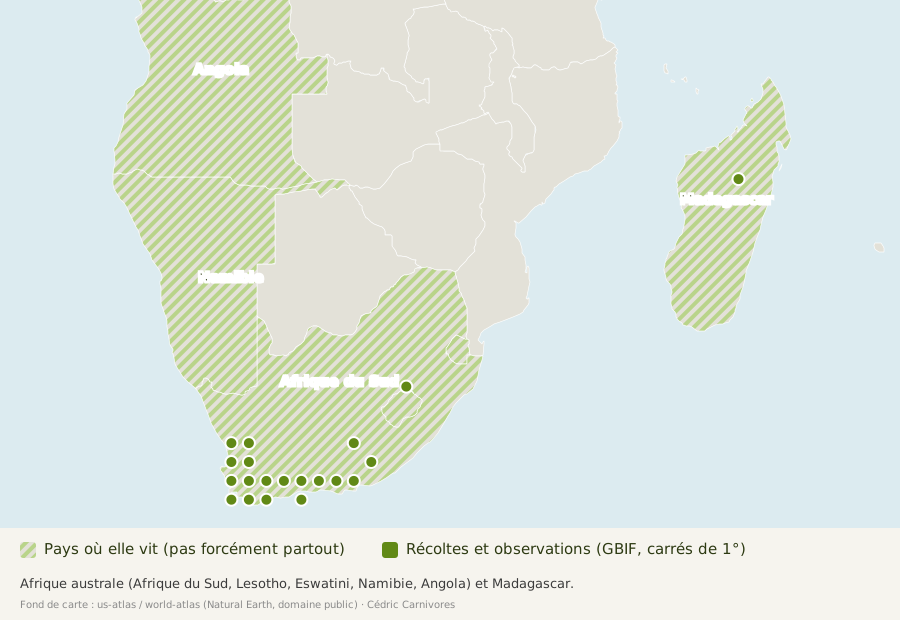
Southern Africa: South Africa (more than 1 100 records in GBIF), Lesotho, Eswatini, Namibia, Angola, and Madagascar.
Habitat
Acid and peaty soils in sandstone areas, among mosses, along streams or in damp hollows; part of the fynbos. From sea level to 1 200 m in South Africa, up to 2 250 m in Angola.
Did you know?
It germinates easily and is found in cultivation; the cultivar “Betty's Bay” has larger, more colourful flowers.
Sources
- Wikipedia (English), Utricularia bisquamata: author, year, description, range, altitude, habitat, cultivation.
- GBIF, Utricularia bisquamata: author, original publication, countries and localities of herbarium specimens and observations.