Utricularia caerulea L.
Species sheet, updated on 30/10/2026.
At a glance
| Scientific name | Utricularia caerulea Carl von Linné, Species Plantarum: 18, 1753 |
| Family | Lentibulariaceae |
| Distribution | Tropical Africa, Asia, Australia |
| Habitat | Shallow damp soils over rock, wet grasslands, marshes, up to 2 100 m |
| Status | in Western Australia: not threatened (FloraBase) |
Photos in the wild
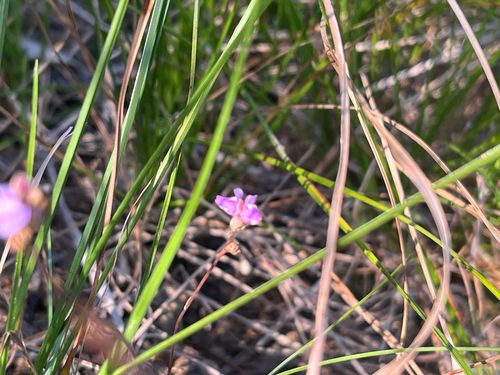
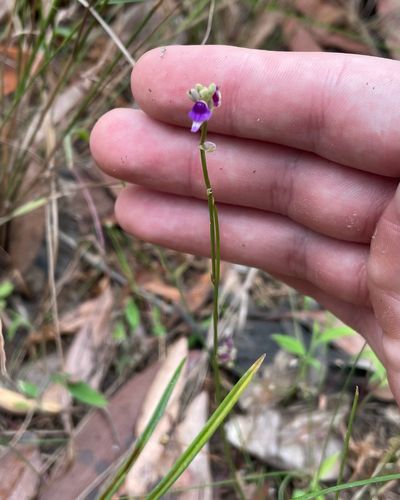
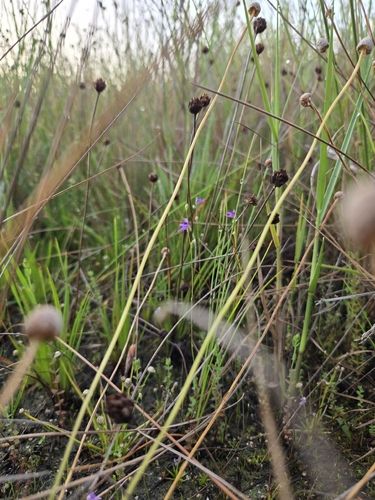
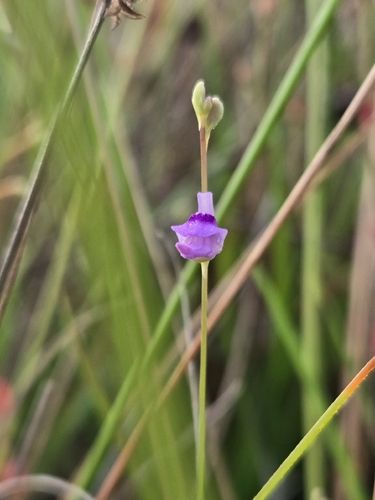
Etymology
- Utricularia: see the genus sheet.
- caerulea: from the Latin, “blue”.
Description (how to recognise it)
- A very small to medium-sized terrestrial bladderwort, highly variable, hence its many synonyms.
- According to FloraBase: an annual or perennial terrestrial plant, 7 to 30 cm tall. Purple, yellow or white flowers, from May to September.
Distribution
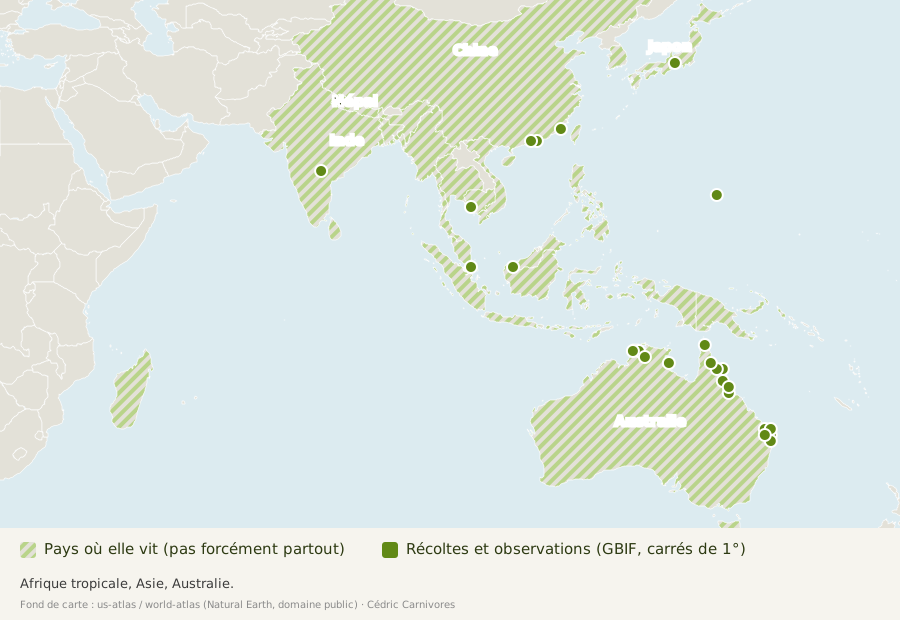
Very wide range: tropical Africa, Asia (from India to Japan) and Australia (nearly 3 000 records in GBIF). According to Kew's world checklist of plants (WCVP), it is native to 33 regions of the world (see the map and the Kew source). In Western Australia, FloraBase records it in these natural regions (IBRA): Central Kimberley, Darwin Coastal, Northern Kimberley, Ord Victoria Plain.
Habitat
Shallow damp soils over rock, wet grasslands, marshes or open stream banks, mainly at low altitude, up to 2 100 m. According to FloraBase: damp soils, sandstone. Seepages, stream banks, pools.
Did you know?
Its English name is “blue bladderwort”; in French utriculaire bleue.
Sources
- Wikipedia (English), Utricularia caerulea: author, year, range, altitude, habitat, variability, English name.
- Kew, World Checklist of Vascular Plants (via GBIF): native distribution.
- FloraBase, Western Australian Herbarium, Utricularia caerulea L.: description (Amanda Spooner, 17 January 1997), flowering, soil and habitat, regions, status in Western Australia.
- GBIF, Utricularia caerulea: author, original publication, countries and localities of herbarium specimens and observations.