Utricularia chrysantha R. Br.
Species sheet, updated on 30/10/2026.
At a glance
| Scientific name | Utricularia chrysantha Robert Brown, Prodromus Florae Novae Hollandiae: 432, 1810 |
| Family | Lentibulariaceae |
| Distribution | Northern Australia and southern New Guinea |
| Habitat | Wet grasslands and Melaleuca and Acacia savannas, near sea level |
| Status | in Western Australia: not threatened (FloraBase) |
Photos in the wild
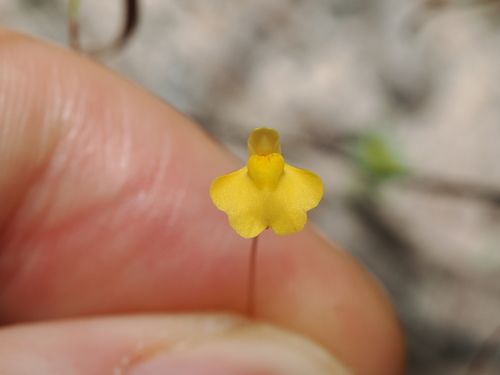
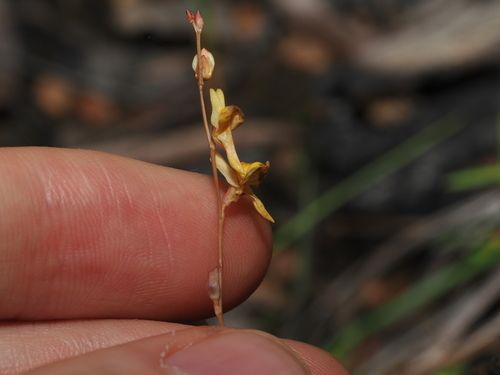
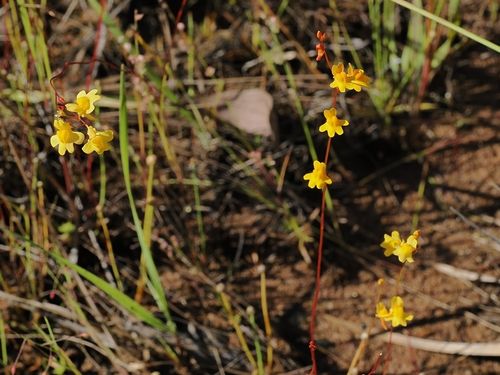
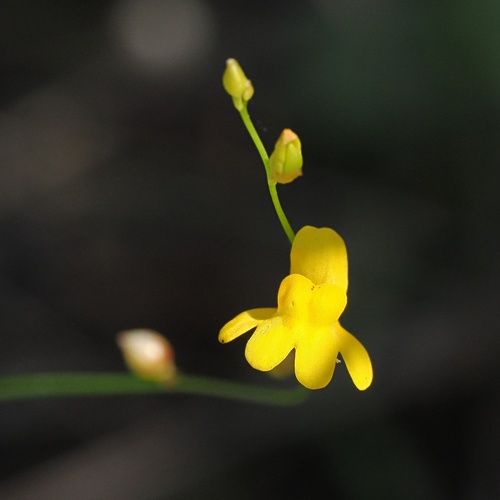
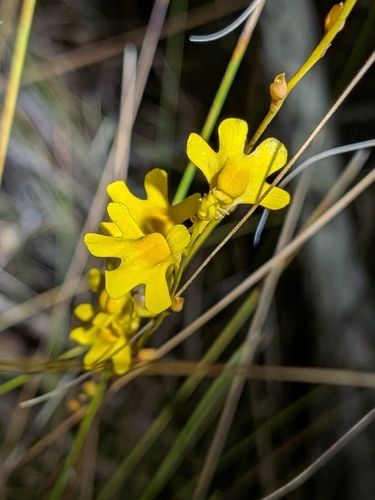
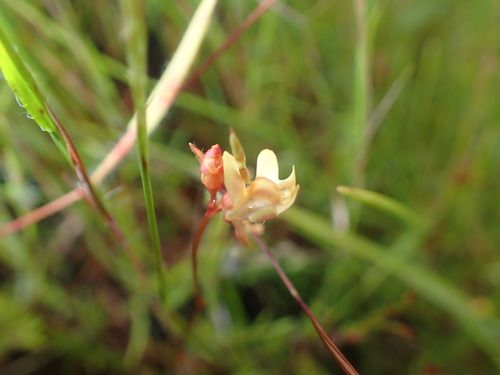
Etymology
- Utricularia: see the genus sheet.
- chrysantha: from the Greek, “with golden flowers”.
Description (how to recognise it)
- A medium-sized annual terrestrial bladderwort.
- According to FloraBase: an annual terrestrial plant, 5 to 40 cm (sometimes 60 cm) tall. Yellow to orange flowers, from March to October.
Distribution
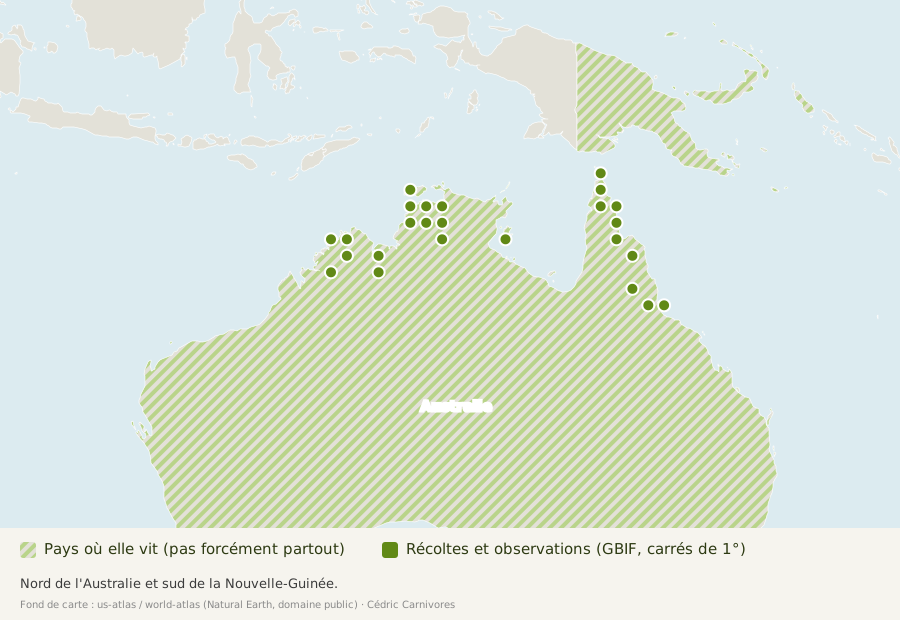
Northern Australia (more than 1 600 records in GBIF) and southern New Guinea. According to Kew's world checklist of plants (WCVP), it is native to the following regions: New Guinea, Northern Territory, Queensland and Western Australia. In Western Australia, FloraBase records it in these natural regions (IBRA): Central Kimberley, Dampierland, Darwin Coastal, Northern Kimberley, Ord Victoria Plain, Victoria Bonaparte.
Habitat
Wet grasslands and savannas with Melaleuca and Acacia, at low altitude. According to FloraBase: damp sandy soils, thin soils over sandstone. Along creeks, swamp margins, damp depressions.
Did you know?
Its English name is “sun bladderwort”; in French utriculaire soleil.
Sources
- Wikipedia (English), Utricularia chrysantha: author, year, range, habitat, English name.
- Kew, World Checklist of Vascular Plants (via GBIF): native distribution.
- FloraBase, Western Australian Herbarium, Utricularia chrysantha R.Br.: description (Amanda Spooner, 17 January 1997), flowering, soil and habitat, regions, status in Western Australia.
- GBIF, Utricularia chrysantha: author, original publication, countries and localities of herbarium specimens and observations.