Utricularia erectiflora A. St.-Hil. & Girard
Species sheet, updated on 30/10/2026.
At a glance
| Scientific name | Utricularia erectiflora Augustin Saint-Hilaire & Frédéric de Girard, Annales des Sciences Naturelles, ser. 2, 11: 159, 1839 |
| Family | Lentibulariaceae |
| Distribution | Central and South America |
| Habitat | Wet sandy savannas, wet grasslands, marshes |
Photos in the wild
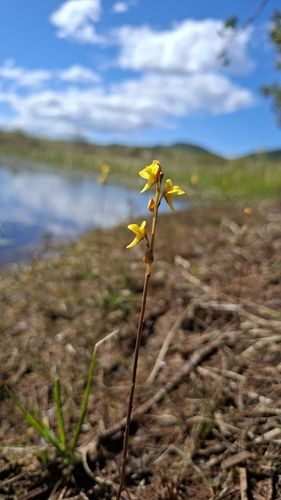
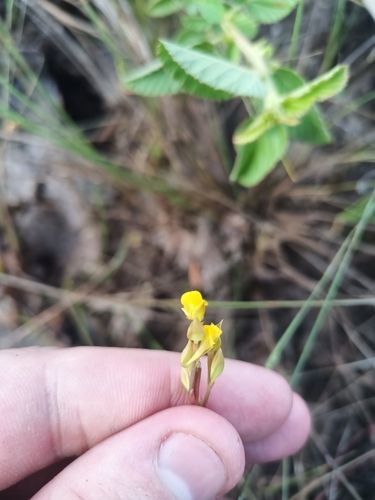
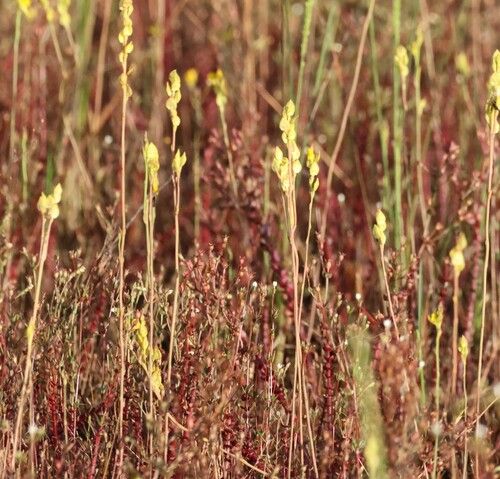
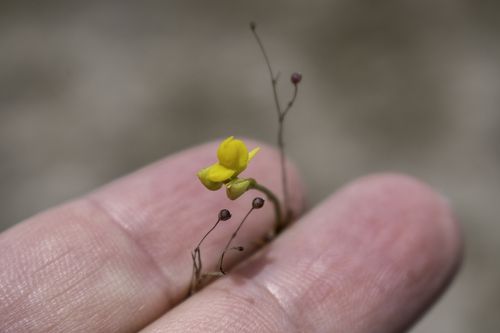
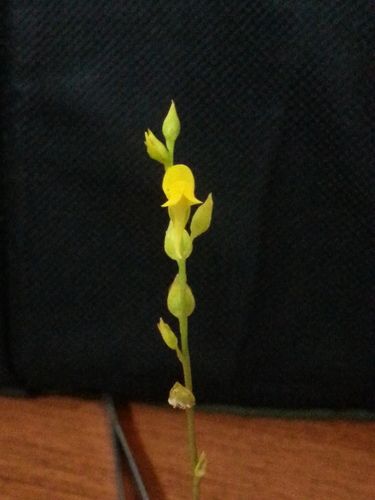
Etymology
- Utricularia: see the genus sheet.
- erectiflora: from the Latin, “with upright flowers”.
Description (how to recognise it)
- A small terrestrial bladderwort, probably perennial.
- According to Benjamin (1847): scape with a few flowers; golden-yellow corolla, with entire lips ending in a small point; spur almost twice as long as the corolla, pointing downwards, slightly curved, conical and pointed.
Distribution
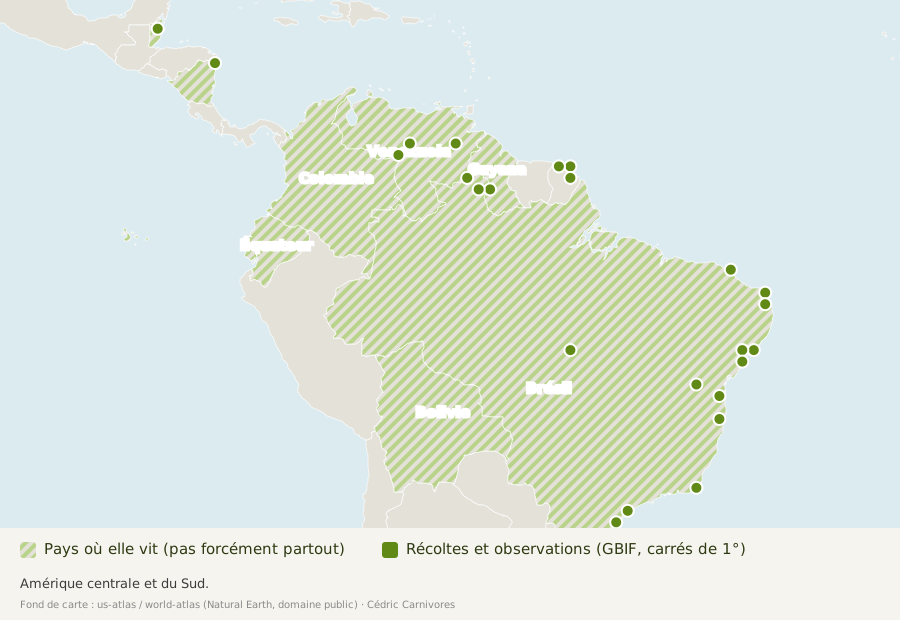
Belize, Bolivia, Brazil, Colombia, Ecuador, Guyana, Nicaragua, Suriname and Venezuela (Wikipedia); also French Guiana (GBIF). According to Kew's world checklist of plants (WCVP), it is native to 15 regions of the world (see the map and the Kew source). According to the Flora do Brasil (the official list of Brazilian plants), it grows in these Brazilian states: Alagoas, Bahia, Ceará, Federal District, Espírito Santo, Goiás, Maranhão, Mato Grosso, Paraíba, Pernambuco, Piauí, Paraná, Rio de Janeiro, Rio Grande do Norte, Roraima, Santa Catarina, Sergipe, São Paulo and Tocantins. Major biomes: Amazon, Cerrado and Atlantic Forest.
Habitat
Wet sandy savannas, wet grasslands or marshes. According to the Flora do Brasil: a terrestrial plant, in campinarana (white-sand savanna of the Amazon), open grasslands, cerrado (savanna), restinga (coastal sand vegetation) and aquatic vegetation. Benjamin (1847) cites Saint-Hilaire's collection in a marsh near Guarapari (Espírito Santo), in flower in October.
Sources
- Wikipedia (English), Utricularia erectiflora: authors, range, habitat.
- Kew, World Checklist of Vascular Plants (via GBIF): native distribution.
- Flora e Funga do Brasil, official list (via GBIF): states, biomes, endemism, life form and vegetation types in Brazil.
- Benjamin, Flora Brasiliensis X: Lentibulariae, 1847 (archive.org): description, localities and habitats (translated from Latin).
- GBIF, Utricularia erectiflora: author, original publication, countries and localities of herbarium specimens and observations.