Utricularia floridana Nash
Species sheet, updated on 30/10/2026.
At a glance
| Scientific name | Utricularia floridana George Valentine Nash, Bulletin of the Torrey Botanical Club 23: 105, 1896 |
| Family | Lentibulariaceae |
| Distribution | Southeastern United States (Florida, Georgia, Alabama, the Carolinas) |
| Habitat | Shallow lakes and ponds with sandy bottoms, floating peat mats |
| Status | in Alabama: critically imperilled to imperilled in the state (S1S2, USDA PLANTS database) |
Photos in the wild
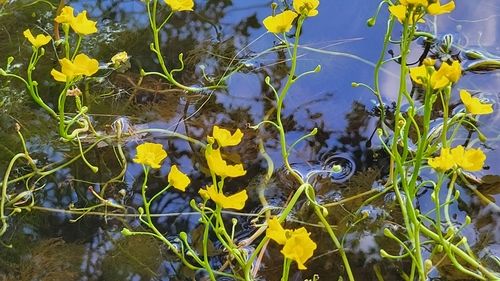
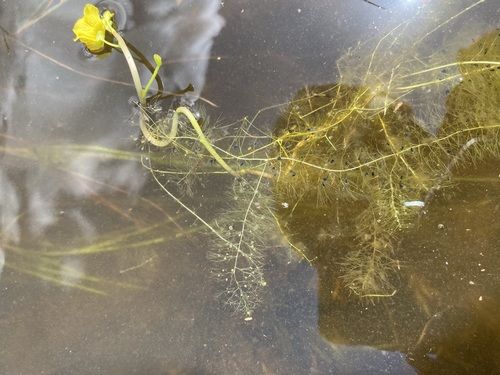
Etymology
- Utricularia: see the genus sheet.
- floridana: from the Latin, “of Florida”. The species was discovered in Florida.
History of the description
- In June 1895, the botanist George Valentine Nash collected the plant near Eustis, in Lake County, central Florida. He described it the following year, in 1896.
- This original specimen (the “type”) is kept at the New York Botanical Garden; duplicates are spread across several major herbaria, including those of Kew, Paris and Harvard.
- On old labels, the plant was sometimes filed under other names, Utricularia fibrosa or Utricularia foliosa, before being correctly identified.
Description (how to recognise it)
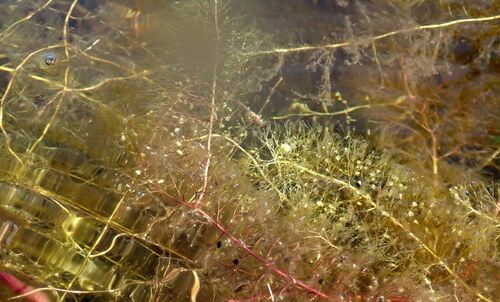
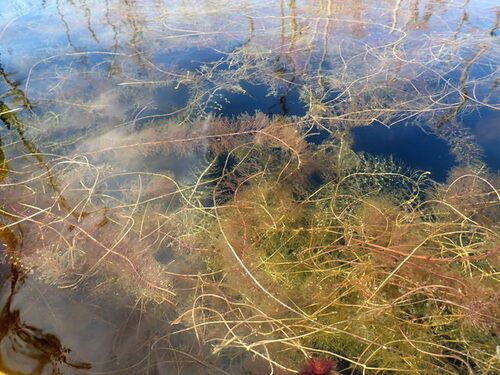
- A large, anchored aquatic, perennial bladderwort.
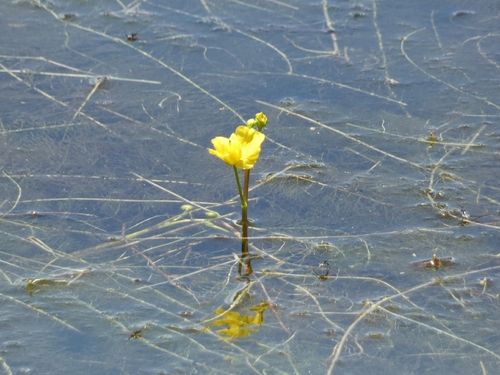
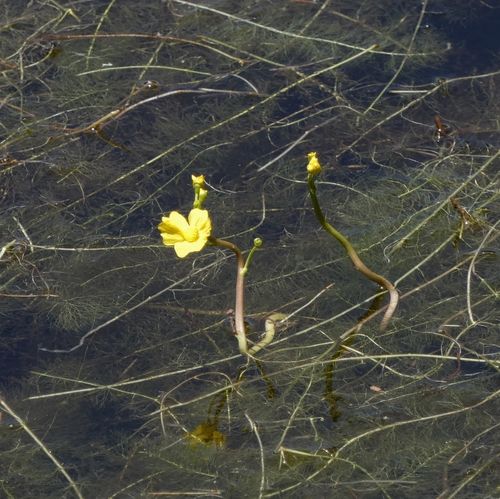
- It forms dense colonies; its leaves are of two kinds and its yellow flowers rise above the water on a scape (a botanist's notes on a herbarium specimen).
- Flowering specimens have been collected from April to September.
Distribution
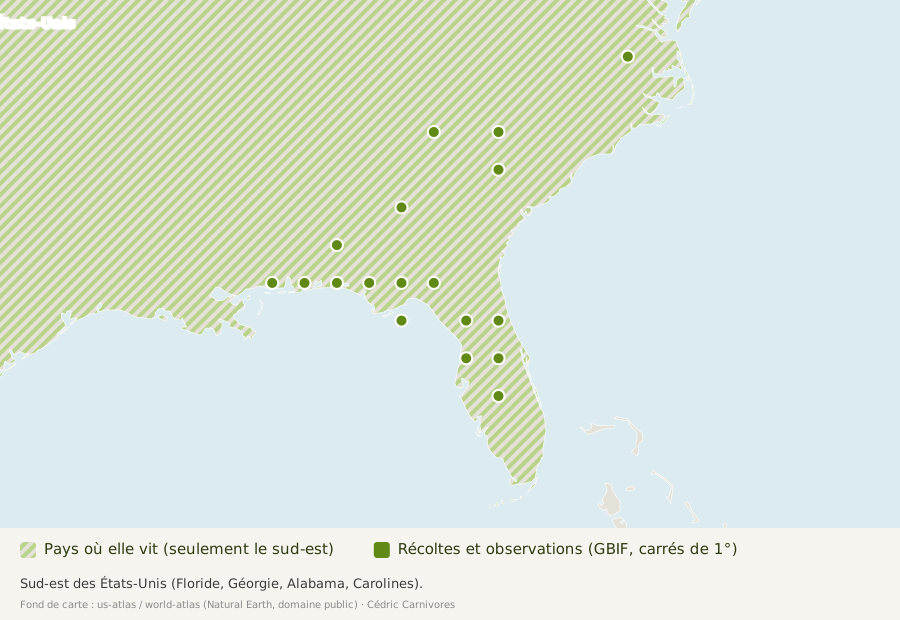
Endemic to the southeastern United States: Florida, Georgia, Alabama and the Carolinas. According to Kew's world plant checklist (WCVP), it is native to the following regions: Alabama, Florida, Georgia, North Carolina and South Carolina. The University of South Florida herbarium holds collections made between 1952 and 2007 in Florida (Alachua, Bay, Hillsborough, Lake, Leon, Pasco and Walton counties), in Alabama (Covington County) and in South Carolina (Barnwell County).
Habitat
A strictly aquatic plant: the Atlas lists it among “obligate wetland” plants. Herbarium labels describe shallow lakes with white sand bottoms, in water from the shoreline down to 25 cm, with Rhynchospora, water lilies (Nymphaea) and floating hearts (Nymphoides); deeper water (one specimen collected under 2.5 to 3 m of water); ponds in hollows of sandy hills; a floating peat mat on thick organic mud, fed by seepage; in South Carolina, a “Carolina bay”, one of those oval, flooded depressions of the coastal plain.
Threats and protection
In Alabama, it is ranked S1S2: critically imperilled to imperilled in that state. The USDA PLANTS database lists it among “obligate wetland” plants in the Atlantic and Gulf coastal plain, but also in the eastern mountains and piedmont.
Did you know?
Its English name is “Florida yellow bladderwort”; in French, utriculaire jaune de Floride.
Sources
- Wikipedia (English), Utricularia floridana: author, year, range, way of life, English name.
- Kew, World Checklist of Vascular Plants (via GBIF): natural distribution.
- Atlas of Florida Plants (University of South Florida), Utricularia floridana, and its herbarium specimens: original publication, type (Nash, Eustis, June 1895), English name, wetland plant, counties, habitats, description, flowering, old names on labels.
- USDA, PLANTS database, Utricularia floridana (UTFL): native perennial plant, status in Alabama (S1S2), wetland status by region.
- GBIF, Utricularia floridana: author, original publication, countries and localities of herbarium specimens and observations.