Utricularia geminiscapa Benj.
Species sheet, updated on 30/10/2026.
At a glance
| Scientific name | Utricularia geminiscapa Ludwig Benjamin, Linnaea 20(3): 305, 1847 |
| Family | Lentibulariaceae |
| Distribution | Northeastern United States and eastern Canada |
Photos in the wild
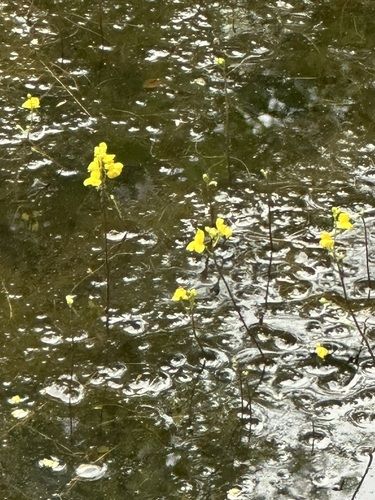
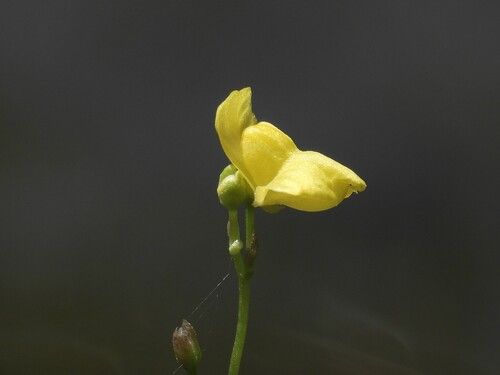
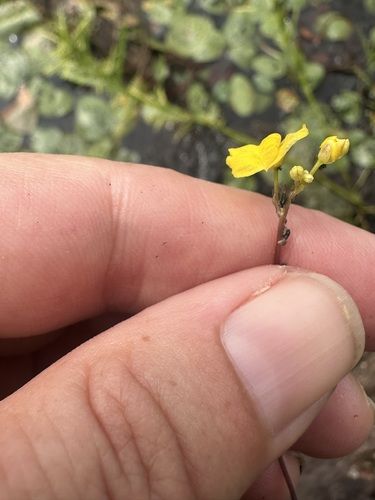
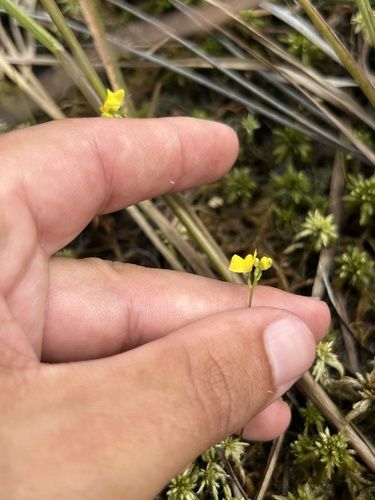
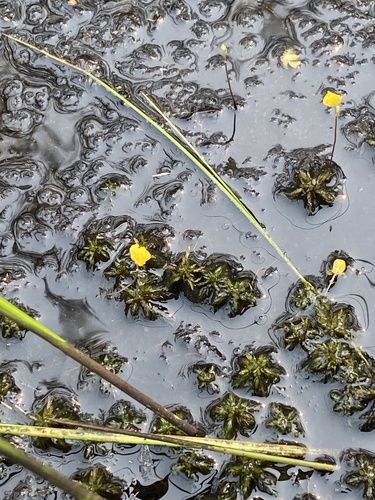
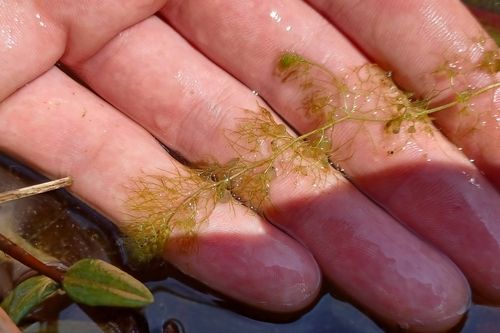
Etymology
- Utricularia: see the genus sheet.
- geminiscapa: from the Latin, “with twin scapes”.
Description (how to recognise it)
- A medium-sized, perennial aquatic bladderwort.
- According to Britton and Brown (1913), who describe it under the name U. clandestina: stems 20 to 25 cm, floating horizontally beneath the surface; leaves about 2 cm, forked 4 to 7 times; scape 5 to 12 cm with 2 to 5 yellow flowers at least 6 mm across.
- It also bears closed flowers (cleistogamous, which fertilise themselves without opening), solitary on short stalks at the base of the scape and along the stems, often in pairs: hence the name clandestina.
Distribution
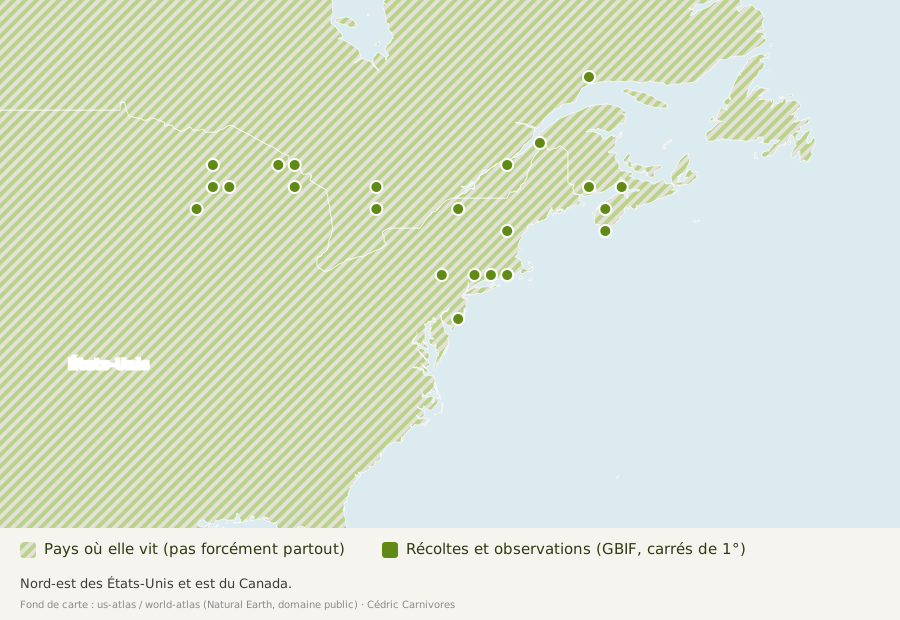
Northeastern United States and Canada (one record in British Columbia). A small naturalised population exists near Westport, in New Zealand, reported since 1975. According to Kew's world plant checklist (WCVP), it is native to 25 regions of the world (see the map and the Kew source).
Habitat
Britton and Brown (1913) give it in shallow water, from New Brunswick to Virginia; flowering in July–August.
Did you know?
Its English name is “hiddenfruit bladderwort”; in French, utriculaire aux fruits cachés.
Sources
- Wikipedia (English), Utricularia geminiscapa: author, year, range, naturalisation in New Zealand, English name.
- Kew, World Checklist of Vascular Plants (via GBIF): natural distribution.
- Britton and Brown, An Illustrated Flora of the Northern United States III, 2nd ed., 1913 (archive.org): description, habitats and range (translated from English).
- GBIF, Utricularia geminiscapa: author, original publication, countries and localities of herbarium specimens and observations.