Utricularia hydrocarpa Vahl
Species sheet, updated on 30/10/2026.
At a glance
| Scientific name | Utricularia hydrocarpa Martin Vahl, Enumeratio Plantarum 1: 200, 1804 |
| Family | Lentibulariaceae |
| Distribution | Tropical America, from Mexico and the West Indies to Brazil and Bolivia |
Photos in the wild
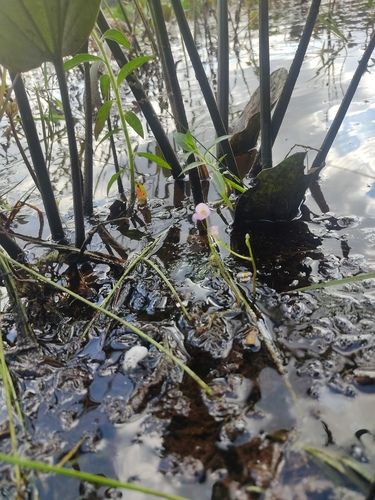
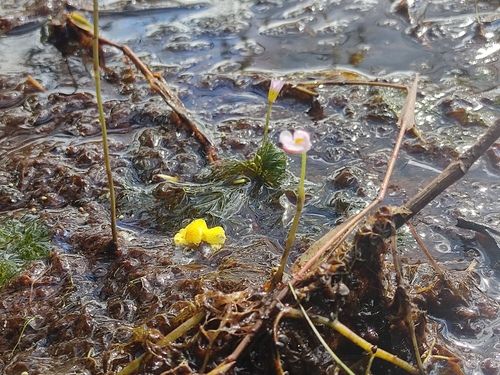
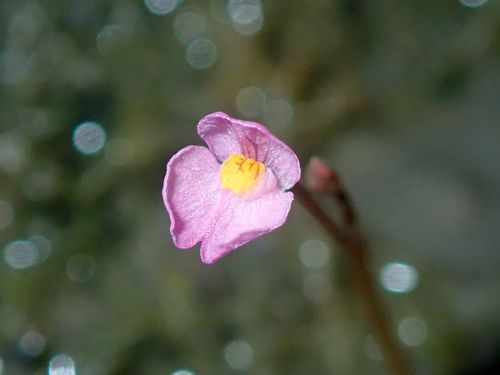
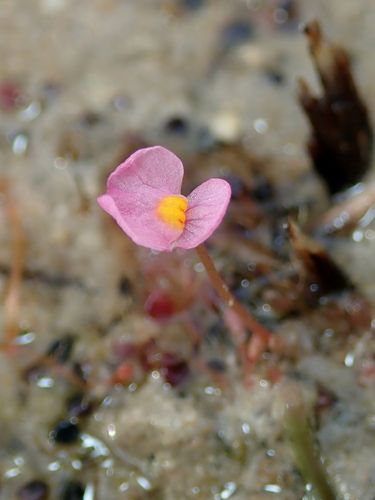
Etymology
- Utricularia: see the genus sheet.
- hydrocarpa: from the Greek, “with fruits in the water”.
Description (how to recognise it)
- A medium-sized, free-floating aquatic bladderwort, probably annual.
- A water plant with hair-like submerged leaves; scape slightly swollen, always bearing a closed flower at its base (cleistogamous, which fertilises itself without opening); corolla pink with a yellow palate, lower lip two-lobed; pedicels bent back in fruit. It differs from U. poconensis by its pink flowers and this closed flower.
Distribution
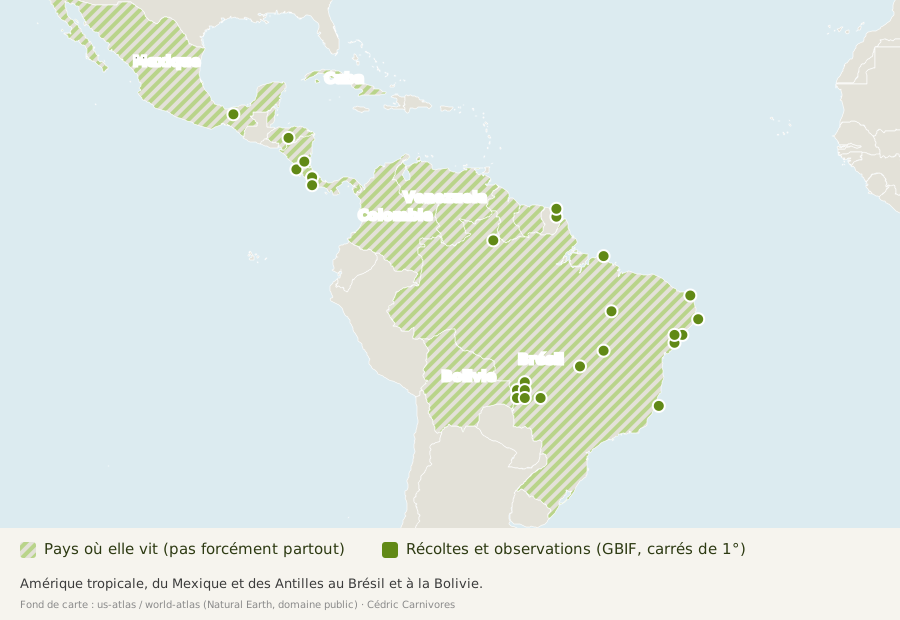
Tropical America, from Mexico and Cuba to Brazil and Bolivia (more than 550 records in GBIF). According to Kew's world plant checklist (WCVP), it is native to 21 regions of the world (see the map and the Kew source). According to the Flora do Brasil (the official list of Brazilian plants), it grows in Brazil in these states: Alagoas, Amazonas, Amapá, Bahia, Ceará, Goiás, Maranhão, Minas Gerais, Mato Grosso do Sul, Mato Grosso, Pará, Paraíba, Pernambuco, Piauí, Rio de Janeiro, Rio Grande do Norte, Roraima, Santa Catarina, Sergipe and São Paulo. Major biomes: Amazon, Caatinga, Cerrado, Atlantic Forest and Pantanal.
Habitat
According to the Flora do Brasil: an aquatic plant, in human-modified habitats, caatinga (dry scrub), campinarana (white-sand savanna of the Amazon), floodable grasslands, open grasslands, campos rupestres (rocky mountain grasslands), cerrado (savanna), semi-deciduous seasonal forest, rainforest, restinga (coastal sand vegetation) and aquatic vegetation. In Bahia, it is found only in restinga (coastal sand vegetation).
Sources
- Wikipedia (English), Utricularia hydrocarpa: author, year, range, way of life.
- Kew, World Checklist of Vascular Plants (via GBIF): natural distribution.
- Flora e Funga do Brasil, official list (via GBIF): states, biomes, endemism, way of life and vegetation types in Brazil.
- “Diversity and distribution of Lentibulariaceae in Bahia state, Brazil” (Plazi text, public domain, via GBIF): description, possible confusions, habitats in Bahia.
- GBIF, Utricularia hydrocarpa: author, original publication, countries and localities of herbarium specimens and observations.