Utricularia lateriflora R. Br.
Species sheet, updated on 30/10/2026.
At a glance
| Scientific name | Utricularia lateriflora Robert Brown, Prodromus Florae Novae Hollandiae: 431, 1810 |
| Family | Lentibulariaceae |
| Distribution | South-eastern Australia and Tasmania |
| Habitat | Sandy or peaty soils in heathland, at low altitude |
Photos in the wild
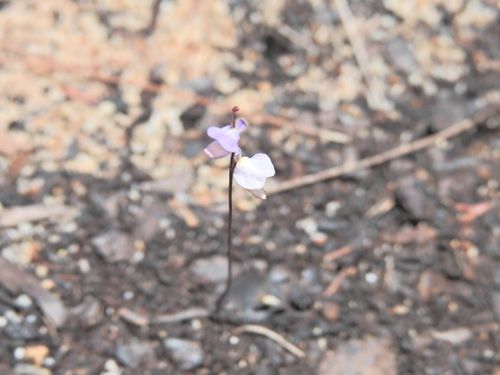
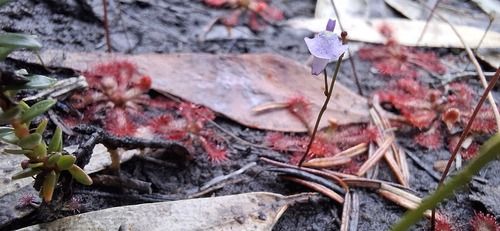
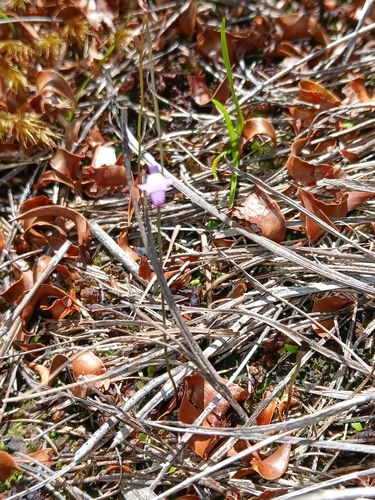
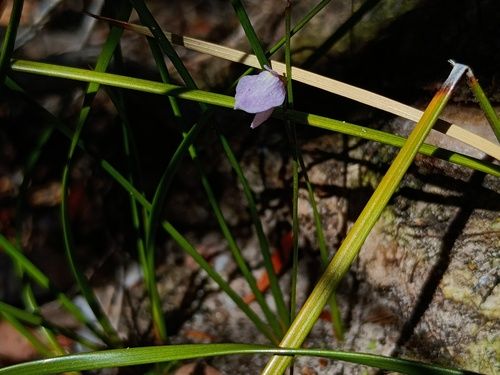
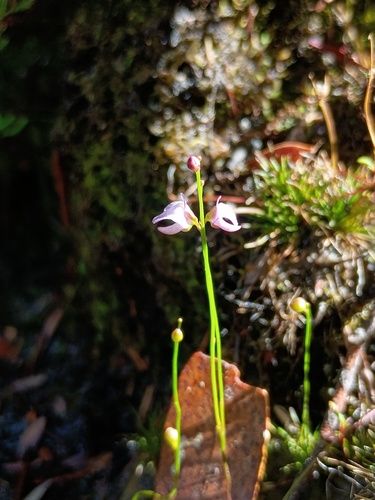
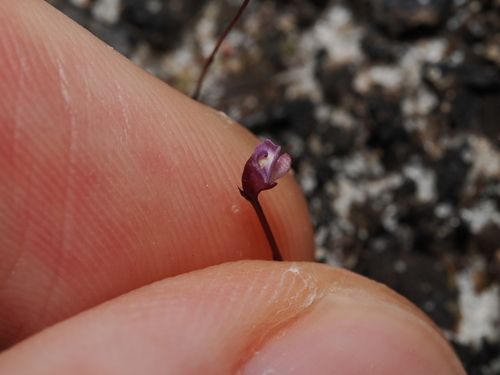
Etymology
- Utricularia: see the genus sheet.
- lateriflora: from the Latin, “with flowers on the side”.
Description (how to recognise it)
- Small to medium-sized perennial terrestrial bladderwort.
- According to Bentham (1869): scape 2.5 to 10 cm, sometimes thread-like, often stiff and turning black when dried; leaves spoon-shaped, very rarely present at flowering; most often 2 to 4 small purple flowers, spaced apart, almost without a pedicel; lower lip 6 to 8 mm wide.
Distribution
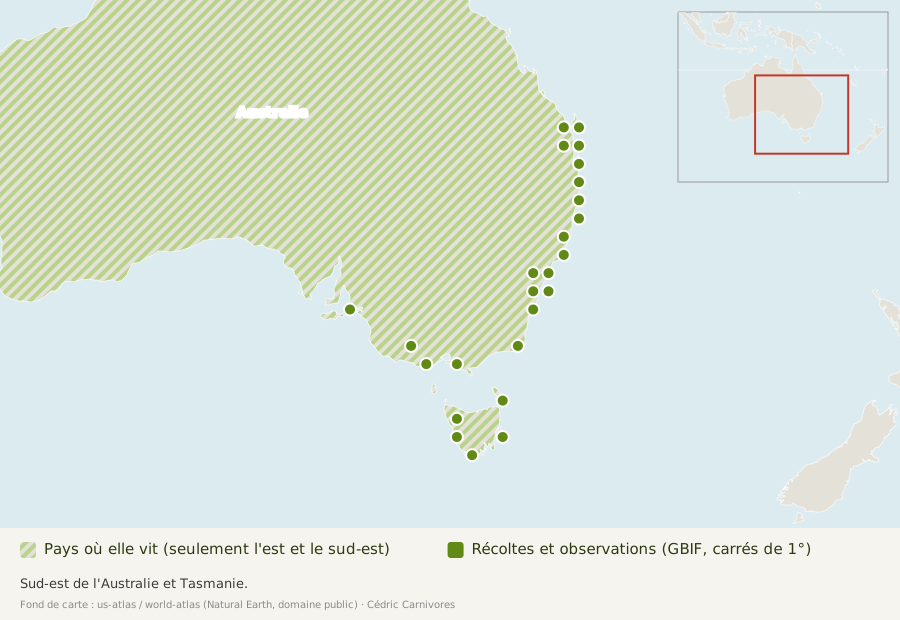
Endemic to Australia: New South Wales, Queensland, South Australia, Tasmania and Victoria (nearly 1,300 records in GBIF). According to Kew's world list of plants (WCVP), it is native to the following regions: New South Wales, North Island (New Zealand), Queensland, South Australia, Tasmania and Victoria.
Habitat
Sandy or peaty soils in heathland, at low altitude. Bentham (1869) says it is common near Sydney and cites collections from Tasmania, including from lagoons of Brisbane Bay (Macquarie Harbour).
Did you know?
Its English name is “small bladderwort”.
Sources
- Wikipedia (English), Utricularia lateriflora: author, year, range, habitat, English name.
- Kew, World Checklist of Vascular Plants (via GBIF): natural distribution.
- Bentham, Flora Australiensis IV: Lentibulariae, 1869 (archive.org): description and localities (translated from English).
- GBIF, Utricularia lateriflora: author, original publication, countries and localities of herbarium specimens and observations.