Utricularia meyeri Pilg.
Species sheet, updated on 30/10/2026. Short sheet: sources on this species are still scarce.
At a glance
| Scientific name | Utricularia meyeri Robert Pilger, Botanische Jahrbücher für Systematik 30: 194, 1901 |
| Family | Lentibulariaceae |
| Distribution | Central Brazil: western Goiás and eastern Mato Grosso |
| Habitat | Bogs, marshes and seasonally flooded grasslands, from 400 to 600 m |
Etymology
- Utricularia: see the genus sheet.
- meyeri: probably in honour of a person named Meyer.
History of the description
- 1901: Robert Pilger describes it.
- 1967: Peter Taylor reduces it to a synonym of U. erectiflora, then reverses his decision after comparing their seeds under the electron microscope.
Description (how to recognise it)
- Medium-sized terrestrial bladderwort, probably perennial.
Distribution
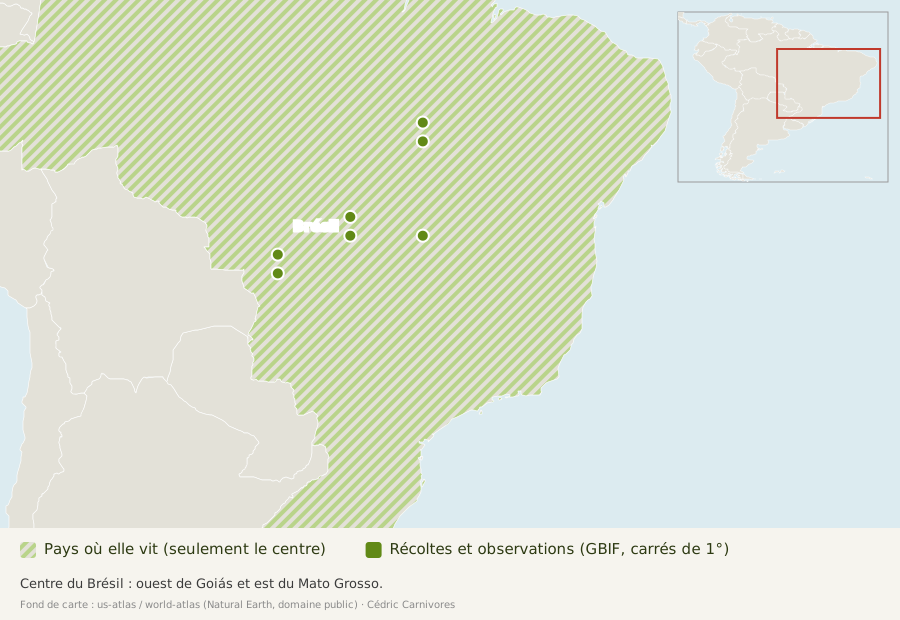
Endemic to Brazil: western Goiás and eastern Mato Grosso. GBIF also attaches records from Bolivia and Colombia to it (including U. densiflora, which it treats as a synonym). According to Kew's world list of plants (WCVP), it is native to the following regions: Bolivia and West-Central Brazil. According to the Flora do Brasil (the official list of Brazilian plants), it is endemic to Brazil and grows in these states: Goiás, Mato Grosso and Tocantins. Major biomes: Cerrado and Pantanal.
Habitat
Bogs, marshes and grasslands flooded for part of the year, from 400 to 600 m. According to the Flora do Brasil: terrestrial plant, in open grasslands and cerrado (savanna).
Sources
- Wikipedia (English), Utricularia meyeri: author, year, history, range, habitat, altitude.
- Kew, World Checklist of Vascular Plants (via GBIF): natural distribution.
- Flora e Funga do Brasil, official list (via GBIF): states, biomes, endemism, life form and vegetation types in Brazil.
- GBIF, Utricularia meyeri: author, original publication, countries and localities of herbarium specimens and observations.