Utricularia pubescens Sm.
Species sheet, updated on 30/10/2026.
At a glance
| Scientific name | Utricularia pubescens James Edward Smith, in Rees, Cyclopaedia 37, 1819 |
| Family | Lentibulariaceae (only species of section Lloydia) |
| Distribution | India, tropical Africa, Central and South America |
| Habitat | Wet peaty soils in marshy grasslands, up to 1,900 m |
Photos in the wild
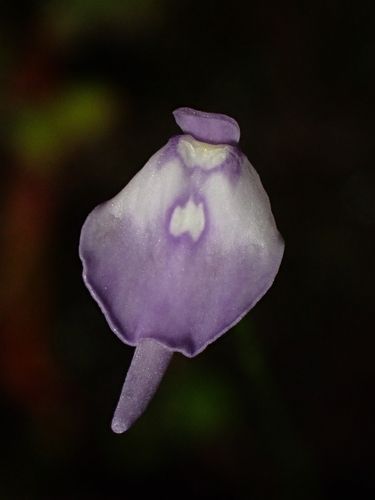
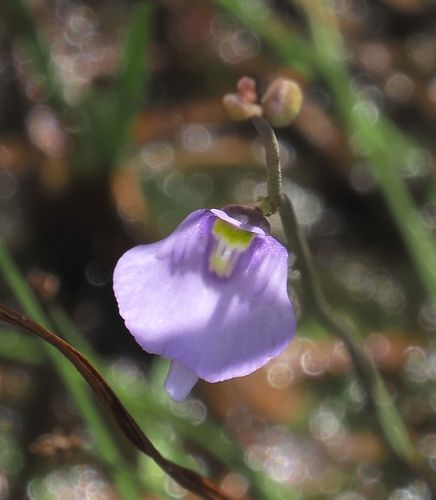
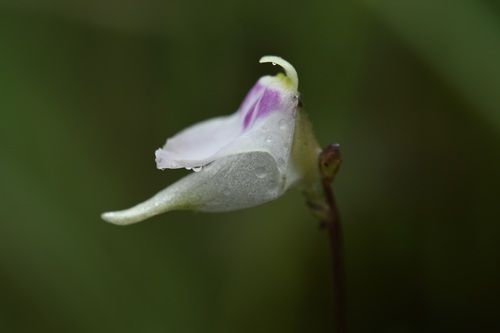
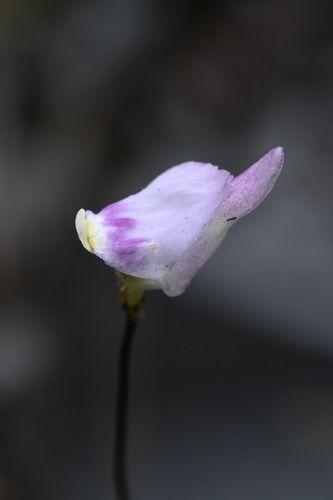
Etymology
- Utricularia: see the genus sheet.
- pubescens: from the Latin, “downy”.
History of the description
- 1819: James Edward Smith describes it.
- 1986: Peter Taylor places it alone in section Lloydia.
Description (how to recognise it)
- Terrestrial or rock-dwelling bladderwort, small to medium-sized, probably annual.
- Its small peltate leaves (attached by the centre) set it apart from all other bladderworts.
- An extremely variable species, hence its many synonyms.
Distribution
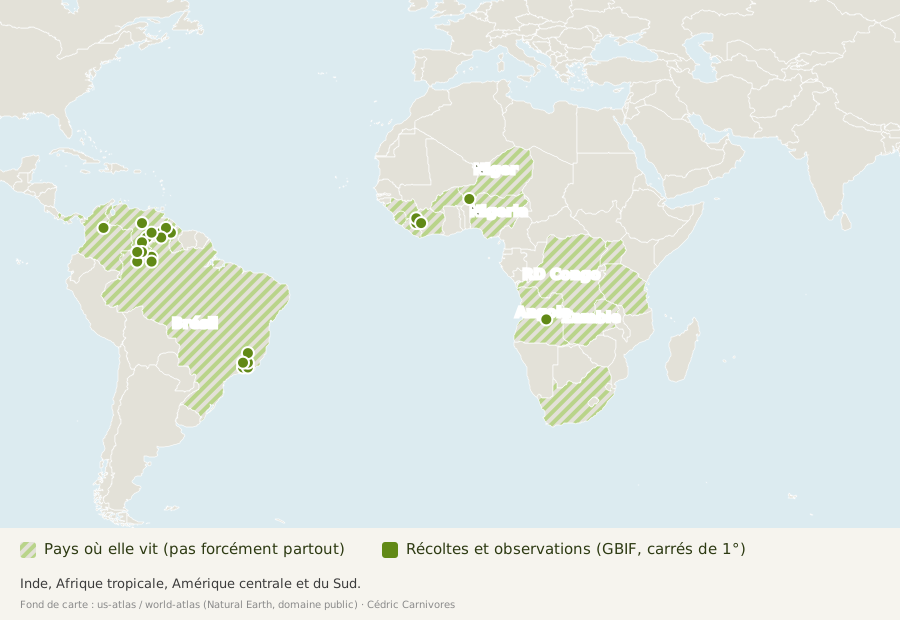
India, tropical Africa and Central and South America (nearly 600 records in GBIF). According to Kew's world plant list (WCVP), it is native to 29 regions of the world (see the map and the Kew source). According to the Flora do Brasil (the official list of Brazilian plants), it grows in these Brazilian states: Amazonas, Ceará, Goiás, Minas Gerais, Mato Grosso, Rio de Janeiro, Roraima and São Paulo. Major biomes: Amazon, Cerrado and Atlantic Forest.
Habitat
Marshy grasslands, on wet peaty soils, from sea level to 1,900 m. According to the Flora do Brasil: terrestrial or rock-dwelling plant, in campinarana (white-sand savanna of the Amazon), high-altitude grasslands, campos rupestres (rocky mountain grasslands), cerrado (savanna), rainforest, Amazonian savanna and rock-outcrop vegetation.
Sources
- Wikipedia (English), Utricularia pubescens: author, year, section, range, habitat, altitude, peltate leaves, variability.
- Kew, World Checklist of Vascular Plants (via GBIF): natural distribution.
- Flora e Funga do Brasil, official list (via GBIF): states, biomes, endemism, way of life and vegetation types in Brazil.
- GBIF, Utricularia pubescens: author, original publication, countries and localities of herbarium specimens and observations.