Utricularia pusilla Vahl
Species sheet, updated on 30/10/2026.
At a glance
| Scientific name | Utricularia pusilla Martin Vahl, Enumeratio Plantarum 1: 202, 1804 |
| Family | Lentibulariaceae |
| Distribution | Mexico, West Indies, Central and South America |
Photos in the wild
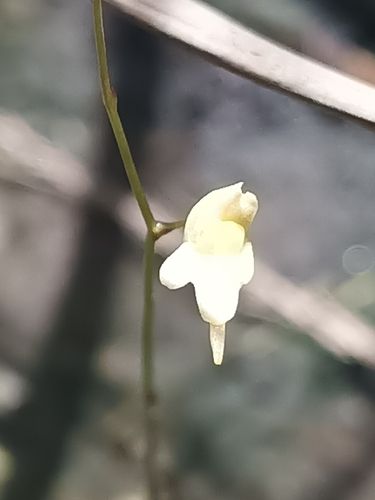
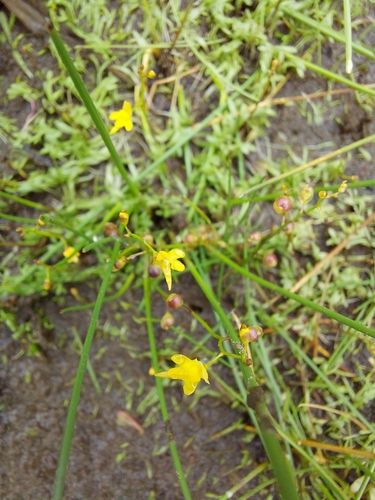
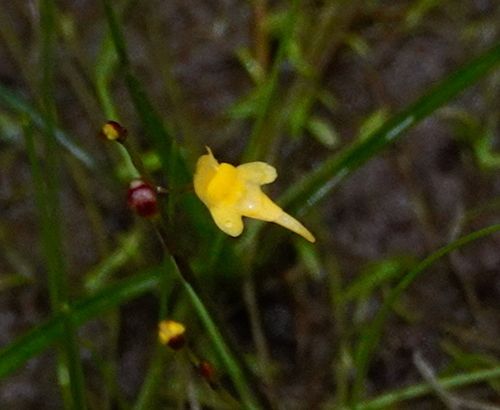
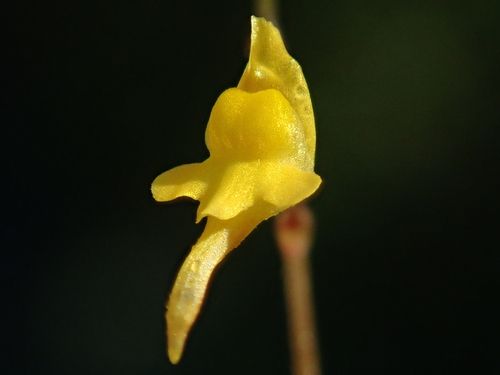
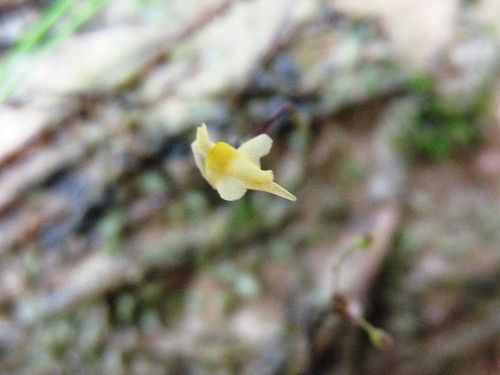
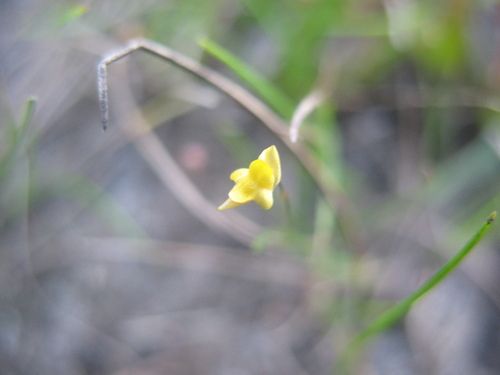
Etymology
- Utricularia: see the genus sheet.
- pusilla: from the Latin, “very small”.
Description (how to recognise it)
- An annual terrestrial bladderwort.
- According to Benjamin (1847): scape with scales; corolla yellow, upper lip oval, lower lip almost twice as long, 3-lobed; spur twice as long as the lower lip, straight, awl-shaped.
Distribution
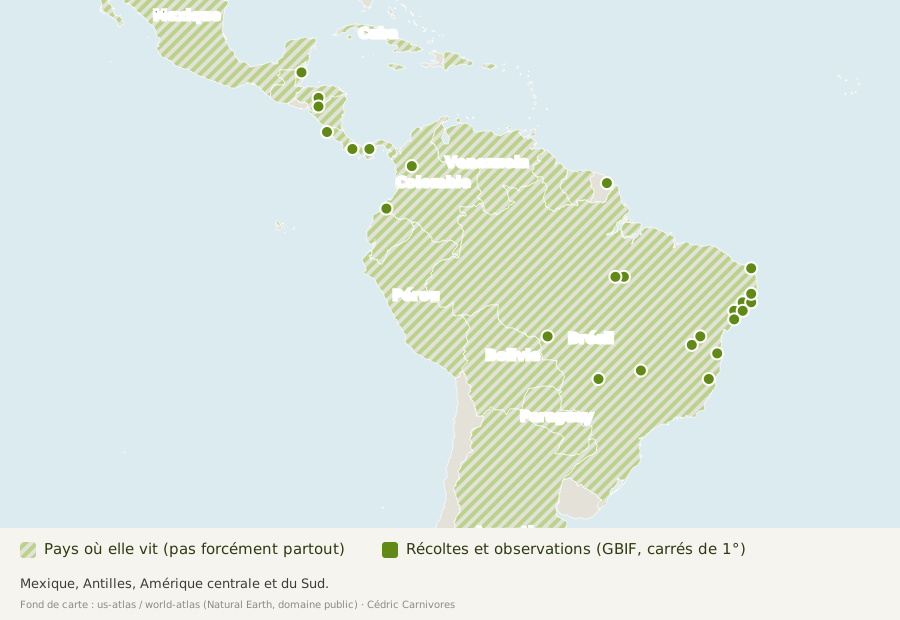
Mexico, West Indies, Central and South America: more than twenty countries, from Mexico and Cuba to Argentina and Paraguay. According to Kew's world plant list (WCVP), it is native to 30 regions of the world (see the map and the Kew source). According to the Flora do Brasil (official list of the plants of Brazil), it grows in Brazil in these states: Acre, Alagoas, Amazonas, Bahia, Ceará, Goiás, Maranhão, Minas Gerais, Mato Grosso, Pará, Paraíba, Pernambuco, Piauí, Paraná, Rio de Janeiro, Rio Grande do Norte, Roraima, Sergipe, São Paulo and Tocantins. Major biomes: Amazon, Caatinga, Cerrado and Atlantic Forest.
Habitat
According to the Flora do Brasil: a terrestrial plant, in man-made habitats, campinarana (Amazonian white-sand savanna), high-altitude grasslands, campos rupestres (rocky mountain grasslands), cerrado (savanna), gallery forests, seasonal deciduous forest, seasonal semi-deciduous forest, rainforest, palm groves, restinga (coastal sand vegetation), Amazonian savanna, aquatic vegetation and rock outcrop vegetation. Benjamin (1847) cites collections from Bahia (Cruz do Cosme) and from Minas Novas (Minas Gerais).
Did you know?
Its English name is “tiny bladderwort” (in French utriculaire minuscule).
Sources
- Wikipedia (English), Utricularia pusilla: author, year, range, English name.
- Kew, World Checklist of Vascular Plants (via GBIF): natural distribution.
- Flora e Funga do Brasil, official list (via GBIF): states, biomes, endemism, life form and vegetation types in Brazil.
- Benjamin, Flora Brasiliensis X: Lentibulariae, 1847 (archive.org): description, localities and habitats (translated from Latin).
- GBIF, Utricularia pusilla: author, original publication, countries and localities of herbarium specimens and observations.